The Amalfi Coast: A Food and Travel Guide to Italy's Most Spectacular Coastline
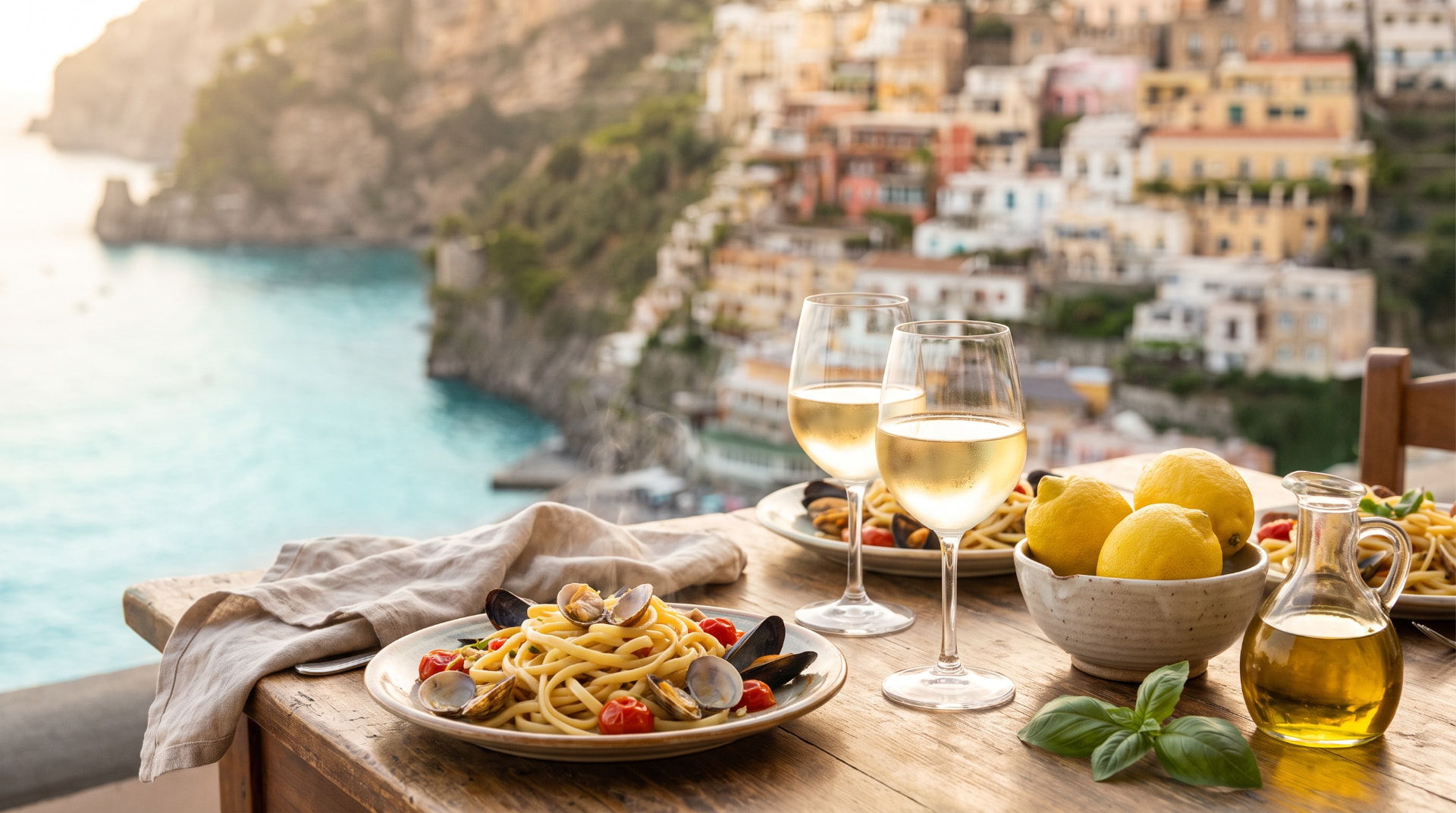
There are places in the world that stop you completely. The Amalfi Coast is one of them. Stretching along the southern edge of Italy's Sorrentine Peninsula, this UNESCO World Heritage coastline is a drama of vertiginous cliffs, pastel-coloured villages clinging to rockfaces, and water so blue it looks painted. But beyond the postcard views lies something equally breathtaking: the food.
Here, cooking is not a hobby. It is a way of life passed down through generations, built around whatever the sea offered that morning and whatever grew on the terraced hillsides above. Lemons the size of your fist. Tomatoes that taste like concentrated sunshine. Clams pulled from the water hours before they reach your plate. This is food at its most honest, and its most delicious.
In this guide we explore the towns, the food culture, and the extraordinary ingredients that define this stretch of Italian coastline. And we give you everything you need to bring a little of that Mediterranean magic into your own kitchen.
The Amalfi Coast: The Essentials
The Amalfi Coast runs along the Province of Salerno in the Campania region of southern Italy. It connects a string of clifftop towns: Positano, Praiano, Amalfi, Atrani, and Ravello, each dramatically beautiful in its own way. The coastline is at its best between April and June or September and October, when the summer crowds thin and the light turns golden and long in the late afternoon.
Positano is the most photographed of the towns, a cascade of terracotta and white buildings tumbling down to a small pebble beach lapped by clear turquoise water. It is undeniably beautiful and undeniably busy in peak season. For a quieter experience, head inland and upward to Ravello, perched high above the coast with sweeping panoramic views and some of the finest restaurants on the entire stretch. Or discover tiny Atrani, the smallest municipality in southern Italy, tucked into a narrow gorge just a few minutes' walk from Amalfi town itself, and almost entirely overlooked by tourists, all the more beautiful for it.
Getting there is part of the adventure. The coastal road, the SS163 Statale Amalfitana, is one of the most spectacular drives in Europe, hugging cliff edges with the Tyrrhenian Sea glittering far below. Arriving by ferry from Naples or Salerno gives the most dramatic first impression: the coast reveals itself slowly from the water in a way that no road can match.
The Food Culture of the Amalfi Coast
Campanian cuisine is the foundation of what most of the world calls Italian food. Pizza was born in nearby Naples. The tomato-based sauces that define Italian cooking worldwide originated in this region. But the Amalfi Coast adds its own deeply personal layer of identity, rooted in the sea and in the extraordinary lemons that grow on its terraced hillsides.
The cooking here is built around simplicity and the very best ingredients. Pasta is made fresh each morning. The catch of the day defines the menu. Meals are long and generous, always finished with something cold, sharp, and lemony. There is a generosity to the food here that feels like a natural extension of the landscape: big, dramatic, and completely unforgettable.
The Soul of the Coast: Amalfi Lemons
If you visit the Amalfi Coast and bring one thing home, make it lemons. The Sfusato Amalfitano, the lemon of the Amalfi Coast, is unlike any other lemon in the world. Elongated, thick-skinned, and intensely fragrant, it is protected by a PGI designation, the same European quality mark given to Champagne and Parmigiano Reggiano. The zest alone is enough to perfume an entire kitchen.
These lemons are the soul of Limoncello, the bright sunshine-yellow digestivo served ice cold at the end of every meal along the coast, and they find their way into pasta, seafood, pastries, and gelato with equal ease. When cooking any recipe from this region, always use unwaxed lemons so you can use the zest freely. Organic lemons are even better. And always zest before you juice; it's far easier and far more fragrant.
The Dishes You Need to Know
The Amalfi Coast has a surprisingly distinct regional cuisine for such a small stretch of coastline. These are the dishes that define it.
Scialatielli ai Frutti di Mare
The signature pasta of the Amalfi Coast, and arguably its greatest culinary gift to the world. Scialatielli is a short flat pasta unique to this coastline, made fresh each morning with flour, milk, Pecorino cheese, and fresh basil. Served with a spectacular mixed seafood sauce of clams, mussels, prawns, and squid in white wine and olive oil, it is the definitive taste of the Amalfi Coast on a plate.
Limoncello
More than a drink, Limoncello is a way of life on the Amalfi Coast. Made by steeping the zest of Sfusato lemons in pure alcohol then blending with sugar syrup, it is served ice-cold in chilled ceramic glasses after every meal. Every family has their own recipe. Every restaurant has their own version. It is non-negotiable.
Alici di Menaica
In the tiny fishing village of Pisciotta at the southern end of the coast, an ancient method of salting anchovies has been practised for over two thousand years. The Menaica net, unchanged since Greek times, catches only the largest, fattest anchovies, which are then salted by hand in terracotta pots and left to mature for months. The result is completely unlike any anchovy you have tasted: rich, complex, and not aggressively salty. Seek them out at a good Italian deli and eat them simply on good bread with butter.
Delizia al Limone
The signature dessert of the Amalfi Coast: a perfect dome of light lemon sponge filled with lemon pastry cream and covered entirely in whipped lemon cream. Created in Sorrento and now found in every pasticceria along the coast, it is one of the most beautiful and delicious desserts in Italian cuisine, and almost entirely unknown outside Italy.
Limoncello Tiramisu
The Amalfi Coast's answer to Italy's most famous dessert. When Tiramisu travelled south from Venice, the locals did what Italians always do: they made it their own. Espresso was replaced with Limoncello. Dark cocoa was replaced with lemon curd and fine lemon zest. The result is lighter, brighter, and arguably more beautiful than the original. We have recreated this dish at home with full gram measurements and a built-in scaling tool. It is spectacular.
The Cookware of Italian Coastal Cooking
Amalfi Coast cooking does not require specialist equipment, but a few key pieces make a significant difference to the results.
A large pasta pot, at least 8 litres, is essential for cooking pasta properly in generously salted water. A wide shallow sauté pan with a lid handles the seafood sauces that define the coastline. A digital kitchen scale transforms your baking and pastry work immediately: Italian recipes are built on weight, not volume, and the difference in precision is remarkable. And a good microplane zester is indispensable in a kitchen where lemon zest appears in almost every dish.
Visiting the Amalfi Coast: Practical Notes
The Amalfi Coast rewards those who plan carefully and travel slowly. A week is the minimum to do it justice; two weeks is better. Base yourself in one town and take day trips along the coast by ferry rather than by road. The boats are faster, more scenic, and far less stressful than navigating the hairpin bends of the coastal road in a hire car.
April, May, early June, and September are the sweet spots: warm enough to swim, cool enough to walk, quiet enough to breathe. July and August are spectacular but extremely busy and extremely hot. The shoulder seasons offer the best balance of good weather, manageable crowds, and lower prices.
For food, eat where the locals eat. The restaurants on the main squares of Positano are beautiful but often overpriced and tourist-facing. Walk five minutes uphill from any main piazza and you will find the places where locals actually go: better food, lower prices, and a far more authentic experience.
Limoncello Tiramisu: The Amalfi Coast's Most Iconic Dessert
We have recreated this spectacular coastal dessert with full gram measurements, step by step instructions, and a built-in scaling tool so you can make it for any number of guests. Layers of Limoncello-soaked Savoiardi, whipped lemon mascarpone cream, and golden lemon curd: it is the taste of the Amalfi Coast in a glass.
View the full recipe