Tamales 101
The Calculated Cook uses affiliate links. We may earn a small commission at no extra cost to you.
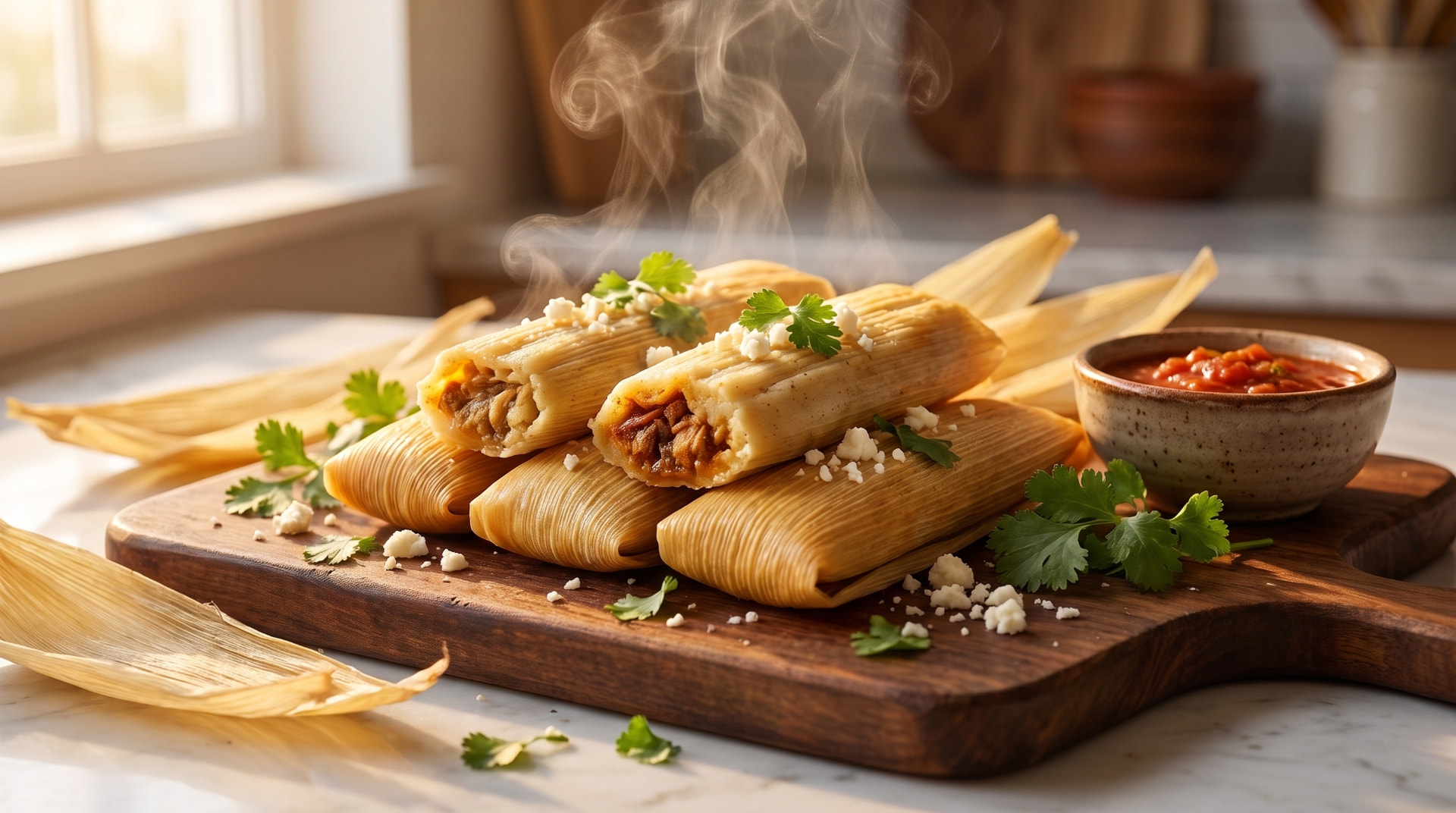
Tamales have a way of turning "I'll just make a small batch" into a full weekend project involving three pots, a sink full of corn husks, and at least one family member insisting they're doing it wrong. If you've ever found yourself mid-tamalada wondering how long these things actually last, whether you're supposed to eat that husk, or what on earth to serve alongside a tray of them, you're in the right place. Here's everything sorted out.
A Brief History of Tamales
Tamales are one of the oldest prepared foods in the Americas, with roots tracing back to Mesoamerican cultures, including the Aztec, Maya, and Olmec, thousands of years before European contact. They were practical before they were festive: a portable, energy-dense food that could be carried by travelers, hunters, and soldiers without needing utensils or a table. Corn, the foundation of the masa dough, was central to Mesoamerican life, so it makes sense that wrapping it around a filling and steaming it became one of the region's defining dishes.
As tamales spread and evolved across Latin America, regional variations developed. Some cultures use banana leaves instead of corn husks. Fillings and preparation methods shifted based on local ingredients and traditions. What hasn't changed is the basic idea: masa, filling, wrapper, steam. Today tamales remain closely tied to celebration and gathering, especially around the holidays, when families come together for a tamalada to make dozens at once.
Tamal or Tamale? Clearing Up the Name
If you've seen both spellings and wondered which one is correct, you're not alone. In Spanish, "tamal" is the singular form and "tamales" is the plural. English speakers commonly use "tamale" as the singular instead, with "tamales" still serving as the plural. Both are widely understood, so use whichever feels natural. You may also come across "tamal" used correctly in Spanish-language recipes or menus, which isn't a typo.
How Tamales Are Made (The Basics)
You don't need a culinary degree to understand the process, even if executing it well takes practice. At its core, making tamales comes down to four steps.
Masa. A dough made from corn, typically using masa harina, mixed with fat and broth until it reaches a spreadable, whipped consistency.
Filling. Meat, cheese, vegetables, or beans, seasoned and prepared ahead of time so it's ready to fold in.
Wrapping. A layer of masa is spread onto a softened corn husk, the filling is added, and the husk is folded around it to fully enclose the dough.
Steaming. The wrapped tamales are stood upright in a steamer, filling side up, and steamed until the masa pulls cleanly away from the husk.
If you're planning to make a large batch, a dedicated steamer makes the process significantly easier than improvising with a stockpot and a makeshift rack. The ARC 20QT Stainless Steel Tamale Steamer is built specifically for this, with enough capacity to steam a full batch at once instead of working in smaller rounds.
Do You Eat the Corn Husk?
No. The corn husk is a wrapper, not a food. It holds the masa and filling together while steaming and gives the tamale its shape, but it's meant to be peeled away and discarded before eating, similar to how you wouldn't eat the foil off a baked potato. If the husk isn't peeling away easily, the tamale likely needs a bit more steaming time.
How Long Do Tamales Last?
Tamales are typically made in large batches, so knowing how to store leftovers safely matters. Based on USDA food safety guidance:
- Refrigerator: Up to 4 days. Any tamales not eaten within 2 hours of cooking should go straight into the fridge.
- Freezer: For best quality, reheat within 6 months of freezing. If you're freezing a large batch, freeze them before the 4-day refrigerator window closes, and label with the date so you're not guessing later.
Reheating in the microwave. If you're short on time, the microwave works well for one or two tamales at a time. Leave the husk on, wrap the tamale in a damp paper towel, place it on a microwave-safe plate, and heat for 30 seconds to 2 minutes, checking for doneness as you go. If your tamales are frozen, thaw them in the fridge first, since microwaves heat unevenly and a dense, wrapped tamale can end up hot on the outside and still cold in the center. Avoid microwaving more than two or three at once, and confirm the internal temperature reaches 165°F before eating.
What to Serve With Tamales
Tamales are rich and filling on their own, so sides tend to lean fresh, bright, or saucy to balance them out. Classic pairings include refried or black beans, Mexican rice, guacamole, salsa or pico de gallo, Mexican crema, and tortilla chips.
Refried or black beans are one of the most traditional accompaniments, and making a batch low and slow is easy to do hands-off while your attention is on the tamales themselves. A slow cooker like the Magnifique works well for this, letting the beans simmer for hours without needing to babysit a stovetop pot.
If you're setting up a spread with multiple sides, keeping everything warm without drying it out can be its own challenge. The Elite Gourmet Triple Buffet Server and Food Warmer has separate trays with temperature control, which is useful for holding beans, rice, and guacamole at serving temperature during a longer gathering.
For drinks, aguas frescas are a natural match for the richness of tamales. A Made in Mexico Vitrolero is a classic way to serve a large batch of horchata, jamaica, or agua de melón for a crowd.
To finish the spread, round things out with dessert. Churros, flan, sweet tamales, and fresh fruit are all classic choices that pair well after a savory meal.
Planning a Tamale Bar? Use the Calculator
If you're trying to figure out how many tamales to make per person, how much masa and filling you'll need, or how to plan for a crowd, skip the guesswork. The Tamale Bar Calculator does the math for you based on your guest count and preferences.
FAQ
Is it tamal or tamale?
Tamal is the correct singular form in Spanish, with tamales as the plural. In English, tamale is commonly used as the singular, with tamales still used as the plural.
Do you eat the corn husk on a tamale?
No. The husk is a wrapper used for steaming and shaping the tamale, and it should be peeled off and discarded before eating.
How long do tamales last in the fridge?
Up to 4 days, according to USDA guidance. Any tamales not eaten within 2 hours of cooking should be refrigerated.
How long can you freeze tamales?
For best quality, reheat frozen tamales within 6 months.
Can you make tamales ahead of time?
Yes. Tamales freeze well, making them a good make-ahead option for holidays and large gatherings. Steam, cool, then freeze within the 4-day refrigerator window for best results.