What Type of Potato Should You Use? A Guide for Every Dish
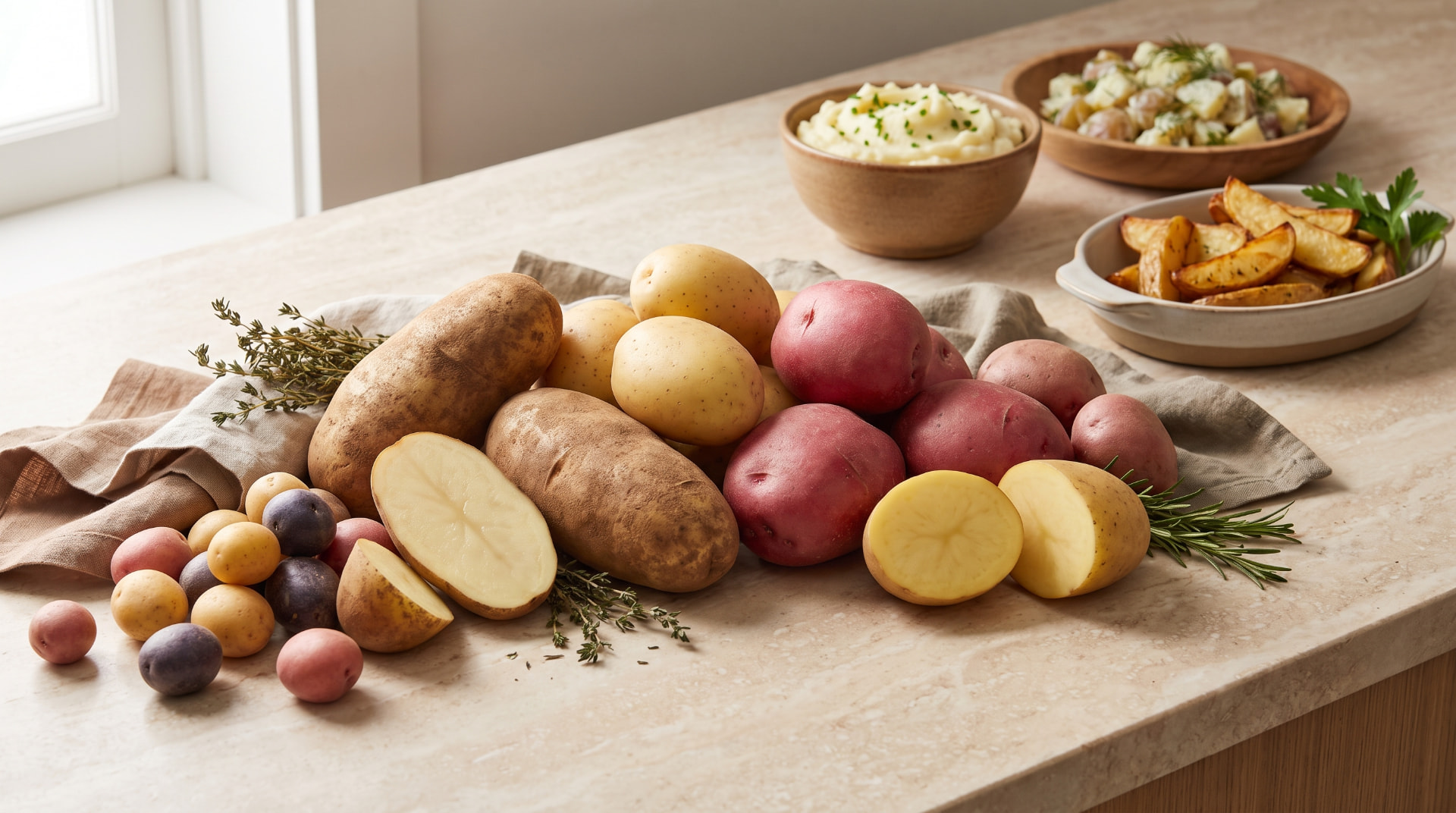
Not all potatoes are created equal. Grab the wrong one and your mashed potatoes turn out gluey, your roasted potatoes fall apart, or your potato salad turns to mush. The good news? Once you know which potato does what, you'll never second-guess it again.
Here's a simple breakdown of the best potato for every dish.
The Main Types of Potatoes
Before we get into specific dishes, here's what you need to know about potato categories:
Starchy potatoes (like Russets) are high in starch and low in moisture. They become fluffy and light when cooked, which makes them perfect for mashing, baking, and frying.
Waxy potatoes (like Red and Fingerling) are low in starch and high in moisture. They hold their shape well when cooked, which makes them perfect for salads, soups, and roasting.
All-purpose potatoes (like Yukon Gold) fall in the middle, versatile enough for almost any dish.
🥔 Mashed Potatoes → Russet or Yukon Gold
Best choice: Russet Russets are the gold standard for mashed potatoes. Their high starch content breaks down easily and produces a fluffy, smooth result that absorbs butter and cream beautifully.
Second choice: Yukon Gold Yukon Golds produce a naturally buttery, creamy mash with a slightly richer flavor. They don't get quite as fluffy as Russets, but many cooks prefer the taste.
Avoid: Red potatoes and waxy varieties. They produce a dense, gluey mash.
🧮 Know exactly how many potatoes you need: Use our Mashed Potato Calculator to calculate pounds, butter, milk, and salt for any number of people.
🍟 Roasted Potatoes → Yukon Gold or Red
Best choice: Yukon Gold Yukon Golds roast beautifully — crispy on the outside, creamy on the inside. Their natural buttery flavor means you need less added fat to get great results.
Second choice: Red potatoes Red potatoes hold their shape perfectly when roasted and have a slightly earthy flavor. Great for herb-roasted potatoes and sheet pan dinners.
Avoid: Russets. They can dry out and fall apart when roasted at high heat.
🥗 Potato Salad → Red or Fingerling
Best choice: Red potatoes Red potatoes are the top choice for potato salad because they hold their shape after boiling and don't absorb too much dressing. They stay firm and have a slightly waxy texture that works perfectly in a cold salad.
Second choice: Fingerling potatoes Fingerlings add visual interest and have a firm, creamy texture. Great for a more elevated potato salad.
Avoid: Russets. They absorb too much dressing and fall apart easily.
🍠 Baked Potato → Russet
Best choice: Russet, every time There's really only one answer here. Russets are large, have thick skin that crisps up perfectly, and their fluffy interior is exactly what you want when loading up with toppings.
Tip: Prick with a fork, rub with oil and salt, and bake at 425°F for 50-60 minutes for perfect results.
🍲 Soups and Stews → Yukon Gold
Best choice: Yukon Gold Yukon Golds hold their shape in soups and stews without turning to mush, but they also release just enough starch to naturally thicken the broth. Best of both worlds.
Second choice: Red potatoes Red potatoes also work well in soups. They stay firm and add a slightly different texture.
Avoid: Russets. They break down too quickly and can make your soup starchy and thick.
🧇 Hash Browns and Potato Pancakes → Russet
Best choice: Russet The high starch content in Russets is exactly what makes hash browns crispy and golden. Squeeze out as much moisture as possible before cooking for the best results.
Tip: Grate your Russets and soak in cold water for 10 minutes, then squeeze dry in a clean towel before cooking. This removes excess starch and gives you crispier hash browns.
🫙 Potato Skins → Russet
Best choice: Russet Russets are the only real choice for potato skins. Their thick skin holds up to scooping and crisps up perfectly in the oven. Load them up with cheese, bacon, and sour cream.
Quick Reference Guide
| Dish | Best Potato | Why |
|---|---|---|
| Mashed Potatoes | Russet or Yukon Gold | Fluffy and smooth |
| Roasted Potatoes | Yukon Gold or Red | Crispy outside, creamy inside |
| Potato Salad | Red or Fingerling | Holds shape, firm texture |
| Baked Potato | Russet | Fluffy interior, crispy skin |
| Soups and Stews | Yukon Gold | Holds shape, thickens broth |
| Hash Browns | Russet | High starch, crispy result |
| Potato Skins | Russet | Thick skin, holds up to toppings |
| Potato Pancakes | Russet | High starch, crispy and golden |
Looking to round out your potato night setup? Check out our Shop Kitchen Essentials page for the tools we recommend.
Frequently Asked Questions
What's the difference between a starchy and a waxy potato?
Starchy potatoes, like Russets, are low in moisture and break down easily when cooked, which makes them fluffy. Waxy potatoes, like Red or Fingerling, are higher in moisture and hold their shape, which makes them better for dishes where you want the potato to stay intact.
Can I substitute one type of potato for another?
In some dishes, yes. Yukon Gold and Russet can often stand in for each other since both fall on the starchy side. Swapping a waxy potato like Red for a starchy one like Russet in potato salad will change the texture, since the Russet will break down more.
Do I need to peel potatoes before cooking?
It depends on the dish and the potato. Thin-skinned potatoes like Yukon Gold and Red potatoes can usually be left unpeeled for extra texture and nutrients. Russets have a thicker skin, so many cooks peel them for mashed potatoes but leave the skin on for baked potatoes and hash browns.
What potato works best for meal prep?
Yukon Gold and Red potatoes hold up best when cooked ahead and reheated, since they resist getting mushy. Russets can dry out or lose texture after a few days in the fridge, so they are better cooked closer to when you plan to eat them.