Asparagus Guide: How to Cook, Store, and Freeze It
As an Amazon Associate, I earn from qualifying purchases.
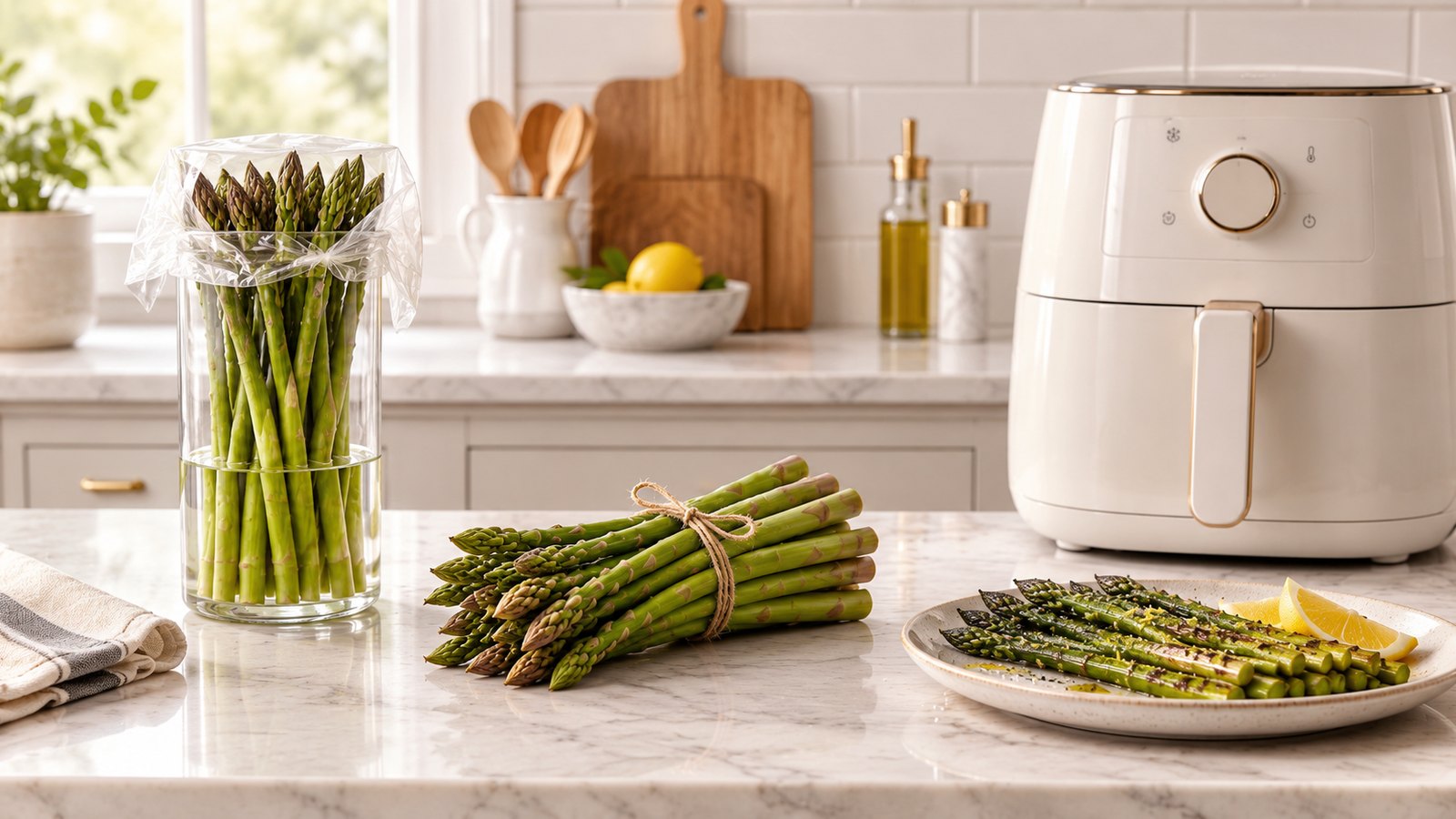
Asparagus shows up in the produce aisle looking simple enough, but it's easy to overcook it, let it go limp in the crisper, or freeze it improperly and end up with mush. Here are our tips on cooking asparagus, how to tell when it's past its prime, and how to freeze it so it actually holds up.
How to Cook Asparagus
Start by trimming the woody ends. The easiest way is to bend a spear near the bottom until it snaps naturally, right where the tough part ends and the tender part begins. Use that spear as a guide and trim the rest of the bunch with a knife.
Oven Roasted
Preheat the oven to 400 to 425°F. Toss the trimmed spears with olive oil, salt, and pepper, and spread them in a single layer on a sheet pan. Roast for 8 to 12 minutes, depending on thickness, until tender and lightly browned at the tips.
Air Fryer
Preheat the air fryer to 375 to 400°F. Toss the asparagus with oil and seasoning, then arrange it in a single layer in the basket so the spears aren't overlapping. Air fry for 5 to 10 minutes, shaking the basket halfway through. Thin spears will be done closer to 5 minutes, thicker ones closer to 10. If you're not sure your air fryer's actual temperature matches the dial, our Air Fryer Converter can help you translate oven-style settings so you don't end up over or undercooking it.
Stovetop (Boiled)
Bring a pot of salted water to a boil. Add the asparagus and cook for 3 to 4 minutes, just until bright green and fork tender. Drain immediately so it doesn't keep cooking in the residual heat.
Steamed
Set up a steamer basket over about an inch of simmering water. Steam the asparagus for 5 to 7 minutes, until tender but still a little firm at the center.
Grilled
Toss the trimmed spears with oil and seasoning, then grill over direct medium heat for 2 to 4 minutes per side, turning occasionally, until charred in spots and tender. If you don't have an outdoor grill, a grill pan on the stovetop works well indoors.
How to Tell If Asparagus Is Bad
Fresh asparagus should be firm, straight, and bright green with tightly closed tips. Here's what tells you it's on its way out:
- Slimy or mushy tips. This is usually the first sign of spoilage and means it's time to toss it.
- Limp, bendy stalks. Fresh asparagus snaps; asparagus that's going bad droops and bends without breaking.
- Wrinkled skin. A little wrinkling alone doesn't mean it's unsafe, just past peak texture. Wrinkled but still firm spears are fine cooked into soups or stir-fries where texture matters less.
- A sour or off smell. Fresh asparagus barely smells like anything. Any sour, ammonia-like, or otherwise unpleasant odor means it should be thrown out.
- Visible mold or dark, slimy spots. Discard the whole bunch if you see this, since mold can spread through the bundle even where it's not visible yet.
How to Store and Freeze Asparagus
In the Fridge
Two methods work well. The simplest is to wrap the ends in a damp paper towel and store the bunch in a loosely closed plastic bag in the crisper drawer, which typically keeps asparagus good for about 3 to 5 days.
For longer storage, treat it like a bouquet of flowers: trim the ends, stand the spears upright in a jar with an inch or two of water, and loosely cover the tops with a plastic bag before refrigerating. This method can stretch freshness closer to a week to 10 days, though times vary depending on how fresh it was when you bought it, so use your judgment alongside the signs above.
Freezing
Asparagus needs to be blanched before freezing. Skipping this step is a real quality risk, not just a preference, since it leads to mushy, faded spears after thawing. Here's how:
- Wash and trim the woody ends.
- Bring a large pot of water to a boil and prepare a bowl of ice water.
- Blanch the spears: 2 minutes for small/thin spears, 3 minutes for medium spears, and 4 minutes for large spears.
- Immediately transfer the spears to the ice bath for the same amount of time you blanched them, to stop the cooking.
- Drain and pat the spears completely dry.
- Freeze in a single layer on a baking sheet until solid, then transfer to a freezer bag or airtight container with as much air removed as possible.
Properly blanched and packaged asparagus keeps for about 8 to 12 months in the freezer. Cook it directly from frozen; there's no need to thaw first.
Frequently Asked Questions
Can you eat asparagus raw?
Yes. Raw asparagus is safe to eat as long as it's washed well. It's tougher and more fibrous than cooked asparagus, so it's best thinly sliced or shaved for salads rather than eaten in whole spears. Some people notice bloating or gas from raw asparagus due to its fiber content, so start with a small amount if you're not used to eating it uncooked. Cooking softens the texture and boosts antioxidant activity, though raw asparagus retains slightly more vitamin C.
What does asparagus taste like?
Fresh asparagus has a mild, slightly grassy, faintly sweet flavor with a subtle earthiness, similar in category to green beans or broccoli stems but more delicate. Thicker stalks can taste slightly more bitter, which is part of why roasting or grilling, which caramelizes the exterior, is such a popular way to prepare it.
Is asparagus good for you?
Yes. A 100-gram serving of raw asparagus has about 20 calories, 2 to 2.5 grams of protein, under a gram of fat, roughly 4 grams of carbohydrates, and about 2 grams of fiber. It's a particularly good source of vitamin K and folate.
Can dogs eat asparagus?
Plain, cooked asparagus is not toxic to dogs and can be given in small amounts as an occasional treat. It should be steamed or boiled with no seasoning, salt, oil, or butter, and cut into small pieces since raw or tough stalks can be a choking hazard. As with any new food, introduce it gradually and check with your vet if your dog has any health conditions. One important distinction: the asparagus fern, a common houseplant, is a completely different plant that is toxic to dogs and cats. It's unrelated to the vegetable and should never be confused with it.
Why Asparagus May Cause Your Pee to Smell
Asparagus contains a compound called asparagusic acid, which your body breaks down into sulfur-containing compounds after digestion. Those compounds are what create the distinctive smell. Interestingly, not everyone can detect it. Studies suggest only around 40 percent of people are able to smell it at all, which comes down to genetics rather than anything about how much asparagus you ate.
This post is for informational purposes only and isn't medical or veterinary advice. Always check with your doctor before making significant changes to your diet, and check with your vet before adding new foods to your dog's diet, especially if they have any existing health conditions.