Beets 101: How to Eat Them Raw, Roasted, or Pickled, Plus How to Store Them
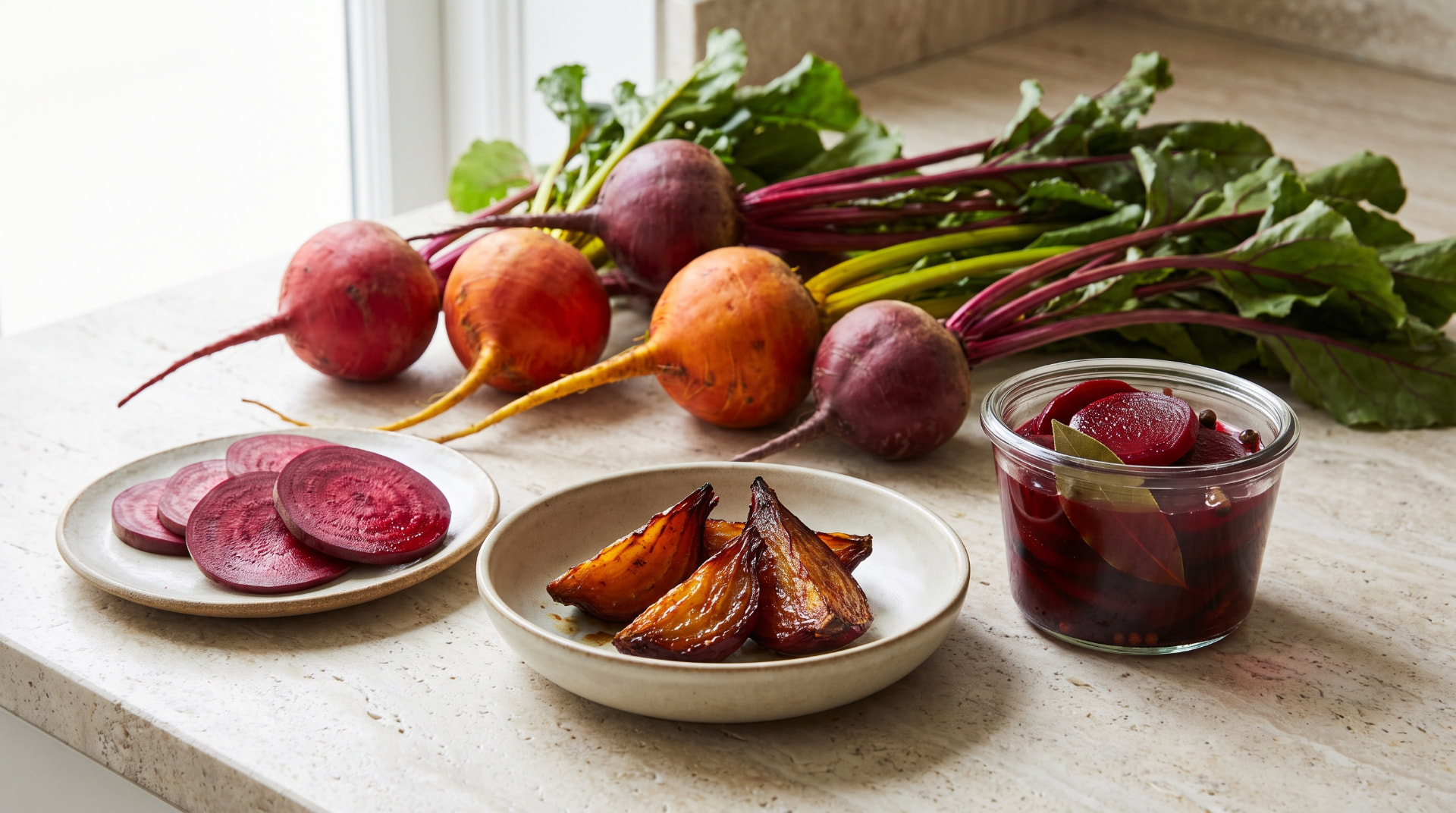
Beets have a reputation problem. Half the internet treats them like a health supplement, the other half only knows them from a can. Neither does justice to what's actually a versatile, easy-to-love root vegetable, whether you're eating it raw and crunchy, roasted until caramelized, or tucked into a pickle jar, and it's easy enough to keep on hand all winter once you know how to store it.
In this guide, you'll learn how to eat beets raw, roasted, or pickled, how to store and freeze them for later, and how eating beets can cause a few temporary, harmless biological changes worth knowing about ahead of time.
Can You Eat Beets Raw?
Yes, beets are perfectly safe to eat raw, and honestly underrated that way. Raw beets are firmer and more peppery-earthy than cooked ones, closer in texture to a raw carrot or jicama than anything you'd expect from something that turns soft and sweet once roasted.
The easiest ways to eat them raw:
- Shredded or spiralized into slaw or salads
- Shaved thin on a mandoline for a carpaccio-style starter
- Blended into juice or smoothies
- Finely diced and tossed with a citrus vinaigrette
Raw beets pair especially well with citrus, goat cheese, walnuts, and arugula. The acidity and sharpness balance out the earthiness nicely.
One practical heads-up: raw beets stain. Cutting boards, hands, light countertops, all of it. Nothing to do with safety, just kitchen prep reality. A quick rinse with lemon juice and salt helps lift beet stains off hands and boards.
How to Roast Beets
Roasting is the method most people default to, and for good reason: it concentrates the beet's natural sugars and mellows the earthiness into something closer to sweet and caramelized.
- Trim the tops, leaving about an inch of stem to reduce bleeding, and scrub the skins clean.
- Wrap individually in foil (or place in a covered dish with a splash of water) to steam-roast, which keeps them from drying out.
- Roast at 400°F. Small beets take about 45 minutes; medium beets run 55 to 60 minutes. They're done when a fork slides in with no resistance.
- Cool slightly, then peel. The skins slip off easily with your fingers or a paper towel once they've cooked, no peeler needed.
- Slice, cube, or leave whole depending on what you're making.
Roasted beets hold up well in the fridge for about a week, making them a good make-ahead component for salads and grain bowls throughout the week.
How to Pickle Beets
Pickled beets are the classic beet, tangy, slightly sweet, and a fixture on relish trays for a reason. There are two routes depending on how long you want them to last.
Quick refrigerator pickles (ready in a day, good for about a month): cover cooked, sliced beets in a simple brine of vinegar, sugar, salt, and water, then refrigerate. No canning equipment needed.
Shelf-stable canned pickled beets (for pantry storage): this requires a tested, vinegar-based recipe processed in a boiling water bath canner. The vinegar is what makes water bath canning safe here, not just flavor. That distinction matters more than it sounds like it should, which brings us to the next section.
Freezing and Storing Beets
This is where beets break the normal preservation rules, and it trips people up.
Freezing: unlike most vegetables, beets aren't quick-blanched before freezing. They're cooked all the way through first. Boil small beets for 25 to 30 minutes and medium beets for 45 to 50 minutes, until fork-tender, then cool, peel, and slice or cube before packing into freezer bags or containers with about a half-inch of headspace. Skipping straight to a quick blanch (the way you would with green beans or corn) won't cook them through, and the skins won't slip off cleanly.
Canning: plain, unpickled beets are a low-acid food, which means they cannot be safely canned in a boiling water bath. They require a pressure canner. Only pickled beets, acidified with vinegar in a tested recipe, are safe for water bath canning. If you're set up for pressure canning, plain canned beets are more versatile than pickled since they haven't been flavored with vinegar and sugar yet. Once you've got jars piling up from a bigger harvest, our Pantry Storage Calculator can help map out how much pantry space you'll actually need.
Fresh storage: trim the greens (which draw moisture from the root) and store beets loose in a perforated bag in the crisper drawer. They'll keep for two to three weeks this way.
Quick Reference: Which Method to Use
| Method | Best for | Shelf life |
|---|---|---|
| Raw | Salads, slaws, juicing | 2-3 weeks (whole, unpeeled) |
| Roasted | Side dishes, grain bowls, salads | ~1 week refrigerated |
| Quick pickled | Fast flavor, snacking | ~1 month refrigerated |
| Canned pickled | Pantry storage | ~1 year, unopened |
| Frozen | Longer-term storage | 8-12 months |
FAQ
Do you need to peel beets before cooking?
No. Beets are typically cooked with the skin on, whether roasting or boiling, because the skin slips off far more easily after cooking than before. Peeling raw beets is harder and messier than peeling cooked ones.
Can beets turn your urine or stool red?
Yes, in some people. Beets contain a pigment called betanin that isn't fully broken down during digestion in an estimated 10 to 14% of people, which can turn urine or stool pink to red. It's harmless, genetics- and stomach-acid-related, and resolves within a day or two of stopping beets.
How do you freeze beets from the garden?
Harvest and trim the tops, leaving about an inch of stem to reduce bleeding, then wash off any dirt. Cook the beets whole in boiling water until fork-tender, 25 to 30 minutes for small beets or 45 to 50 minutes for medium ones. Cool them, slip off the skins, and slice or cube before packing into freezer bags or containers with about a half-inch of headspace. This is the same process as freezing store-bought beets, the only difference is you're starting with a fresher harvest.
Can you freeze beets raw, without cooking them first?
It's not recommended. Beets are dense enough that they need to be fully cooked before freezing to preserve texture and food safety, unlike vegetables that can be frozen after a quick blanch.
How long do fresh beets last in the fridge?
About two to three weeks if you trim the greens first and store the roots loose in a perforated bag in the crisper drawer.