Which Vegetables Need Blanching Before Freezing (And Which Don't)
The Calculated Cook uses affiliate links. We may earn a small commission at no extra cost to you.
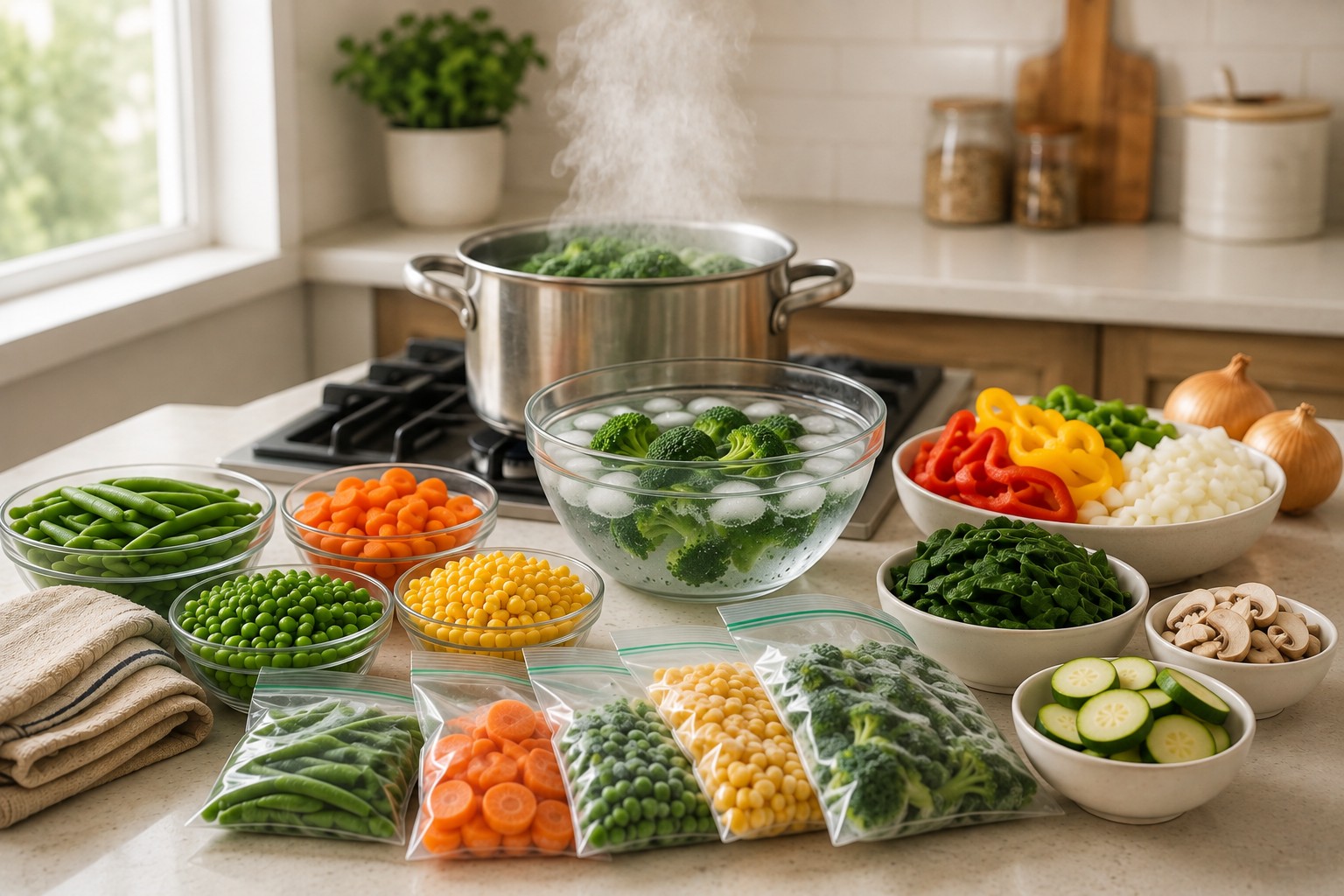
Somewhere between "I have too many zucchini" and "I froze them and now they're mush," there's a step almost everyone skips: figuring out which vegetables actually need to be blanched before they go in the freezer, and which ones are just fine going in raw.
The short version: most vegetables benefit from a quick dip in boiling water before freezing, because it stops the enzyme activity that causes off-flavors, faded color, and mushy texture over time. But a handful of vegetables skip that step entirely, and freezing them raw is both easier and correct. Here's the breakdown.
Quick-Answer Table: Blanch or Skip?
| Vegetable | Blanch Before Freezing? | Why |
|---|---|---|
| Green beans | Yes | Prevents toughening and off-flavor |
| Broccoli | Yes | Preserves color, texture, nutrients |
| Cauliflower | Yes | Same enzyme-related breakdown as broccoli |
| Carrots | Yes | Stops enzyme activity that causes bitterness |
| Brussels sprouts | Yes | Prevents strong, sulfurous off-flavors |
| Peas | Yes | Preserves sweetness and color |
| Corn (on the cob or cut) | Yes | Cob needs longer blanch time than cut kernels |
| Mushrooms | Yes | Freezing raw turns them watery and rubbery; steam or water blanch, or sauté in butter, before freezing |
| Onions | No | Freeze raw, chopped or sliced |
| Bell peppers, hot peppers | No | Freeze raw, sliced or diced |
| Garlic | No | Freeze raw, minced or whole cloves |
| Ginger, turmeric root | No | Freeze raw, whole or grated |
| Fresh herbs (basil, dill, chives, parsley) | No | Freeze raw; texture softens on thaw but flavor holds |
| Tomatoes (for cooking) | No | Freeze raw, whole or chopped; skins slip off after thawing |
| Leafy greens (spinach, kale, chard) | Optional | Not required, but blanched greens take up less freezer space and hold quality slightly longer |
Tomatoes Are a Special Case
This is where most guides get muddy: tomatoes show up on lists for blanching, but that's almost always about peeling, not freezing.
If you're freezing tomatoes to use later in sauces, soups, or stews, skip the blanching step entirely. Just wash them, freeze them whole or chopped on a tray, then bag them once solid. The skins will slip off easily once thawed, so there's no need to peel first.
Blanching tomatoes only matters if you want the skins off right now, for something like canning or a recipe that calls for peeled tomatoes. That's a 30-second dip in boiling water followed by an ice bath, and it's a peeling technique, not a freezing one. Two different jobs, same word.
Don't Freeze These Raw at All
A few vegetables have too much water content to freeze well raw, blanched or not. Cucumbers, lettuce, radishes, and summer squash all turn watery and mushy once thawed, regardless of prep. If you want to preserve them, cooking them into something first (a soup, a sauce, a relish) works better than trying to freeze them as-is.
Leafy Greens: Your Call
Spinach, kale, chard, and collards are the rare middle-ground case. Blanching isn't required for food safety or to prevent spoilage the way it is for green beans or broccoli, but it does two useful things: it wilts the greens down so they take up a fraction of the freezer space, and it helps them hold their color and texture a bit longer in storage. If freezer space isn't a concern, freezing them raw is perfectly fine.
How Long Do Blanched Vegetables Last in the Freezer?
Properly blanched and frozen vegetables hold their quality for 8 to 12 months at 0°F. Unblanched vegetables that should have been blanched tend to noticeably decline within 1 to 2 months, which is really the whole argument for blanching in the first place. If a big harvest or bulk grocery haul has you rethinking pantry space too, the Pantry Storage Calculator can help you sort out what needs to move to the freezer versus what can stay shelf-stable.
FAQ
Do you need to blanch tomatoes before freezing?
No. Tomatoes can be frozen raw, whole or chopped, for later use in cooking. Blanching tomatoes is only necessary if you want to peel them before freezing or canning, not for the freezing process itself.
What vegetables can you freeze without blanching?
Onions, bell and hot peppers, garlic, ginger, turmeric root, most fresh herbs, and tomatoes intended for cooking can all be frozen raw without blanching first.
Why do vegetables need to be blanched before freezing?
Blanching stops enzyme activity that continues even in the freezer, which otherwise causes vegetables to lose color, flavor, and texture over time. It also helps vegetables retain more of their nutrients during long-term storage.
Can you freeze vegetables without blanching them first?
Yes, but for vegetables that typically need blanching, like green beans, broccoli, and corn, skipping the step means they'll degrade in quality within a month or two, even though they'll still be safe to eat.
What vegetables should never be frozen raw?
Cucumbers, lettuce, radishes, and summer squash have too much water content to freeze well in any form, blanched or not. They turn watery and mushy once thawed.