The Curious Case of Celery: Storage, Uses, and Edible Leaves
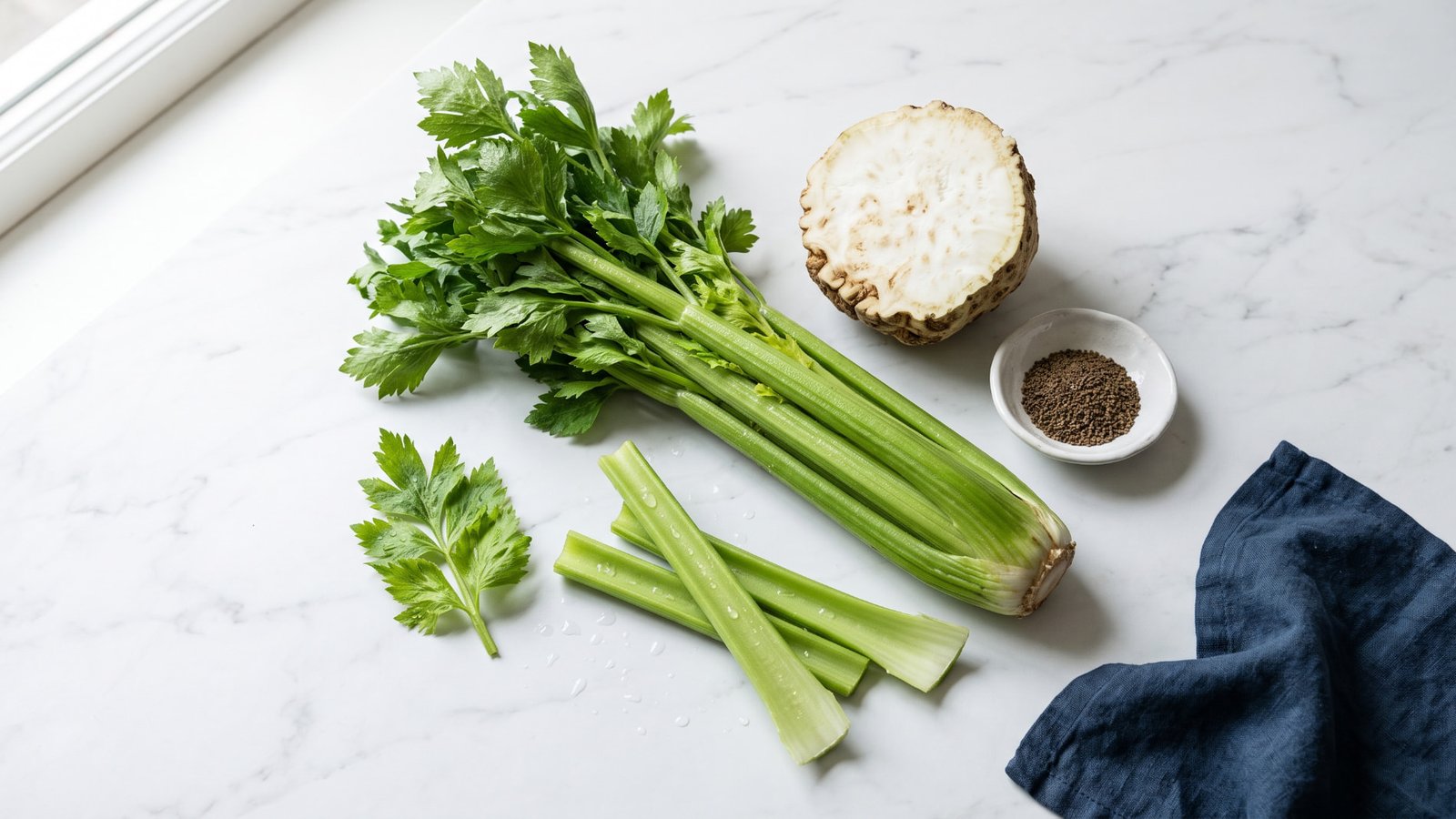
Celery shows up in more recipes than almost any other vegetable, but it's easy to misuse. People wonder how long a bunch lasts, whether the leaves are edible, and what the difference is between celery seed, celery salt, and celery root. This guide covers all of it.
What Is Celery?
Celery (Apium graveolens) is a crisp, mild, slightly peppery vegetable grown for its long, fibrous stalks. It's related to parsley, carrots, and parsnips, and it's one of the most common aromatic vegetables in kitchens around the world.
A few terms are worth knowing:
- Bunch (or head): the whole celery plant, with stalks joined at the base
- Rib (or stalk): a single stalk pulled from the bunch
- Leaves: the feathery tops, which are edible and more flavorful than the stalks
In Spanish, celery is apio.
How to Store Celery
Keep the stalks and leaves attached until you're ready to use them, and wash the celery right before you cook with it. Store the bunch in the refrigerator's crisper drawer, wrapped loosely or in a produce bag. Many cooks also wrap the whole bunch in foil, which is a popular tip. Keep celery away from ethylene-producing fruits like apples and bananas, which can speed up spoilage.
Whole celery generally stays fresh for 1 to 2 weeks in the fridge.
Limp celery isn't necessarily bad. Trim the ends and soak the stalks in ice water for 10 to 20 minutes, and they'll usually crisp back up.
Signs celery has gone bad: slimy or soft stalks, dark or brown spots, and an off smell. If it's only bendy, try the ice water first.
Can You Freeze Celery?
Yes, but the texture changes. Frozen celery loses its crunch, so it works best in cooked dishes like soups, stews, and stocks, not in salads or for snacking.
How to freeze celery:
- Wash the celery and trim the ends.
- Cut the stalks into 1-inch pieces.
- Blanch in boiling water for 3 minutes.
- Cool promptly in ice water and drain well.
- Pat dry, then pack into freezer bags with as little air as possible.
For loose, easy-to-portion pieces, spread the dry celery in a single layer on a lined baking sheet, freeze until solid, then transfer to bags.
For best quality, use frozen celery within a year. It will still be fine to cook with after that, but it can get softer and duller.
Don't Throw Away the Leaves
Celery leaves are edible, and they're one of the most overlooked parts of the plant. They taste like a stronger, slightly anise-like version of the stalks, and they're tender enough to eat raw.
Ways to use them:
- Chop them like an herb and use them in place of parsley
- Toss them into salads or use them as a garnish
- Add them to soups, stocks, stuffing, and sauces
- Stir them into egg dishes, grain bowls, or pasta
Store the leaves separately from the stalks if you won't use them right away. You can also chop them, freeze them in a thin layer on a tray, and keep them in a bag for adding flavor to soups and stews.
Celery vs. Celeriac (Celery Root)
Celery and celeriac are the same species, but they're grown for different parts. Celery is grown for its stalks, and celeriac is grown for its large, knobby bulb. Most people call the bulb celery root, even though it's technically a swollen stem.
Celeriac tastes like celery with a more earthy, nutty edge, and its texture is closer to a potato or turnip. It can be eaten raw, as in classic rémoulade, or roasted, mashed, pureed, or added to soups. It's also good diced into a mirepoix.
Celeriac keeps far longer than celery. Store it whole, unwashed, and unpeeled in the crisper drawer, where it should last a month or two.
Celery Seed, Celery Salt, and Celery Powder
These three products all come from celery, but they aren't interchangeable.
- Celery seed is the dried seed of the plant, sold whole or ground. It has a concentrated, slightly bitter celery flavor and is used in pickling, dressings, rubs, and stuffing.
- Celery salt is ground celery seed mixed with salt. It can also be made from a root extract or dried leaves. Because it contains salt, adjust the other salt in your recipe when you use it.
- Celery powder is dried, ground celery used as a seasoning and flavoring. You may also see cultured celery powder on the labels of packaged foods. It's a celery-derived ingredient used by manufacturers rather than something most home cooks use.
If a recipe calls for celery seed and you only have celery salt, use less salt elsewhere and start with a small amount.
How Celery Is Used in Cooking
Celery is a flavor base more often than it's the star of a dish.
- Mirepoix: celery, onion, and carrot, the classic French base for soups, stocks, and sauces
- The "holy trinity": celery, onion, and bell pepper, the base of Louisiana Creole and Cajun cooking
- Raw: for crunch in salads and on snack and veggie platters
- Garnish: the leafy hearts and tops add color and fresh flavor
- Stock: trimmings and leaves make a good addition to homemade stock
Planning a big pot of soup? The Soup Bar Calculator can help you work out how much to make for your crowd.
Can Dogs and Cats Eat Celery?
Dogs: Yes, in moderation. Celery is not toxic to dogs, and it works as a low-calorie treat. Cut it into small, bite-size pieces, since long, stringy stalks can be a choking hazard, especially for small dogs. Serve it plain, without salt, seasonings, or dips, and treat it as an occasional snack, not a meal replacement.
Cats: A small piece is generally fine. Celery isn't considered toxic to cats, but cats are obligate carnivores and don't need vegetables, so it's an occasional nibble at most. Too much can cause an upset stomach. Some cats are curious about the leaves, but the stalk is the safer choice.
Skip celery seed and celery salt for both, since they're concentrated and, in the case of celery salt, high in sodium. If your pet has a health condition or you're unsure, check with your veterinarian first.
Frequently Asked Questions
How long does celery last in the fridge?
Whole celery usually lasts 1 to 2 weeks when stored in the crisper drawer.
Can you freeze celery?
Yes. Blanch it for 3 minutes first. It's best used in cooked dishes because it loses its crunch.
Can you eat celery leaves?
Yes. They're edible and flavorful, and they work like an herb.
Is celery the same as celery root?
They're the same species but grown for different parts. Celery is grown for its stalks, and celery root (celeriac) is grown for its bulb.
What's the difference between celery seed and celery salt?
Celery seed is the plain dried seed. Celery salt is ground celery seed mixed with salt.
What does "apio" mean?
It's the Spanish word for celery.