Cilantro: Love It or Hate It, Here's What You Need to Know
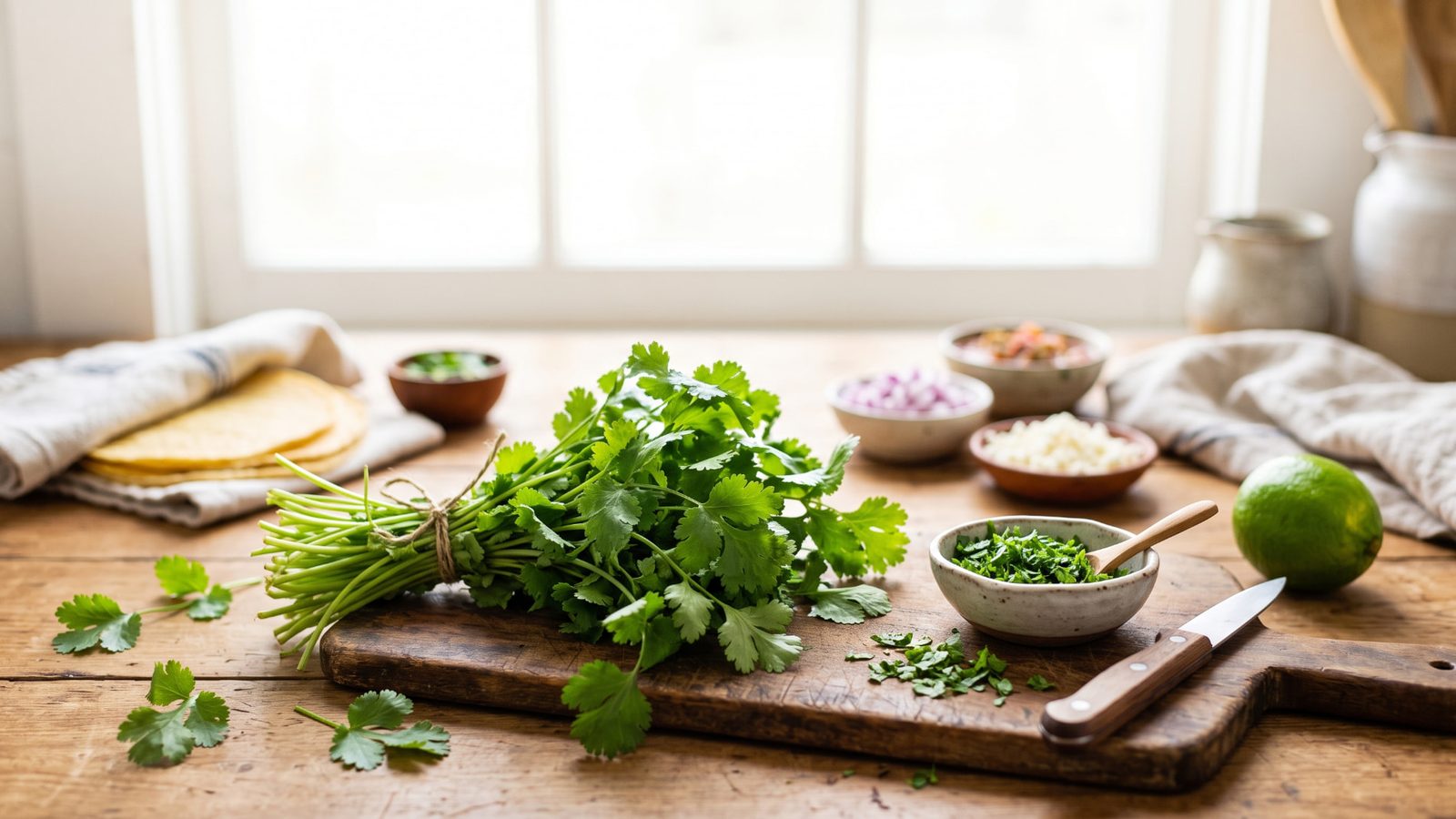
Cilantro is the only herb that can start an argument at the dinner table. Half the room swears it makes the salsa, and the other half swears it came off the soap dish by the sink. As it turns out, both sides are valid. This guide covers what cilantro is, why it has so many names, why it tastes different to different people, and how to wash, store, freeze, and substitute it.
What Is Cilantro?
Cilantro is the fresh leaves and tender stems of Coriandrum sativum, an annual herb in the same family as parsley, carrots, and celery. It has a bright, citrusy, slightly peppery flavor, and it's best added at the end of cooking or served raw, since heat fades it quickly.
The same plant also produces the seeds sold as coriander, which taste warm and nutty and are nothing like the leaves. That's where the naming gets confusing.
Cilantro vs. Coriander
They're the same plant. The difference is mostly about language and which part of the plant you are referring to.
- In the U.S. and Canada, "cilantro" means the fresh leaves and stems, and "coriander" means the dried seeds.
- In the UK, Australia, India, and most of the English-speaking world, "coriander" means both the fresh leaves and the seeds, so recipes may say "fresh coriander" or "coriander seeds"
- "Cilantro" is the Spanish word for coriander.
If you're following a British or Australian recipe and it calls for coriander in a garnish or salsa, it means the fresh leaves. If it's in a spice rub or curry base, it usually means the seeds. Don't swap one for the other, because the seeds and leaves taste completely different.
Cilantro vs. Culantro
The names are one letter apart, but they're two different plants.
Culantro (Eryngium foetidum) is a tropical herb with long, saw-toothed leaves that grow in a low rosette. Cilantro has delicate, scalloped leaves on thin stems. The two are in the same plant family but different subfamilies, and researchers have described their similar smell as an example of convergent evolution: unrelated plants that ended up with many of the same aroma compounds.
Culantro is much stronger and more pungent than cilantro. Because its flavor holds up to heat, it's used in stews, marinades, and other long-cooked dishes, while cilantro is usually added at the end. It's popular in Latin American and Caribbean cooking, and you may see it sold as recao.
You can sometimes swap one for the other, but use less culantro than you would cilantro, since it's strong enough to take over a dish. Whether it triggers the soap reaction in people who dislike cilantro isn't settled, so it may not bother everyone the same way.
Why Does Cilantro Taste Like Soap To Some People?
For some people, cilantro really does taste or smell like soap, and part of the reason is genetic.
Cilantro's leaves contain aldehydes, the same type of aroma compound found in many soaps and lotions. A 2012 study in the journal Flavour asked over 14,000 people of European ancestry whether cilantro tasted soapy, and found a genetic variant near a cluster of smell-receptor genes. One of them, OR6A2, binds strongly to cilantro's aldehydes and is the leading suspect.
A few important caveats:
- It's not a single "cilantro gene." Several variants may be involved, and researchers describe OR6A2 as a likely candidate, not a proven cause.
- The reaction seems to be driven mostly by smell, not taste.
- Dislike rates vary by background. People of European or East Asian descent report disliking cilantro more often, while rates are lower among people of Middle Eastern, Hispanic, and South Asian descent.
If you're one of the people who can't stand it, you're not being picky. It really does smell different to you.
Don't Toss the Stems and Roots
The stems carry plenty of flavor. Chop them into salsas, sauces, and curries, or simmer them in broth and coconut-milk-based dishes.
The roots are prized in Thai cooking, where they're ground into curry pastes and added to soups. U.S. grocery stores usually cut them off, so look for bunches with the roots still attached at Asian and Latin markets. Wash them very well and trim them with a little bit of stem above the root. If you can't find roots, chopped stems are a reasonable stand-in.
How to Wash Cilantro
Wash cilantro right before you use it, not when you bring it home. Swish the bunch in a bowl of cold water to loosen dirt and grit, lift it out, and dry it thoroughly with a towel or salad spinner. Wet leaves turn slimy and spoil faster.
How to Store Cilantro
In the fridge: Cilantro wilts fast if you just toss it in the crisper. Test kitchens and home experiments have gotten much better results with this method:
- Trim the bottoms of the stems.
- Stand the bunch in a jar with an inch or so of water.
- Loosely cover the leaves with a plastic bag.
- Keep it in the fridge and change the water if it gets cloudy.
Bunches stored this way have lasted two weeks or more, and in some tests much longer. Cilantro stored in its bag from the store, with no extra care, usually lasts only a few days to about a week. If your bunch came with roots attached, keeping the roots in water or wrapped in a damp cloth helps it last longer.
In the freezer: Freezing works best when the cilantro is fresh. Wash and dry it well, chop it, and pack it in an airtight container or freezer bag. You can also freeze it in ice cube trays covered with water or oil. Frozen cilantro loses its crisp texture, so it's best in soups, stews, curries, and sauces, not as a fresh garnish.
Plan to use frozen cilantro within six months for the best flavor and color.
Cilantro Substitutes
If you're out of cilantro or can't stand it, these are the easiest swaps:
- Parsley: The closest and most popular substitute. It's less citrusy, so add a squeeze of lime or lemon juice. Use it 1:1.
- Thai basil: Spicier and more aromatic, and it holds up to heat better than cilantro. Use it 1:1, especially in Asian-style dishes.
- Mint: Best raw. It's sweeter and stronger, so start with less.
- Dill: A fresh, citrusy herb that works in many of the same dishes.
- Lime or lemon juice: Not an herb, but a squeeze mimics cilantro's brightness.
For cooked dishes where you want a hint of cilantro's flavor, a little ground coriander seed can help, but it tastes warmer and nuttier, so it's a different flavor, not a true swap.
If you're scaling a recipe up or down and aren't sure how much herb to swap in, the Recipe Scaler can do the math for you.
Frequently Asked Questions
Is cilantro the same as coriander?
Yes, it's the same plant. In the U.S., cilantro is the leaves and coriander is the seeds. Most other countries call both coriander.
Is culantro the same as cilantro?
No. Culantro is a different plant with a stronger flavor, so use less of it if you swap it in for cilantro.
Can you eat cilantro stems?
Yes. The stems are flavorful and fine to use, so chop them in with the leaves.
Can you freeze cilantro?
Yes. It's best in cooked dishes, since frozen cilantro loses its crispness.
Can cats eat cilantro?
Yes, in small amounts. The ASPCA lists cilantro (also called coriander or Chinese parsley) as non-toxic to cats. A leaf or two is fine, but it isn't a meal, and large amounts can upset a cat's stomach. Don't share cilantro from a finished dish or sauce, because it may be mixed with garlic, onion, or salt, which are harmful to pets. If your cat seems unwell after eating something, call your vet.
Can dogs eat cilantro?
Yes, in small amounts. The ASPCA lists cilantro as non-toxic to dogs. Stick to plain fresh cilantro, skip cilantro from sauces and seasoned dishes, and call your vet if your dog seems unwell after eating something.