Dutch Cocoa Powder Explained: Natural vs. Alkalized
The Calculated Cook uses affiliate links. We may earn a small commission at no extra cost to you.
If you've ever stood in the baking aisle staring at two cans of cocoa powder wondering which one your recipe actually needs, you're not alone. Natural and Dutch-process cocoa powder look almost identical on the shelf, but they behave very differently once they hit your mixing bowl. Here's what sets them apart and when it actually matters.
What Is Natural Cocoa Powder?
Natural cocoa powder is the simpler of the two. Cacao beans are roasted, ground, and pressed to remove most of the fat (cocoa butter), then pulverized into a fine powder. Nothing else is done to it.
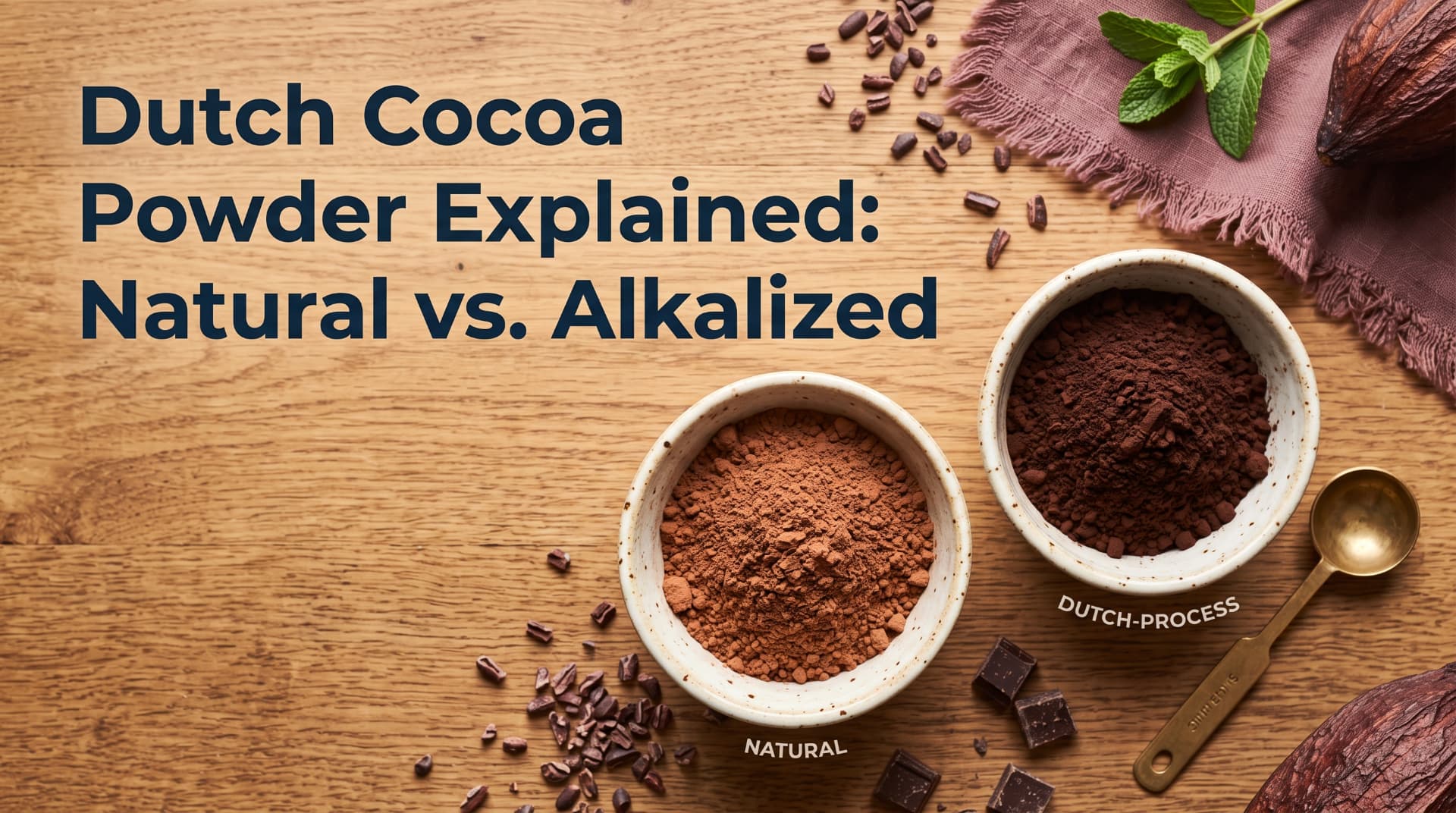
Because it hasn't been treated, natural cocoa powder is acidic and has a lighter, reddish-brown color. That acidity gives it a sharper, more intense chocolate flavor, which is why a lot of classic American recipes (think old-fashioned chocolate cake) call for it by name.
What Is Dutch-Process Cocoa Powder?
Dutch-process cocoa powder starts out the same way, but it goes through an extra step: it's washed with an alkalizing solution that neutralizes the acidity. This process was developed by a Dutch chocolate maker in the 1800s, which is where the name comes from.
That treatment mellows out the sharp flavor and gives the powder a darker color, ranging from reddish-brown to almost black depending on the brand. Black cocoa, the deeply dark powder used in Oreo cookies, is an extra-processed version of Dutch-process cocoa.
Dutch-process cocoa also dissolves more easily in liquid, which is part of why it's a popular choice for hot chocolate and drink mixes.
Taste and Color Differences
| Natural Cocoa | Dutch-Process Cocoa | |
|---|---|---|
| Flavor | Sharp, intense chocolate | Smoother, milder |
| Color | Lighter, reddish-brown | Darker, can be almost black |
| Acidity | Acidic | Neutral |
| Dissolves in liquid | Slower | Easier |
Neither one is "better." It really comes down to what a recipe is built around and what flavor profile you're going for.
Can You Substitute One for the Other?
This is where it actually matters, and it depends on what else is in your recipe.
Safe to swap: If the cocoa powder is just there for flavor or color and there's no baking soda or baking powder doing heavy lifting, you can swap freely. This includes things like:
- Hot chocolate or cocoa mixes
- Frosting and ganache
- Dusting on top of desserts
- Sauces like mole
Don't swap: Recipes that rely on baking soda for rise are counting on the acidity in natural cocoa powder to react with it. Swap in Dutch-process (which is neutral) and your baked good may not rise properly, and the texture can come out dense or gummy. The reverse is also true: using natural cocoa in a recipe built around baking powder can throw off the balance and leave a slightly bitter, overly acidic taste.
If a recipe doesn't specify which type to use, natural cocoa powder is usually the safer default, since most recipes are written with it in mind.
Popular Dutch-Process Cocoa Powder Brands
If you're ready to try Dutch-process cocoa, a few well-regarded options to look for:
- Guittard Cocoa Powder Unsweetened, 8 oz
- Valrhona Dark French Cocoa Powder
- King Arthur Double Dark Cocoa Powder Blend, Perfect for Baking, 14 oz
Frequently Asked Questions
Is Dutch-process cocoa the same as alkalized cocoa?
Yes. "Dutch-process" and "alkalized" both refer to the same treatment, where natural cocoa powder is washed with an alkalizing solution to neutralize its acidity.
Is one type of cocoa powder healthier than the other?
Not in any meaningful way. Both are made from the same cacao beans, and the differences come down to processing, not nutrition.
What is black cocoa, and is it the same as Dutch-process?
Black cocoa is a heavily Dutch-processed cocoa powder. It goes through additional alkalizing treatment, which strips out most of the chocolate flavor and leaves behind that deep black color you see in Oreo cookies.
Can I use Dutch-process cocoa in a recipe that calls for regular cocoa powder?
It depends on what leavening the recipe uses. If it relies on baking soda, stick with natural cocoa powder for the best rise and texture. If there's no baking soda involved, Dutch-process will work fine.
Is Hershey's cocoa powder Dutch-process or natural?
Hershey's classic cocoa powder is natural. Their Special Dark cocoa is a blend that includes Dutch-process cocoa, giving it a darker color and milder flavor.