Eggplant 101: How Eggplant Varieties Taste, Plus Picking, Storing & Freezing
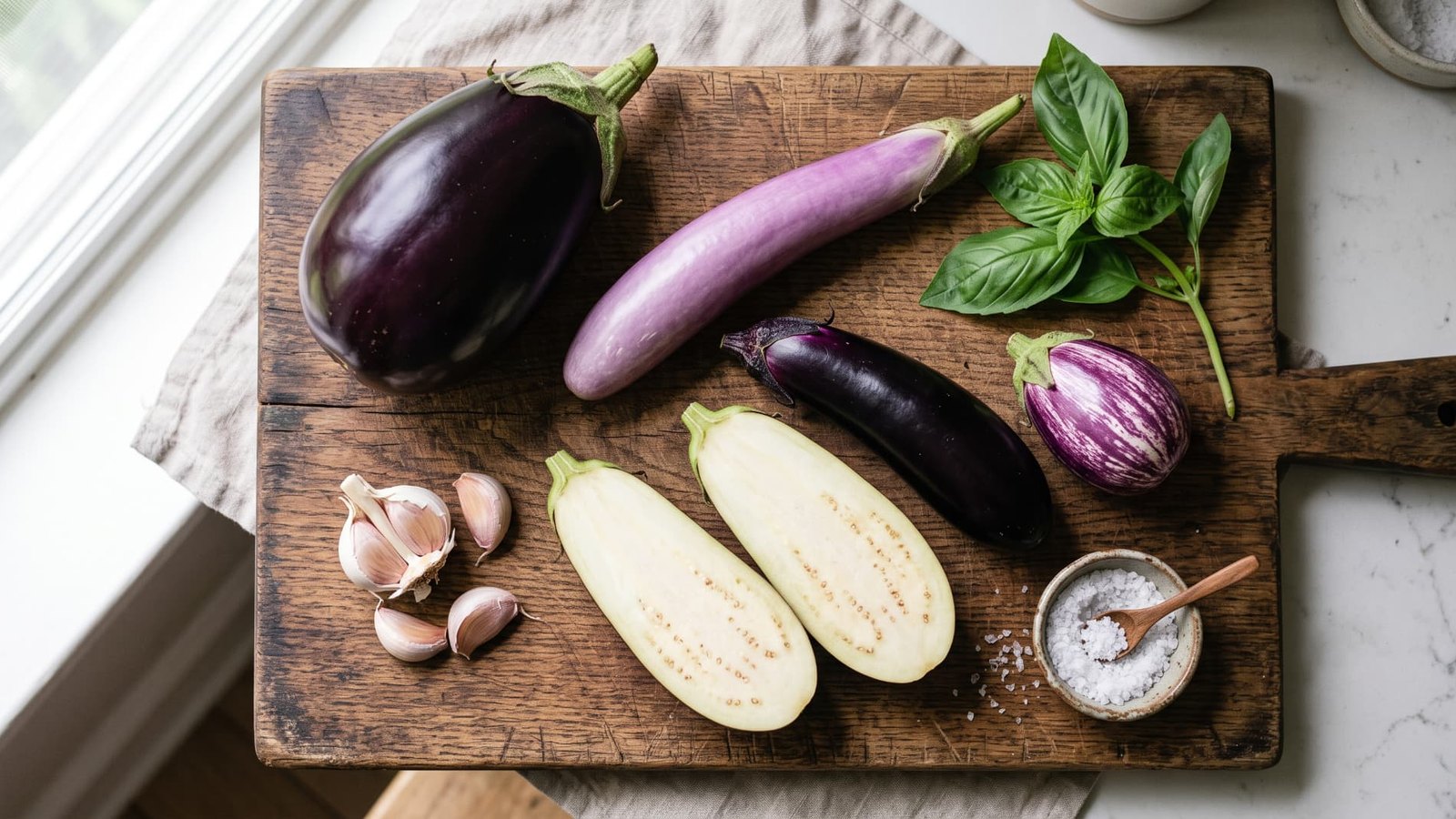
Eggplant often gets a bad rap. Wait too long to pick or eat it and it turns bitter. Store it improperly and it turns brown and spongy in two days. Try to freeze it the way you'd freeze zucchini, and you end up with something closer to a wet paper towel. None of that is the eggplant's fault. It comes with almost no instructions.
Learn when to pick it, how to store it, whether freezing is even worth it, if raw eggplant is safe to eat, and what each variety taste like.
When to Pick Eggplant (Season and Ripeness)
Eggplant season runs mid-summer through fall, roughly July into October, with most varieties ready to harvest 60 to 85 days after transplanting. If you're buying instead of growing, eggplant is generally available in stores year-round, but quality peaks in late summer.
If you're growing your own, timing the harvest matters more than most vegetables. The two easiest tests:
- Press it. Gently press the skin with your thumb. If it springs back, it's ripe. If your thumb leaves a dent, it's overripe. If there's no give at all, give it a few more days.
- Look at the skin. Ripe eggplant has smooth, glossy, deep-colored skin. Once the skin turns dull or matte, the eggplant has gone past its best point and will taste more bitter.
One thing worth knowing: eggplant does not keep ripening after it's picked. Unlike a tomato or a peach left on the counter, an eggplant you harvest underripe will stay underripe. So it's better to pick it slightly early than to wait too long, since overripe eggplant develops large, hard seeds and a noticeably more bitter flavor.
How to Store Eggplant For Optimal Freshness
This is the part where eggplant breaks the normal produce rules. Most vegetables go straight in the fridge. Eggplant does better in a cool spot, ideally between 50 and 55°F, out of direct sunlight. That's cooler than a typical kitchen counter (usually closer to 68-70°F) and warmer than a standard fridge, so a cellar, an unheated pantry, or the coolest corner of your kitchen works better than either extreme.
Here's why: eggplant is sensitive to cold. Temperatures below 41°F for any real length of time cause chilling injury, which shows up as pitting, browning, and a mushy texture. That means a standard refrigerator (usually set to 35 to 38°F) is actually harder on eggplant than a cool room is, but a warm counter isn't ideal either, since eggplant left too warm will spoil faster.
A few storage notes that make a real difference:
- Keep it dry. Moisture is what speeds up decay, so don't wash eggplant until you're ready to use it, and skip sealing it in a plastic bag, which traps humidity.
- Keep it away from ethylene producers. Bananas, tomatoes, and melons all release ethylene gas, which will cause eggplant to over-ripen and spoil faster. Store it separately.
- Use it within a few days. Eggplant is one of the more perishable vegetables in the kitchen, even in ideal conditions.
- If you must refrigerate it, limit it to about three days, and use it soon after taking it out. Wrapping it loosely (paper, not plastic) helps.
Can You Freeze Eggplant? (Yes, Here's How)
Eggplant freezes fine. Eggplant frozen wrong turns into a rubbery, watery mess, which causes a lot of frustration.
The reliable method: blanch first.
- Wash, peel (optional), and slice eggplant into roughly ⅓-inch pieces.
- Blanch in boiling water for 4 minutes. Adding ½ cup of lemon juice per gallon of water helps prevent browning.
- Cool immediately in ice water, then drain thoroughly.
- Package in freezer bags or containers, pressing out as much air as possible.
- Freeze. Blanched eggplant keeps well for several months.
Skipping the blanch is the single most common freezing mistake. Raw, unblanched eggplant slices frozen straight from the fridge tend to come out mushy, watery, and discolored once thawed, since the enzymes that cause spoilage are still active.
The workaround: freeze it already cooked. If you know how you're planning to use it, cook it first, then freeze. Roasted eggplant rounds, breaded and fried slices, or a finished eggplant dish all freeze well:
- Roast or fry the eggplant fully.
- Let it cool completely.
- Flash-freeze in a single layer on a sheet pan for a couple of hours so pieces don't clump.
- Transfer to freezer bags once solid.
Breaded, fried eggplant frozen this way can even go straight from freezer to oven, no thawing required.
One thing eggplant does not do well: canning. Home canning isn't recommended for plain eggplant, so freezing is really your only long-term preservation option.
Can You Eat Eggplant Raw?
Yes. Raw eggplant is not dangerous. It contains a small amount of solanine, the same family of compound found in green potatoes, but at levels far too low to be a real concern for a typical serving. Estimates on exactly how much raw eggplant it would take to reach a harmful dose vary by source, but they all land in the same general place: you'd need to eat dozens of whole raw eggplants in one sitting, which nobody is doing by accident.
That said, there are two honest reasons people usually cook it instead:
- Texture. Raw eggplant is spongy and a bit fibrous. Cooking is what turns it creamy.
- Bitterness. Raw eggplant, especially older or larger specimens, can taste noticeably bitter. Salting sliced eggplant and letting it sit for 15 to 30 minutes before rinsing draws out both moisture and much of that bitterness, whether you're planning to cook it or eat it raw.
If you do want to eat it raw, young, small eggplants (Thai and Japanese varieties especially) tend to be milder and less bitter than a large, mature globe eggplant. As with any raw nightshade, pregnant women, young children, and anyone with a compromised immune system are often advised to be more cautious, though this is a general precaution rather than an eggplant-specific risk.
What Does Eggplant Taste Like? (And Which Variety to Buy)
On its own, raw eggplant doesn't taste like much. It's mildly bitter, slightly vegetal, and mostly known for its texture rather than its flavor. Cooking is what changes everything: heat breaks down the flesh into something creamy and rich, and because eggplant is essentially a sponge, it takes on whatever it's cooked with, especially oil, garlic, and acid.
Not all eggplants are the same, though. Here's how the common varieties actually differ, based on side-by-side taste testing:
| Variety | Appearance | Texture | Flavor | Best For |
|---|---|---|---|---|
| Globe | Large, deep purple | Tender, watery | Mild | Most versatile; the only type that works well in every cooking method, including eggplant parmesan |
| Italian | Smaller than globe | Moderately moist, seedy | Slightly spicy | Sautéing, braising, stir-frying |
| Chinese | Long, light lavender-purple | Dry, firm, fewer seeds | Sweet | Stir-fries, dishes where it needs to hold its shape |
| Japanese | Long, dark purple | Tender, few seeds | Mildly sweet, delicate | Grilling, sautéing |
| Thai | Small, round, green even when ripe | Crisp, dry | Bright, grassy | The one variety genuinely good eaten raw |
| Fairytale | Small, purple and white streaked | Thin skin, creamy flesh | Sweet | Quick sautéing whole or halved |
| Indian / Baby | Small, round, deep purple | Tender | Sweet | Stuffing, curries |
| White | Glossy white skin | Similar to globe | Mild | Interchangeable with globe or Italian |
And to settle the other common question: eggplant is botanically a fruit, specifically a berry, since it develops from the plant's flower and contains seeds. In the kitchen, though, it's used exclusively as a vegetable. Both answers are correct; it just depends on whether you're asking a botanist or a cook.
FAQ
Is eggplant a fruit or a vegetable?
Botanically, eggplant is a fruit, and more specifically a berry, since it develops from the plant's flower and contains seeds. In cooking, it's treated as a vegetable. Both are correct depending on context.
How do you store eggplant?
Store eggplant at temperatures between 50 and 55°F, away from direct sunlight and away from ethylene-producing fruit like bananas and tomatoes. Avoid sealing it in plastic. If you need to refrigerate it, use it within about three days.
Can you freeze eggplant?
Yes. Blanch sliced eggplant for 4 minutes before freezing to prevent it from turning mushy and discolored. You can also freeze it after cooking (roasted, fried, or as a finished dish), which many people find gives better results than freezing it raw.
Can you eat eggplant raw?
Yes, raw eggplant is safe to eat. It contains a small amount of solanine, but not nearly enough in a normal serving to cause harm. Most people cook it instead for texture and to reduce bitterness, not because it's unsafe.
What does eggplant taste like?
Raw, it's mild and slightly bitter with a spongy texture. Cooked, it becomes creamy and rich, and takes on the flavor of whatever it's cooked with, especially oil, garlic, and acidic ingredients like tomato.
Is eggplant good for you?
Eggplant is low in calories, at about 25 per 100 grams raw, and provides roughly 3 grams of fiber per 100 grams with very little fat. It's a reasonable source of fiber for very few calories, which is part of why it works so well as a bulking ingredient in vegetarian cooking.