Green Beans 101: How to Cook, Store & Freeze Them
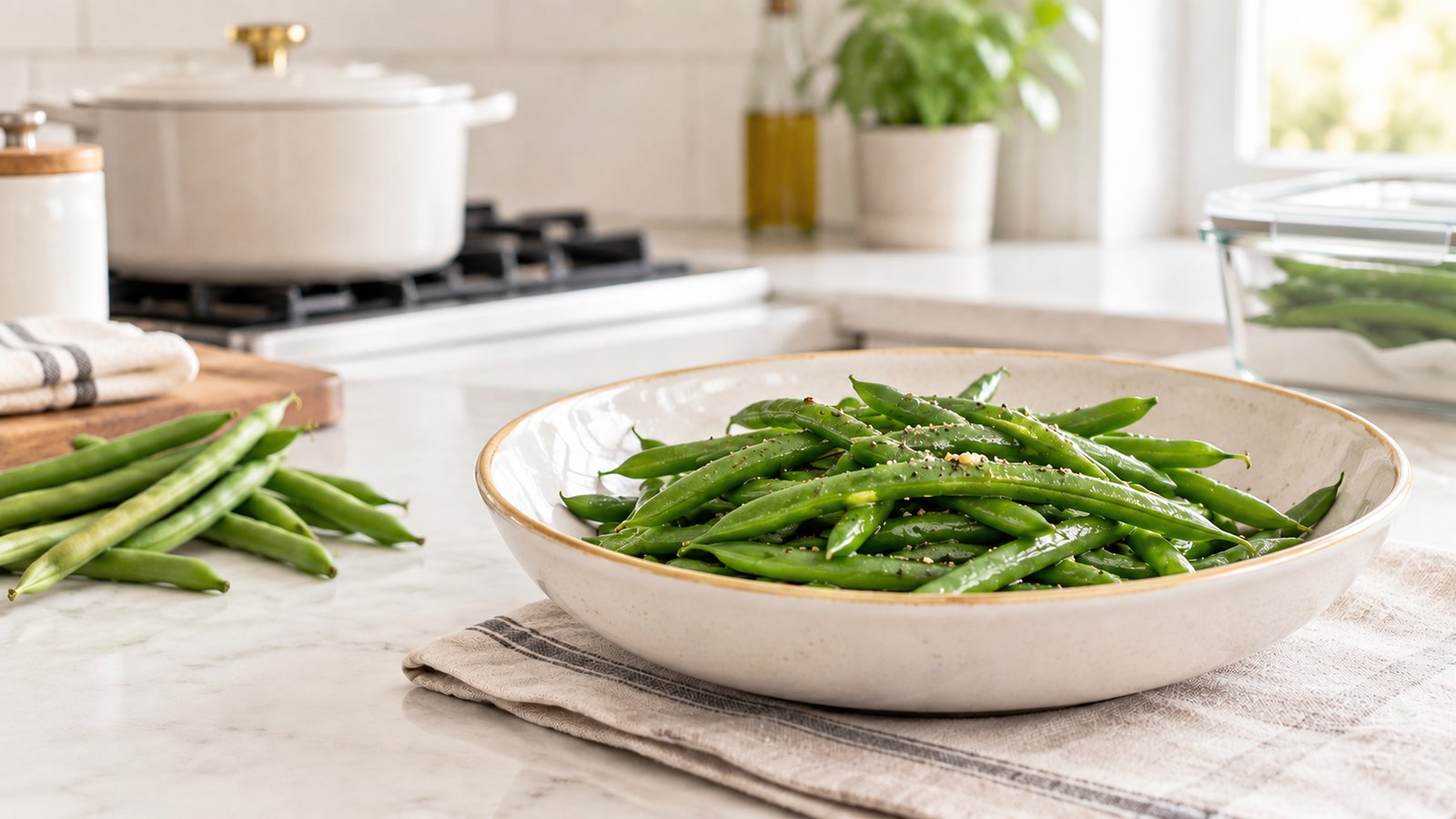
Green beans are one of those vegetables everyone has cooked a hundred times and still ends up googling. Boil or steam? How long is too long? Do you really have to blanch them before freezing, or is that just something your grandmother said? Here's the full rundown, one page, no guessing.
How to Cook Fresh Green Beans
Start by rinsing the beans and trimming the stem ends (the tail end is fine to leave on). From there, pick your method:
Blanch: Drop trimmed beans into a large pot of boiling, salted water for 2 to 3 minutes (2 for smaller beans, closer to 3 for larger ones), until bright green and crisp-tender. Immediately transfer to an ice bath for the same amount of time to stop the cooking. This is the base step for salads, cold sides, or prepping beans to sauté later.
Boil: Similar to blanching but cooked further, for a fully tender bean. Boil 4 to 5 minutes in salted water, then drain.
Steam: The method most sources agree preserves color and nutrients best, since the beans never touch the boiling water directly. Steam over boiling water for 5 to 7 minutes, until tender-crisp.
Roast: Toss trimmed beans with olive oil, salt, and pepper, and spread in a single layer on a baking sheet. Roast at 400°F for 12 to 15 minutes, tossing halfway through. Some recipes push to 425°F for 16 to 18 minutes for extra caramelization, but 400°F is the more consistent starting point.
Air Fry: Toss with oil and seasoning, then air fry at 370°F to 400°F for 7 to 10 minutes, shaking the basket halfway through. Lower time for a firmer bite, closer to 10 minutes if you like them more tender.
Whatever method you use, the beans are done when they're bright green and bend without snapping stiffly. Overcooked green beans turn dull and mushy fast, so start checking a minute or two before the low end of any time range.
How to Store Fresh Green Beans
Whole, unwashed green beans keep in the fridge for 5 to 7 days. Store them in a perforated plastic bag or a container lined with a paper towel in the crisper drawer. Don't wash them until you're ready to cook, since extra moisture speeds up spoilage.
Cut or snapped beans don't last as long. Once they're cut, plan to use them within about 2 days.
Signs they've gone bad: wilting, a slimy surface, dark or soft spots, or a sour smell. If they're just a little limp but still smell fine, a quick ice water soak can crisp them back up for cooking, though they won't return to full freshness for raw eating.
How to Freeze Green Beans
Green beans freeze well, but only if you blanch them first. Skipping the blanch is possible, but the beans will lose color, texture, and flavor much faster in the freezer since the enzymes that cause that breakdown are still active. It's a real quality loss, not just a matter of taste.
To freeze:
- Wash, trim, and cut or leave the beans whole.
- Blanch in boiling water for 3 minutes.
- Transfer immediately to an ice bath for about the same amount of time.
- Drain well and pat dry. Extra moisture leads to clumping and freezer burn.
- Spread the beans in a single layer on a baking sheet and freeze until solid (about an hour), then transfer to freezer bags or containers. This keeps them from turning into one solid block.
Blanched, properly packed green beans keep in the freezer for 8 to 10 months. Cook them straight from frozen, no need to thaw first, in any of the methods above (frozen beans will need a couple extra minutes).
FAQ
Do green beans have protein?
Yes, though not a lot. A 100g serving of raw green beans has about 1.8g of protein, alongside 31 calories, 7g of carbs, and 2.7g of fiber, per USDA data.
Are green beans a legume?
Yes. Green beans come from the same plant family (Fabaceae) as beans, peas, and lentils, and the pod itself is the legume fruit. They're just harvested young, before the seeds inside mature, which is why they're much lower in protein than dried beans or lentils.
Are canned green beans as good for you as fresh?
Nutritionally they're similar, but canned green beans are much higher in sodium unless the can specifically says reduced sodium or no salt added, in which case the sodium content drops close to fresh. Rinsing canned beans before using them also cuts a meaningful amount of that sodium.
Can dogs eat green beans?
Yes. Plain green beans, whether fresh, steamed, or no-salt canned, are considered a safe, healthy low-calorie treat for dogs, and some vets recommend them for weight management. Skip anything seasoned, buttered, or made into a casserole, and avoid regular salted canned beans.
What's the difference between string beans and green beans?
Nothing. String beans, snap beans, and green beans all refer to the same plant. "String" comes from an older, more fibrous seam along the pod that most modern varieties have been bred to lose.
How do you know if green beans have gone bad?
Look for wilting, sliminess, dark or mushy spots, or a sour smell. If they're just slightly limp but otherwise fine, they're still safe to cook, just past their best for eating raw.
Can you freeze green bean casserole?
Yes, but for the best texture, freeze it before baking and leave off the crispy onion topping, since that doesn't freeze or reheat well. Add the topping fresh right before baking. Freeze up to 2 to 3 months, thaw overnight in the fridge, and add about 10 to 15 extra minutes to the bake time if cooking from cold.
Cooking a pot of black beans, pintos, or chickpeas alongside these? Our Bean Calculator figures out exactly how much you'll need for a crowd.