How Long Do Deviled Eggs Last?Preparation, Storage, and Freezing Guide
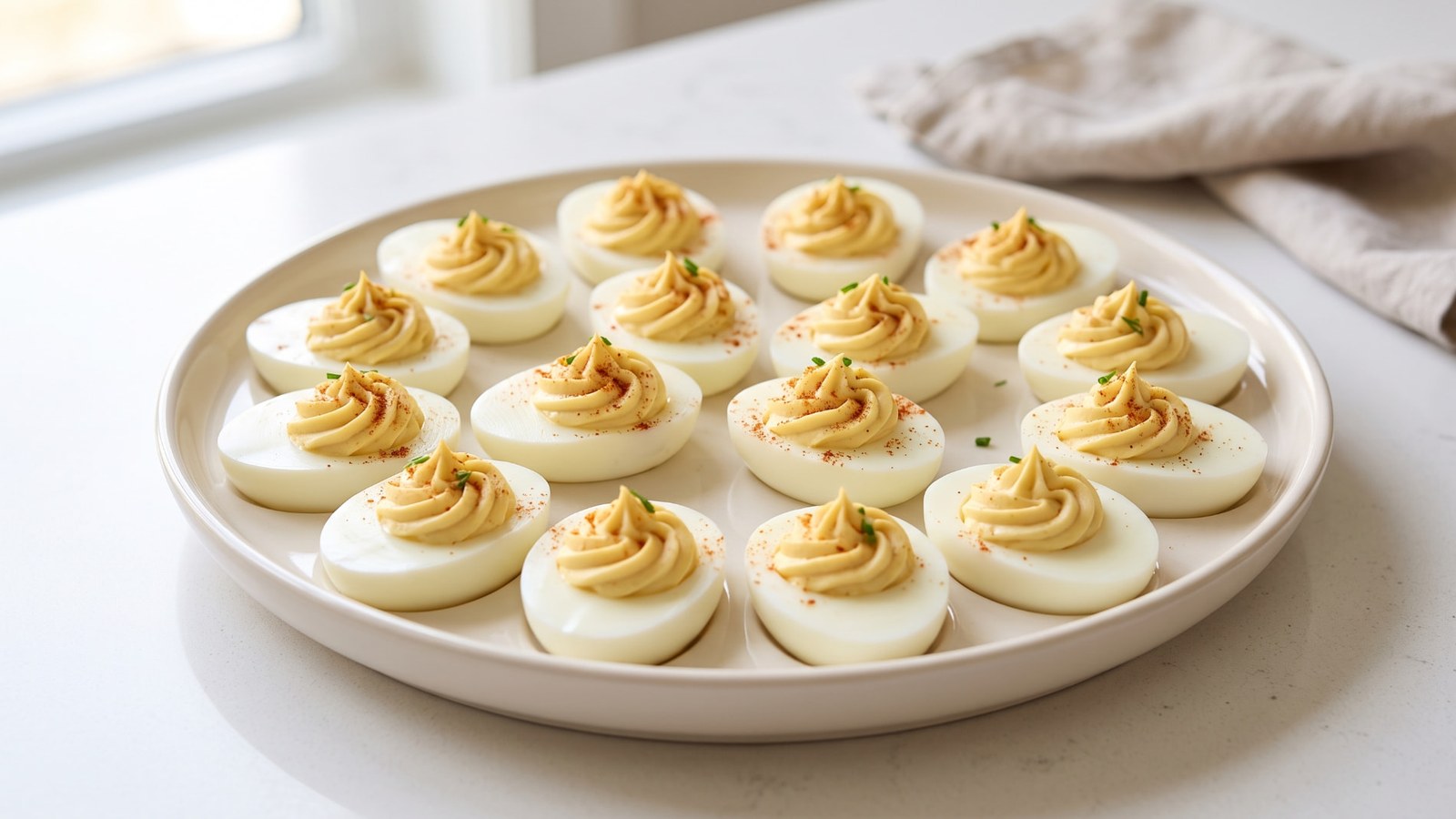
Deviled eggs show up at every potluck, holiday table, and backyard cookout, and they almost never survive the trip home in one piece. Whether you made too many or you're planning ahead for a party, here's exactly how long they last, whether freezing is worth it, and how to keep them safe from the fridge to the table.
How Long Do Deviled Eggs Last in the Fridge?
Properly stored deviled eggs last 3 to 4 days in the refrigerator. Storing them in an airtight glass container keeps them fresher longer than loosely covering the plate. Keep them at or below 40°F, and refrigerate them within two hours of preparing.
Deviled eggs don't last as long as plain hard-boiled eggs. Once an egg is hard-cooked, its protective coating is gone, which makes it more vulnerable to bacteria. Add a mayonnaise-based filling on top of that, and the shelf life shortens further. If you make them often, a dedicated deviled egg tray keeps the halves from sliding around and holds their shape in the fridge or on the way to a party.
The two-hour rule: Deviled eggs should never sit out at room temperature for more than two hours. On a hot day (above 90°F), cut that down to one hour. If they've been sitting out longer, throw them out rather than risk it.
Can You Freeze Deviled Eggs?
Technically, yes. Practically, no.
Frozen deviled eggs can last up to 12 months in the freezer from a pure food-safety standpoint. But the texture doesn't survive the trip. Hard-boiled egg whites toughen and turn rubbery when frozen, and the filling tends to separate and weep liquid once thawed. You'll end up with a watery, gritty version of the deviled egg you started with.
Bottom line: if you have leftovers, eat them within 3 to 4 days instead of freezing them. Freezing is a last resort, not a make-ahead strategy.
Can You Make Deviled Eggs Ahead of Time?
Yes, and it's actually the better move. For the best texture and flavor, make deviled eggs 1 day ahead:
- Hard-boil and peel the eggs up to 3-4 days ahead, and store them whole in the fridge.
- Make the yolk filling and store it separately in an airtight container or piping bag.
- Assemble (pipe the filling into the whites) within 24 hours of serving.
Piping the filling into each egg white using a piping bag and tip gives you a cleaner, more even finish than spooning it in.
Storing the whites and filling separately keeps the eggs from getting watery or the whites from drying out, and it means less last-minute work on the day of your event.
Best Way to Transport Deviled Eggs
Deviled eggs need to stay cold in transit, not just in the fridge. Pack them in a cooler with ice for the drive, and keep the cooler closed as much as possible until you arrive. An insulated cooler bag keeps them at a safe temperature on the way to a potluck or picnic.
A dedicated deviled egg carrier with a lid does two things at once: it keeps the eggs from sliding around and getting knocked out of their filling, and it gives you a sealed container to nest in the cooler. If you're bringing eggs to a party often, it's worth having one on hand rather than improvising with a mixing bowl and foil.
Once you arrive, keep the eggs on ice or refrigerated until serving time, and follow the same two-hour rule once they're out on the table.
How to Boil Eggs for Deviled Eggs
The eggs you use for deviled eggs need to peel cleanly, since a torn egg white means a lopsided deviled egg. Here's the method that gives the most consistent results:
- Place eggs in a single layer in a saucepan and cover with cold water by about an inch.
- Bring to a boil, then remove from heat, cover, and let sit for 10 to 12 minutes.
- Transfer immediately to an ice bath for at least 5 minutes to stop the cooking and make peeling easier.
- Peel under cool running water, starting at the wider end where the air pocket sits.
Using eggs that are a week or so old (rather than fresh from the carton) also helps them peel more cleanly, since very fresh eggs tend to stick to the shell.
How Many Deviled Eggs Per Person?
| Setting | Deviled Eggs Per Person |
|---|---|
| Appetizer alongside other dishes | 2-3 halves |
| Main potluck dish | 4-5 halves |
| Large party with many food options | 2 halves |
A dozen eggs makes 24 deviled egg halves, which comfortably serves 8-10 people as one of several appetizers.
Are Deviled Eggs Healthy?
Deviled eggs are a solid source of protein, but keep portions in mind. A typical deviled egg half runs about 60-80 calories, most of it from the yolk and mayonnaise in the filling. Swapping some or all of the mayo for plain Greek yogurt cuts the fat and calories while keeping the filling creamy.
Frequently Asked Questions
Why are they called deviled eggs?
Deviled has referred to spicy or zesty food since the 1700s, long before it had anything to do with eggs specifically. The name stuck once mustard and cayenne-spiked egg yolk fillings became popular in the 1800s. Some cooks avoid the word and call them stuffed eggs or dressed eggs instead. In Spanish-speaking households, the same dish is often called huevos rellenos.
Can you eat deviled eggs while pregnant?
Yes, as long as the eggs are fully hard-boiled and the mayonnaise is store-bought. Commercial mayo is made with pasteurized eggs. Keep them refrigerated at or below 40°F and don't eat any that have been sitting at room temperature for more than two hours.
How can you tell if deviled eggs have gone bad?
Look for a sour or sulfur-like smell, a slimy texture on the egg white, or discoloration in the filling. When in doubt, throw them out. This isn't a dish worth taking a risk on.
Can you make deviled eggs without mayo?
Yes. Plain Greek yogurt, mashed avocado, or hummus all work as a base and hold up the same way in storage.