How to Organize a Pantry That Actually Works
The Calculated Cook uses affiliate links. We may earn a small commission at no extra cost to you.
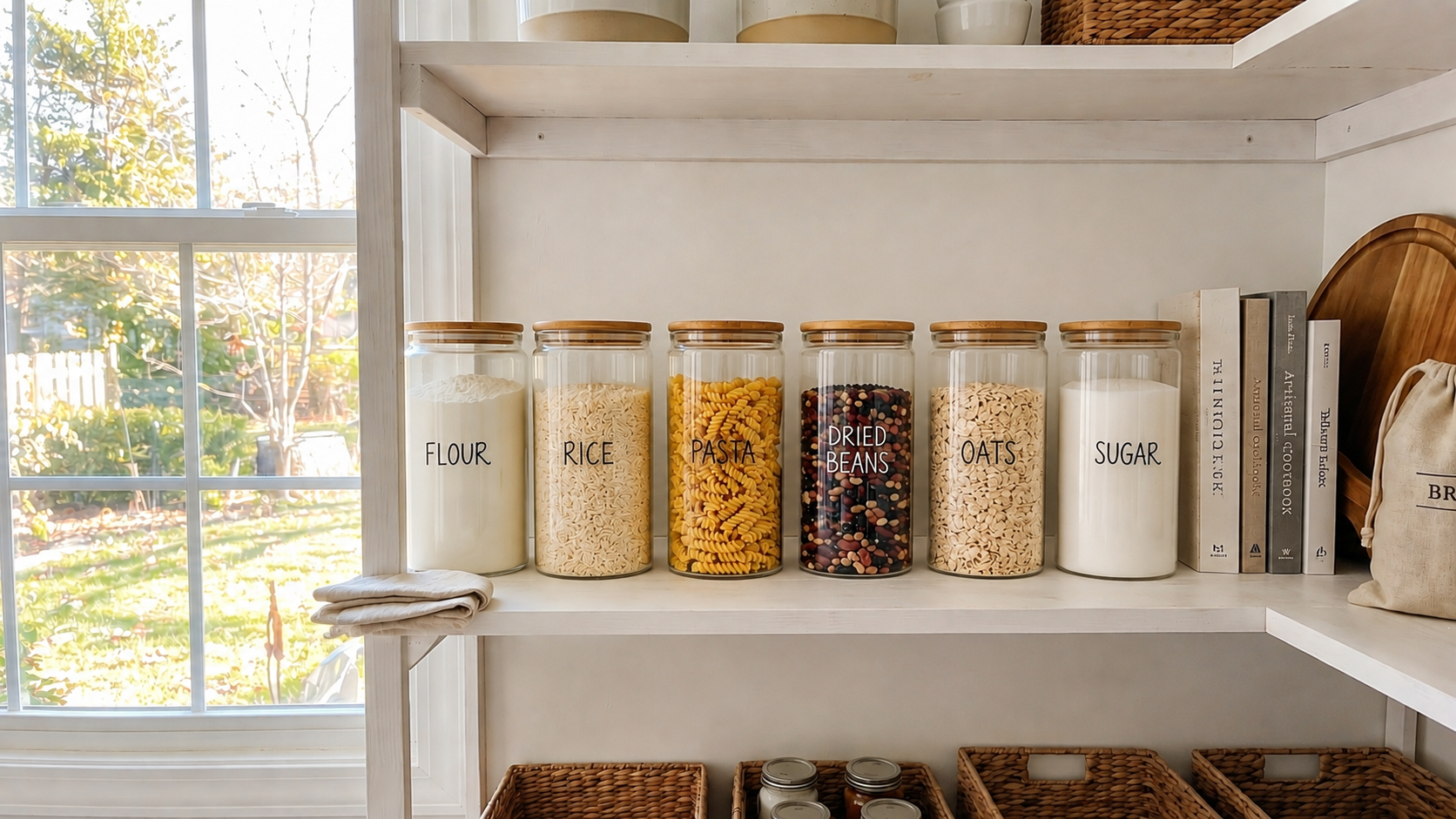
A pantry that looks good for a week and falls apart by month two usually has one problem: it wasn't set up around how you actually shop and cook. Real pantry organization comes down to four things: grouping items by how you use them, choosing the right container for each type of food, knowing how long staples actually last, and keeping pests out before they become a problem.
Set Up Zones, Not Just Shelves
Instead of organizing alphabetically or by container size, group items by how you use them:
- Baking zone: flour, sugar, baking soda, baking powder, cornstarch, cocoa
- Cooking staples: oils, vinegars, canned goods, pasta, rice, grains
- Snacks and grab-and-go: crackers, granola bars, nuts, dried fruit
- Breakfast: cereal, oatmeal, pancake mix, syrup
- Overflow and backstock: unopened duplicates of anything you buy in bulk
Keep your most-used zones (cooking staples, snacks) at eye level and within easy reach. Backstock and rarely used items belong on the highest or lowest shelves.
Choosing the Right Container
Not every pantry item needs a matching canister. The container matters most for anything that came in a bag, a thin cardboard box, or a package that doesn't reseal well.
- Flour: keep in an airtight container. This protects both quality and against pests, since pantry moth larvae can chew through plastic bags and thin cardboard.
- Vegetable oils: refrigeration isn't needed, but store in a cool, dark place in a tightly sealed container.
- Rice, pasta, dried beans, cereal, and other bagged bulk goods: transfer to sturdy glass or plastic containers with tight-fitting lids once opened.
- Spices and dried herbs: keep in airtight containers, away from direct sunlight and heat, which cause them to lose potency faster than time alone.
- Canned goods: fine to store in the can unopened. Once opened, transfer contents to a glass or plastic container rather than storing in the can.
A good rule of thumb: if it came in a bag, box, or package that doesn't fully reseal, it's worth moving to a container.
How Long Pantry Staples Actually Last
These are general shelf-stable storage guidelines for unopened and opened staples. Always check your own package date and use the oldest items first.
| Item | Unopened | Opened |
|---|---|---|
| All-purpose flour | 6 to 12 months | 6 to 8 months (pantry) |
| Whole wheat flour | 3 to 6 months | Best kept refrigerated after opening |
| White rice | 1 to 2 years | 1 to 2 years |
| Pasta (dry) | 2 years | 1 year |
| Sugar (granulated, brown) | 18 to 24 months | 18 to 24 months |
| Vegetable oil | 6 months | 3 to 5 months |
| Ground spices | 2 to 3 years | 2 to 3 years |
| Whole spices | 3 to 4 years | 3 to 4 years |
| Canned goods (general) | 12 to 18 months | Transfer to a container after opening |
| Dried beans | 12 months | 12 months |
| Honey | 2 years | 2 years, may crystallize |
A dedicated rice dispenser can also help keep bulk rice fresh and easy to portion.
When in doubt, the general rule is simple: if the quality, smell, or appearance seems off, it's not worth the risk. These times are for best quality, not a hard safety cutoff for most shelf-stable staples.
Pantry Moths: What They Are and How to Get Rid of Them
Pantry moths, also called Indian meal moths, are the most common pantry pest in North American homes. Their scientific name is Plodia interpunctella.
What to look for:
Adult pantry moths are small, about 10mm long, with pale gray wings that have a coppery-red tint near the tips. They hold their wings tent-like when resting. You're more likely to spot the signs before the moths themselves: webbing or clumping in dry goods, small cocoons in cabinet corners, or fine silk threads in flour, cereal, rice, or pet food.
Where to check:
Inspect grains, cereal, flour, rice, pasta, nuts, spices, birdseed, and pet food. Open packages and look under bright light. Check the seams and folds of bags and boxes, and check the corners of your cabinets for cocoons.
How to get rid of them:
- Identify, remove, and throw away any infested food items.
- Empty and vacuum the shelves and cabinet corners where infested items were stored, including cracks and seams.
- Wash the shelves with warm, soapy water.
- Transfer remaining bulk dry goods into thick, tightly sealed glass or plastic containers going forward. This is the single most effective way to prevent a repeat infestation, since the larvae can chew through plastic bags and cardboard packaging but not sealed glass or hard plastic.
- Once the food source is removed or secured, remaining moths will die off on their own from lack of food.
Mothballs should not be used around food or food preparation areas.
Small Pantry or No Pantry? Adapt the Same System
If you don't have a dedicated pantry, the same zone logic works in cabinets, on open shelving, or in a designated food storage cart or cabinet. Prioritize your baking and cooking staple zones for the most accessible space, and use higher or harder-to-reach spots for overflow and backstock. Airtight containers matter even more in small or open storage, since exposed shelving means more temperature and light exposure for staples like flour and spices.
Frequently Asked Questions
How do I organize a small pantry?
Use the same zone system (baking, cooking staples, snacks, breakfast, overflow) scaled down to fewer shelves. Prioritize your most-used zones at eye level, and use airtight containers to protect against both quality loss and pests, since small or open storage tends to get more light and temperature exposure.
What's the best container for pantry storage?
Airtight glass or plastic containers with tight-fitting lids are best for anything that comes in a bag or thin cardboard, including flour, rice, pasta, cereal, and dried beans. Canned goods are fine to store in the can until opened.
How do I know if I have pantry moths?
Look for webbing or clumping inside dry goods, small cocoons in cabinet corners, and fine silk threads in flour, cereal, or grains. Adult moths are small with pale gray, coppery-tipped wings and are usually the last sign you notice, not the first.
Do pantry moths mean my pantry is dirty?
No. Pantry moths most often come in through already infested packaged food from the store, not through poor cleaning habits. Good sanitation helps prevent them from spreading once they're in, but an infestation isn't a reflection of how clean your kitchen is.
Can I get rid of pantry moths without throwing everything away?
Only infested items need to be discarded. Everything else should be inspected carefully and transferred to sealed containers as a precaution. Once the food source for the larvae is gone, the remaining moths will die off.