Internal Meat Temperatures: A Food Safety Guide for Home Cooks
You pulled it off the grill. It looks done. But looks have sent more than a few dinner guests home with a miserable evening ahead of them. Internal temperature is the only reliable way to know your meat is safe, and that it's actually worth eating.
This guide covers safe and ideal internal temps for every protein you're likely to cook, plus what happens when you miss the mark in either direction.
📌 Bookmark this page. You'll want it every time you fire up the grill or preheat the oven.
Quick Reference: Internal Meat Temperature Chart
| Meat | Safe Minimum Temp | Ideal Temp (best texture) | Rest Time |
|---|---|---|---|
| Beef — Steak | 145°F | 130–135°F (medium rare) | 3–5 minutes |
| Beef — Roast | 145°F | 135°F (medium rare) | 3 minutes |
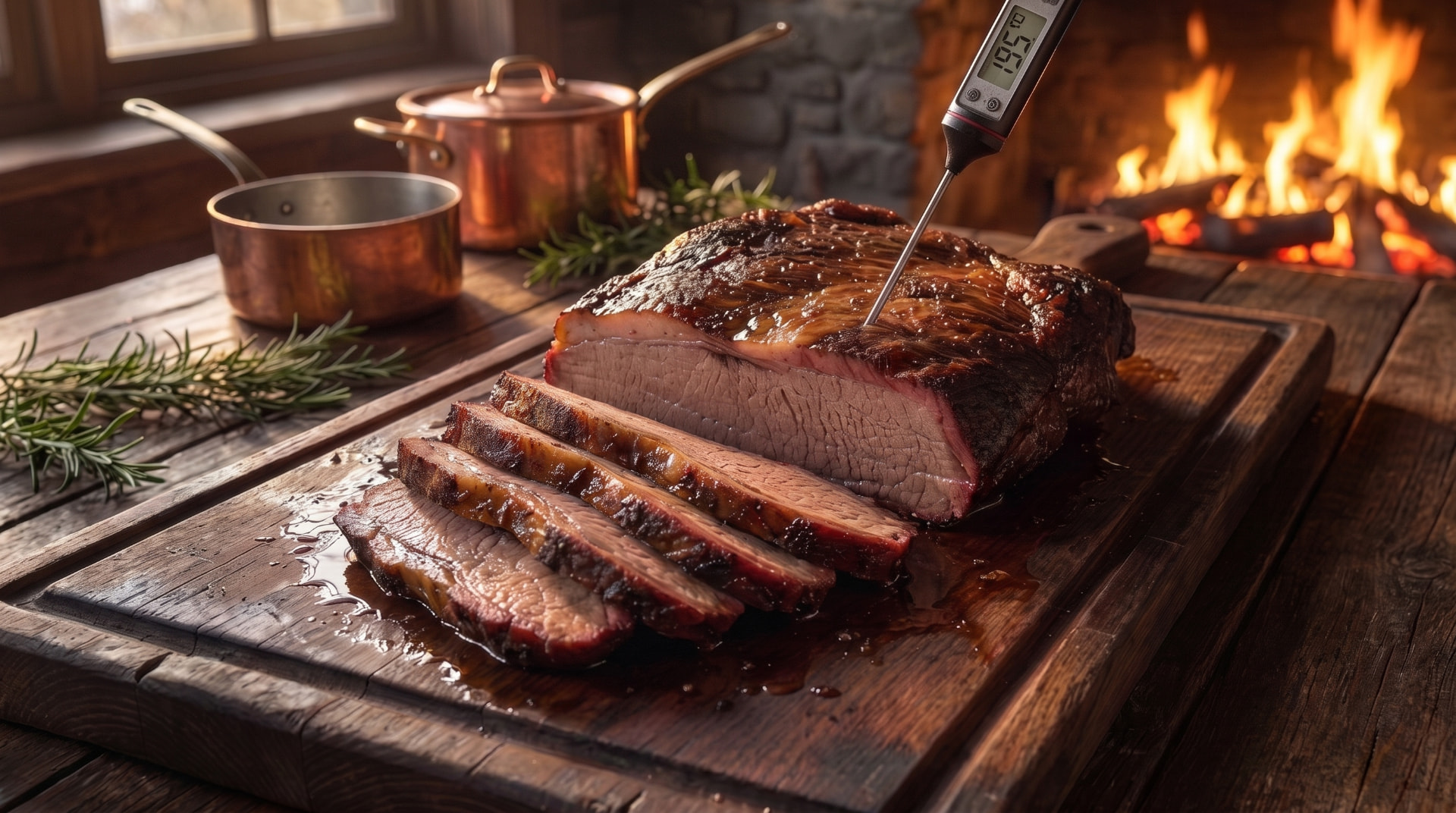
| Beef — Brisket | 145°F | 195–205°F (pull temp) | 30–60 min |
| Ground Beef | 160°F | 160°F | None required |
| Pork — Chops/Tenderloin | 145°F | 145–150°F | 3 minutes |
| Pork — Pulled/Shoulder | 145°F | 195–205°F (pull temp) | 30–60 min |
| Ground Pork | 160°F | 160°F | None required |
| Chicken — Breast | 165°F | 165°F | 3–5 minutes |
| Chicken — Thighs/Wings | 165°F | 175–185°F | 3–5 minutes |
| Turkey — Whole | 165°F | 165°F breast / 175°F thigh | 20–30 min |
| Turkey — Ground | 165°F | 165°F | None required |
| Lamb — Chops/Rack | 145°F | 130–135°F (medium rare) | 3 minutes |
| Fish & Shellfish | 145°F | 125–130°F (salmon) | None required |
| Eggs / Egg Dishes | 160°F | 160°F | None required |
For whole cuts of beef, pork, and lamb cooked to the USDA safe minimum, the 3-minute rest is part of the safety standard itself, not optional. Ranges like 3-5 minutes (such as for steak) reflect doneness preference when a cut is cooked below the safe minimum.
Why Internal Temperature Matters
A thermometer doesn't lie. Color does.
Pork can turn white before it hits 145°F. Chicken can run clear while still harboring bacteria. Beef burgers can brown in the center at 155°F or at 130°F depending on fat content and cooking method. None of these visual cues are reliable on their own.
The USDA sets minimum safe temperatures based on the point at which harmful bacteria including Salmonella, E. coli, and Listeria are destroyed. These aren't arbitrary numbers. They're the line between a good dinner and a food safety incident.
Beef
Steaks and Roasts
Beef is safe at 145°F with a 3-minute rest. But most home cooks are shooting for a specific doneness level, not just the safety floor:
Rare: 120–125°F (below USDA minimum — personal risk decision)
Medium Rare: 130–135°F (below USDA minimum — personal risk decision)
Medium: 135–145°F
Medium Well: 145–155°F
Well Done: 160°F+
Whole muscle cuts like steaks and roasts are lower risk than ground beef because bacteria live on the surface, which reaches high temps quickly. Ground beef mixes the surface throughout, which is why ground beef must hit 160°F, no exceptions.
Brisket
Brisket is a different animal entirely. Safe at 145°F, but you'd be eating shoe leather. Brisket needs to reach 195–205°F for the collagen to fully break down into gelatin, giving you that tender, pullable texture. This takes time, usually 1 to 1.5 hours per pound in a smoker at 225–250°F.
👉 Use our Brisket Calculator to estimate your cook time based on weight and target temperature.
Pork
Pork had a reputation problem for decades, overcooked into dry, flavorless slabs because home cooks were targeting 160°F out of habit. In 2011, the USDA updated its guidance: whole cuts of pork are safe at 145°F with a 3-minute rest.
That's a game changer for pork chops and tenderloin, which are genuinely juicy and slightly pink at 145–150°F.
Pulled Pork
Like brisket, pulled pork (pork shoulder/butt) needs to push past the safety minimum to reach its potential. Target 195–205°F for meat that shreds easily. At 145°F it's safe but tough. Low and slow is non-negotiable here.
Ground pork stays at 160°F — same reasoning as ground beef.
Chicken
Chicken is non-negotiable: 165°F across the board, per USDA. No medium-rare chicken. No "it looks done." Salmonella risk is real and not worth the gamble.
That said, there's nuance within the 165°F+ range:
Chicken breast is best pulled right at 165°F. Every degree above that dries it out.
Chicken thighs and wings actually improve beyond 165°F. The connective tissue and fat in dark meat benefit from higher temps. Target 175–185°F for thighs and wings — juicier, more tender, and the skin crisps better.
Turkey
Turkey follows the same rules as chicken: 165°F minimum, measured at the thickest part of the breast without touching bone. The thigh should hit at least 175°F for best texture and to ensure the joint area is fully cooked through.
The challenge with the whole turkey is that the breast and thigh reach their ideal temps at different times. Techniques like spatchcocking or tenting the breast help even out the cook.
Lamb
Lamb follows beef's framework:
Safe minimum: 145°F with a 3-minute rest
Most people prefer lamb at medium rare: 130–135°F
Ground lamb: 160°F
Rack of lamb and lamb chops are typically served medium rare to medium. Leg of lamb can go either way depending on preference.
Fish and Shellfish
Fish is safe at 145°F, but texture preferences vary significantly by type:
Salmon is most commonly served at 125–130°F (medium) — flaky but still moist
Tuna is often served rare (110–115°F) — personal preference
Shrimp and scallops are done when opaque throughout, typically 120–130°F
Shellfish (clams, oysters, mussels) should be cooked until shells open
Pregnant individuals, immunocompromised individuals, and young children should always follow the 145°F minimum for fish.
The Rest Period: Don't Skip It
Resting meat after cooking isn't just chef theater. When meat rests:
Juices redistribute — cutting too soon sends them all onto the cutting board
Carryover cooking continues — internal temp typically rises 5–10°F after removing from heat
Temperature equalizes — the outer layers and center reach a more consistent temp
For steaks, 3–5 minutes is enough. Brisket and pulled pork benefit from 30–60 minutes wrapped in butcher paper or foil. Turkey needs at least 20–30 minutes before carving.
Account for carryover cooking by pulling meat 5–10°F below your target — especially important for leaner cuts that dry out quickly.
How to Use a Meat Thermometer Correctly
Technique matters as much as the tool. Get the most out of your thermometer with these best practices:
• Insert into the thickest part of the meat, away from bone, fat, and gristle
• Don't touch the pan or grill grates — you'll read surface temp, not internal
• Check multiple spots on large cuts like brisket or whole turkey
• Wait for the reading to stabilize before pulling the probe
• Clean between checks to avoid cross-contamination
The Right Tool Makes the Difference
A slow thermometer on a fast cook is a liability. By the time it stabilizes, you've either over or undershot your target.
An instant-read thermometer gives you an accurate reading in 2–3 seconds — fast enough to check mid-cook without losing significant heat. The ThermoWorks Thermapen ONE is the benchmark in this category: accurate to ±0.5°F, reads in about 1 second, and built to last. It's the thermometer serious home cooks reach for when the stakes are high.
👉 ThermoWorks Thermapen ONE on Amazon — the last thermometer you'll ever need to buy.
👉 Pit Boss 440 Mahogany Series Pellet Grill & Smoker on Amazon — a solid entry-level pellet grill for smoking brisket, pork, and more.
Frequently Asked Questions
Safe minimum temperatures sourced from USDA Food Safety and Inspection Service guidelines.