Leftover Turkey Guide: Uses, Storage, Freezing & Reheating
As an Amazon Associate, I earn from qualifying purchases.
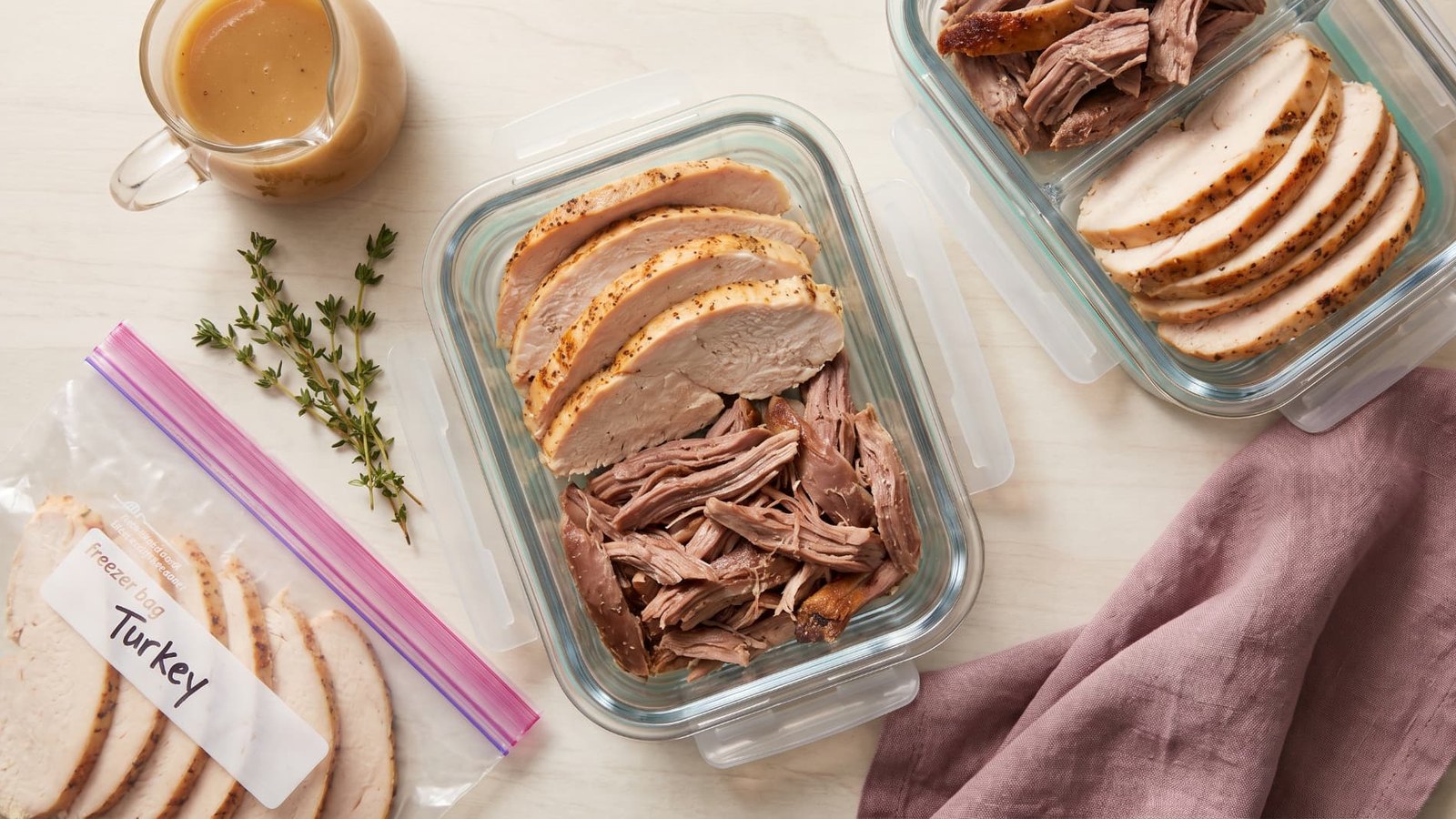
There's a brief, golden window after the big meal where the turkey is arguably better than it was on day one. Then there's a much longer window where it's a science experiment in your crisper drawer. This guide is here to keep you in the first window for as long as possible: how long it actually lasts, the right way to freeze it, how to reheat it without turning it into jerky, and what to do with it once you're done making sandwiches at 11pm.
If you still need to figure out how much turkey to buy, how long to thaw it, or how long to roast it? Check out the Turkey Calculator first.
How Long Does Leftover Turkey Last in the Fridge?
Cooked turkey is good in the refrigerator for 3 to 4 days, according to the USDA. That's the number to work from whether it's a Thanksgiving bird, a random Tuesday roast turkey breast, or a rotisserie-style whole turkey.
A few things that actually affect that window:
- Get it into the fridge within 2 hours of cooking (1 hour if your kitchen is above 90°F). Bacteria multiply fastest in that 40°F to 140°F "danger zone," so the clock starts the moment the turkey comes out of the oven, not whenever you finally get around to cleaning up.
- Carve it before you store it. A whole turkey carcass takes forever to cool all the way through in the fridge, even when it looks cold on the outside. Slice the breast, pull the legs and thighs off the bone, and split it into smaller, shallow containers so it chills quickly and evenly.
- When in doubt, don't taste it to check. At day 5, it goes in the trash, not back on the table, even if it still smells fine.
Can You Freeze Leftover Turkey? (Yes, and It's Actually Great)
Freezing leftover turkey is completely safe, even if the turkey itself was frozen before you cooked it. It's one of the better make-ahead moves in the kitchen: turkey freezes and reheats well, especially compared to something delicate like leafy greens or fried food.
How to freeze it right:
- Slice or cube the meat off the bone. Don't freeze the whole carcass in one piece; it wastes space and freezes unevenly.
- Flash-freeze it first. Spread the pieces in a single layer on a parchment-lined baking sheet and freeze for about an hour before bagging. This keeps the pieces from freezing into one solid block, so you can grab a handful later instead of thawing the whole batch.
- Add a little broth or gravy. A splash of stock or gravy in the container helps protect the meat from drying out in the freezer. Just leave a little headroom in the container since liquid expands as it freezes.
- Package it airtight. Freezer bags with the air pressed out, or a vacuum sealer if you have one, are your best defense against freezer burn. Label the bag with the date and contents; "turkey, 11/27" from memory two months from now is not a reliable system.
- Don't forget the carcass. If you're not making stock right away, freeze it separately; it'll keep for up to a year and makes genuinely excellent soup base later.
How long does frozen turkey last? For best quality, plan on 2 to 6 months, depending on how it's packaged (broth-covered turkey holds up a bit longer than plain slices) and how well you kept air out of the container. It won't become unsafe to eat after that window since freezing halts bacterial growth entirely, but the texture and flavor will start to slide the longer it sits.
How to Reheat Leftover Turkey (Without Drying It Out)
This is the step most people rush, and it's why leftover turkey has a reputation for being dry. A few rules first:
- Reheat to 165°F, checked with a food thermometer. That's the safe internal temperature for any reheated poultry.
- Never reheat a whole turkey. The USDA specifically advises against it: a whole bird takes too long to heat through evenly, which leaves parts of it sitting in the danger zone. Cut it into pieces first (slice the breast, legs and wings can stay whole).
- If it's frozen, thaw it in the fridge first, not on the counter. Give it roughly 24 hours for every 4 to 5 pounds, same math as thawing a raw turkey. This is a different situation than cooking a whole raw frozen turkey, which can safely go straight into the oven; reheating already-cooked, frozen leftovers should be thawed before it hits heat.
Reheating methods, once it's thawed:
- Oven (best for larger portions): Preheat to 300 to 350°F. Place the turkey in a baking dish, add a few spoonfuls of broth or gravy, and cover tightly with foil. Heat 20 to 45 minutes depending on quantity, until it reaches 165°F.
- Stovetop: Place slices in a covered pan or steamer basket with a little simmering broth underneath. This tends to produce the moistest results of any method.
- Microwave (fastest, best for single portions): Cut into smaller pieces, add a spoonful of broth, cover with a damp paper towel, and heat at 50% power in short intervals. Full power tends to overcook the edges before the center is even warm.
What to Do With Leftover Turkey
Once it's stored properly, the fun part is figuring out what to actually make with it:
- Turkey soup or stock. The classic move, and the best use for the carcass if you didn't freeze it separately. Simmer the bones with vegetables and herbs for at least 2 to 3 hours, longer for a richer stock, for a base that freezes well on its own.
- Turkey pot pie. Diced turkey, frozen vegetables, and gravy under a pie crust turns a small amount of leftover meat into a full dinner.
- Turkey tetrazzini. A creamy, baked pasta dish that's an easy way to use up shredded turkey along with any leftover mushrooms or peas sitting in the fridge.
- Hot turkey sandwiches. Sliced turkey with gravy and cranberry sauce on bread is the simplest version; a turkey club or a turkey salad sandwich with mayo and celery are easy variations if you want something less saucy.
- Turkey fried rice. A great way to use up both leftover turkey and any extra roasted vegetables from the big meal in one skillet.
- Casseroles. Turkey stands in for chicken in almost any casserole recipe you already make, from a simple turkey-and-rice bake to a green bean casserole with turkey folded in.
Frequently Asked Questions
How long is leftover turkey good in the fridge?
3 to 4 days, stored at 40°F or below. Refrigerate it within 2 hours of cooking (1 hour if the room is above 90°F).
Can you freeze leftover turkey?
Yes, it's completely safe to freeze cooked turkey, even if the turkey was frozen before you cooked it. Freezing it with a little broth or gravy helps keep it moist.
How long does frozen leftover turkey last?
For best quality, 2 to 6 months. It stays safe to eat indefinitely in the freezer, but the texture and flavor decline the longer it's stored.
Can you reheat turkey from frozen?
Thaw it in the fridge first (about 24 hours per 4 to 5 pounds), then reheat. This is different from cooking a raw whole turkey from frozen, which can safely go straight into the oven; already-cooked leftovers should be thawed before reheating.
How many days after Thanksgiving can you eat the turkey?
Using the 3 to 4 day rule from when it was cooked, that typically means eating it by the Monday after Thanksgiving, or freezing whatever's left before then.
What's the best way to use up leftover turkey?
Turkey soup or stock (especially using the carcass), pot pie, tetrazzini, sandwiches, fried rice, and casseroles are all easy ways to stretch it into full meals rather than eating slices cold from the container.