Mashed Potatoes Guide: Storage, Freezing, Reheating
As an Amazon Associate, I earn from qualifying purchases.
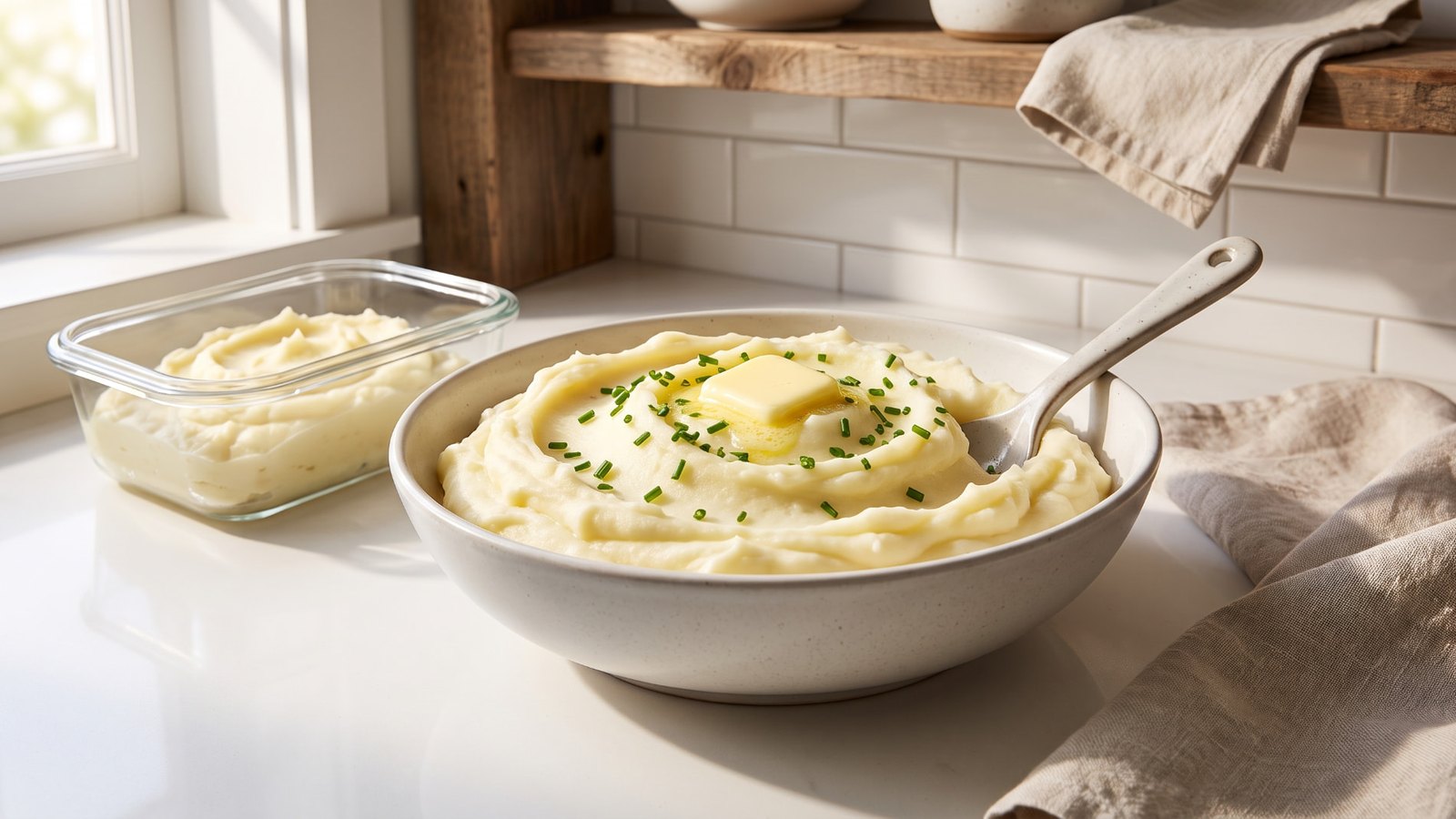
Mashed potatoes are the easiest side dish to make and somehow the easiest to ruin after the fact. Watery, gluey, sitting on the counter longer than you meant. Here's exactly how long they last, how to freeze them, and how to reheat them the right way, whether they're coming from the fridge or straight out of the freezer. If you're not sure how many potatoes to start with, our Mashed Potato Calculator does the math for you.
How Long Do Mashed Potatoes Last in the Fridge?
Mashed potatoes keep for 3 to 4 days in the refrigerator, stored in an airtight container. That clock starts as soon as they're refrigerated, not as soon as they're made, so get them chilled promptly.
Per USDA food safety guidelines, any perishable food, mashed potatoes included, needs to go into the fridge within 2 hours of cooking (1 hour if the room is above 90°F). Past that window, they've spent too long in the "danger zone" between 40°F and 140°F where bacteria multiply fastest, and they should be tossed even if they still look and smell fine.
For fastest, safest cooling, split a big batch into smaller, shallow containers instead of one deep pot. A shallow layer drops below 40°F much faster than a deep one.
Can You Freeze Mashed Potatoes?
Yes, and they hold up better than most people expect if you set them up right before they go in.
The problem with freezing mashed potatoes is water. Potatoes are mostly water, and freezing forms ice crystals that break down their structure, so when they thaw, that water separates out and you get a grainy, watery mess. The fix is fat: mash in extra butter, cream, or sour cream before freezing. It helps the texture come back together on the other side.
Steps that make a real difference:
- Cool the potatoes to room temperature before freezing. Hot potatoes cause condensation inside the container, which shows up as extra ice and extra wateriness later.
- Portion before freezing rather than freezing one big block. Small bags or an ice cube tray let you thaw only what you need.
- Squeeze out as much air as possible if using a freezer bag, or use an airtight container. Air exposure is what causes freezer burn.
- Label with the date. For best texture and flavor, plan to use frozen mashed potatoes within 2 to 3 months. They can stay safe well beyond that if kept tightly sealed, but quality starts fading the longer they sit.
How to Reheat Mashed Potatoes
The method matters, and so does whether you're starting from the fridge or straight out of the freezer. Not every method handles frozen potatoes the same way.
Stovetop: Works well from either fridge-cold or frozen. Add the potatoes to a saucepan over low-medium heat with a splash of milk, cream, or butter. If starting from frozen, break the potatoes into smaller pieces first so they heat more evenly, and expect them to take longer. Stir gently and occasionally rather than mashing again, which can turn them gluey.
Oven: Also works from either state, but frozen takes roughly double the time. Spread into a covered, oven-safe dish with a little extra butter or cream, and bake at 350°F. Fridge-cold potatoes need about 20 to 30 minutes; potatoes going in straight from frozen need closer to 45 to 60 minutes, stirring partway through either way.
Microwave: Best used with fridge-cold or already-thawed potatoes. Frozen potatoes tend to heat unevenly in a microwave, cooking around the edges before the center's even thawed. If you're working from frozen, thaw in the fridge overnight first, then cover and heat at 50% power in short bursts, stirring between each one.
Slow cooker: One of the few methods that handles frozen potatoes directly without a problem. Add them to your slow cooker straight from the freezer (or from the fridge) with a splash of milk or cream, cover, and heat on low for 2 to 4 hours, stirring occasionally.
Whichever method you use, bring the potatoes back to steaming hot throughout before serving. If they still look watery once heated, stir in a tablespoon of sour cream or cream cheese per 2 cups of potatoes to thicken them back up.
Can Mashed Potatoes Sit Out?
Not for long. Like any perishable food, mashed potatoes shouldn't sit at room temperature for more than 2 hours (1 hour if it's especially warm, like a buffet table in a hot room). Past that, bacteria can grow to unsafe levels even if the dish still tastes fine.
Frequently Asked Questions
Can you freeze mashed potatoes made with sour cream or cream cheese?
Yes. Dairy-based additions like sour cream and cream cheese actually help mashed potatoes freeze better, since the extra fat protects the texture from the ice-crystal breakdown that causes wateriness.
Why do frozen mashed potatoes turn watery when thawed?
It's the potatoes' natural water content separating out as ice crystals form and then melt. Potatoes made with plenty of butter, cream, or another fat resist this much better than potatoes made with just milk or broth.
What's the best container for freezing mashed potatoes?
An airtight freezer bag with the air pressed out, or a freezer-safe container with a tight lid. Portioning into smaller amounts before freezing makes thawing faster and more even.
Can you leave mashed potatoes in the fridge overnight before serving them the next day?
Yes, that's well within the 3 to 4 day fridge window. Just make sure they went into the fridge within 2 hours of being made, and reheat them to steaming hot before serving.
Do you need to thaw frozen mashed potatoes before reheating?
It depends on the method. Stovetop, oven, and slow cooker can all take potatoes straight from frozen (the oven and stovetop will just need extra time). Microwave is the exception: thawing overnight in the fridge first gives a much more even result than microwaving frozen potatoes.