Mustard vs. Collard vs. Turnip Greens: Cooking Methods, Storage, and Freezing
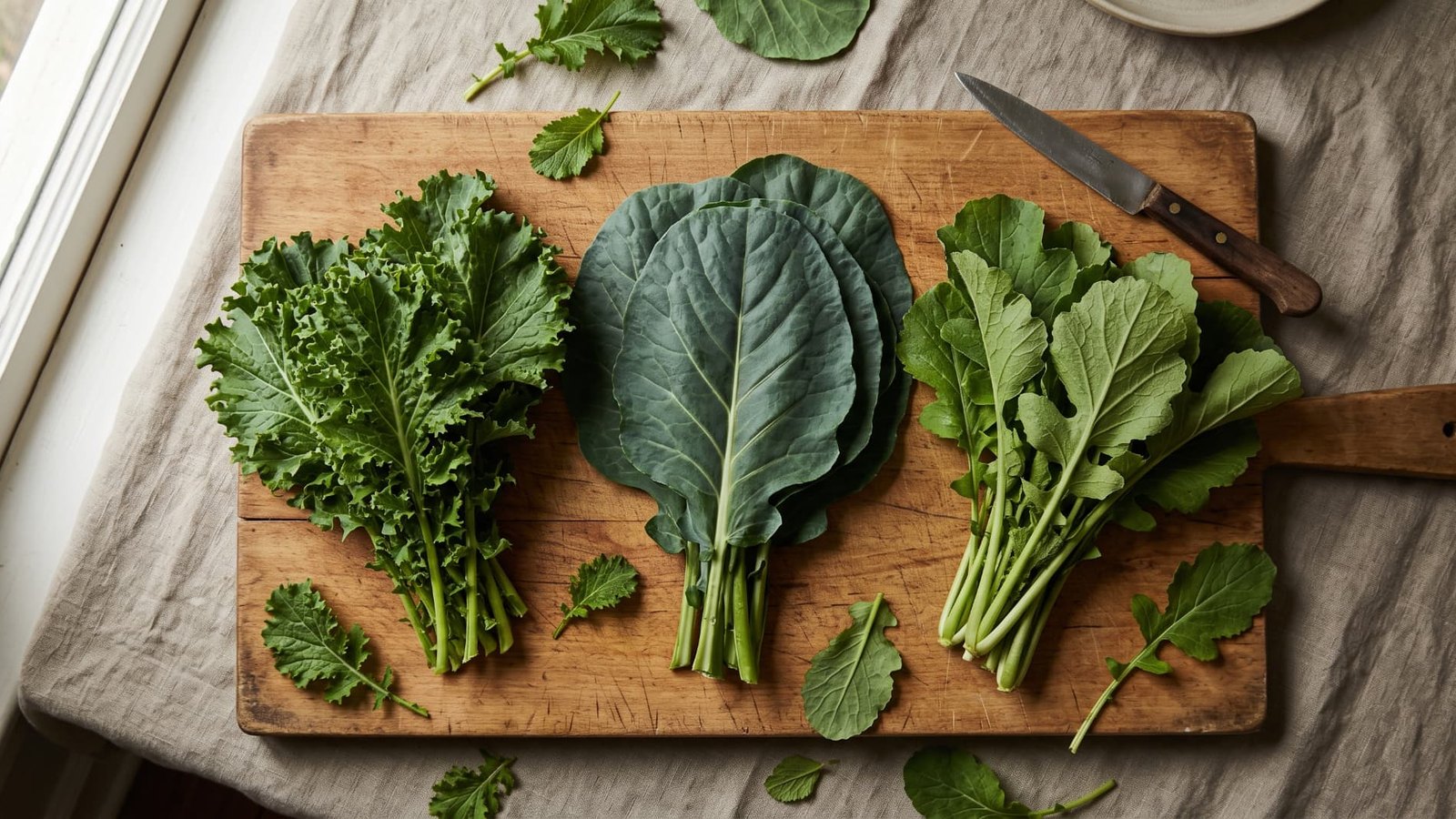
If you have ever stood in the produce aisle staring at three different bunches of dark leafy greens wondering what actually sets them apart, you are not alone. Mustard greens, collard greens, and turnip greens all show up in the same recipes, the same grocery bins, and the same Southern cookbooks, but they don't all cook the same way, so swapping one for another isn't always a clean trade. Each one has its own texture, its own flavor, and its own ideal cooking method. Here is how to tell them apart and get the most out of each.
What's the Difference Between Mustard, Collard, and Turnip Greens?
All three are leafy brassicas, cousins of cabbage, kale, and broccoli, but they behave very differently in the kitchen.
Mustard greens have thin, tender, ruffled leaves with a sharp, peppery bite that is close to horseradish when raw. Cooking mellows that heat considerably, which is why mustard greens work well in dishes that only need a few minutes on the stove.
Collard greens are the opposite: thick, broad, fibrous leaves with a mild flavor that leans slightly bitter to slightly sweet depending on how long they cook. That sturdiness means collards hold up to long, slow cooking without falling apart, which is exactly what they need to become tender.
Turnip greens land in between the other two. The leaves are ruffled like mustard greens but a bit heartier, with a pungent, slightly bitter flavor that softens with cooking, similar to mustard greens but not quite as sharp.
| Mustard Greens | Collard Greens | Turnip Greens | |
|---|---|---|---|
| Texture | Thin, tender | Thick, fibrous | Medium, ruffled |
| Flavor | Peppery, sharp | Mild, slightly bitter | Pungent, moderate bite |
| Best cooking method | Quick sauté or steam | Long braise or simmer | Sauté, or braise for the traditional result |
| Calories (raw, per 100g) | About 27 | About 32 to 33 | About 32 to 33 |
| Vitamin K (raw, per 100g) | About 258mcg | About 437mcg | About 251mcg |
| Stands out for | Vitamin C, lowest calories of the three | Vitamin K, calcium, and folate | A solid, well-rounded source of A, C, and K |
Nutritionally, all three are low-calorie vitamin K and vitamin A powerhouses, and on a like-for-like raw basis, mustard greens are actually the lightest of the three, not turnip greens. Collard greens lead on vitamin K, calcium, and folate. Mustard greens lead on vitamin C. Turnip greens land close to collard greens on calories and vitamin K, without a single standout nutrient of their own, but they're still a strong, well-rounded choice.
How to Cook Mustard Greens
Because the leaves are thin and tender, mustard greens only need a short amount of heat to mellow their peppery bite.
Sauté: Heat oil in a wide pan, add garlic, then add the greens a handful at a time, stirring until wilted, about 5 to 7 minutes total.
Steam: Steam for about 5 minutes, just until tender, then season.
Braise (Southern style): Mustard greens can also be simmered low and slow with smoked meat, the same way collards are, if you want a deeper, softer result. It takes longer than sautéing but delivers a more traditional, potlikker-style dish.
How to Cook Collard Greens
Collard leaves are thick and fibrous, so they need time and moisture to break down and become tender.
Braise or simmer: Remove the tough center stem, slice the leaves into ribbons, and simmer in broth or water, often with smoked turkey or ham hocks, for about an hour, until fully tender.
Sauté (quicker option): Thinly sliced collards can also be sautéed for 10 to 15 minutes if you want a faster, less traditional side, though they will have more bite than a long-braised version.
How to Cook Turnip Greens
For a quick sauté, turnip greens take a bit longer than mustard greens but less time than collards. For a traditional low-and-slow braise, though, they can take just as long as collards to reach that same fall-apart tenderness.
- Sauté: Cook in oil with garlic for about 8 to 10 minutes, until wilted and tender.
- Braise: Simmer with broth or smoked meat for 45 minutes to 1 hour for the traditional, fully tender result, about the same time collards need. If you prefer more bite and less cook time, turnip greens can also be simmered for as little as 20 to 30 minutes.
Storage and Freezing
All three greens store the same way, whether fresh or frozen.
In the fridge: Store unwashed in a plastic bag in the crisper drawer for about 5 to 7 days. Storage times vary by source depending on how the greens are packaged and how fresh they were at purchase, so use this as a general guide rather than an exact cutoff, and trust your eyes and nose if leaves start to yellow or smell off.
In the freezer: All three freeze well, but they need to be blanched first or they will lose flavor and texture quickly in the freezer.
- Wash the greens thoroughly and remove any tough stems.
- Bring a large pot of water to a boil.
- Water blanch collard greens for 3 minutes. Water blanch mustard greens and turnip greens for 2 minutes. (Steam blanching is not recommended for greens, since the leaves mat together and do not blanch evenly.)
- Transfer immediately to an ice water bath for the same amount of time as the blanch.
- Drain well, pack into freezer bags or containers with the air pressed out, and freeze.
Properly blanched and packaged, all three greens keep well in the freezer for about 8 to 12 months.
FAQ
Can I substitute one green for another in a recipe?
To some extent. For a quick sauté, mustard and turnip greens are close enough in cooking time to usually swap for each other. Collard greens are a different story for quick recipes: because they need much longer to become tender, swapping them into a quick mustard greens recipe will leave them tough and underdone. Worth knowing, though: if you are braising turnip greens low and slow rather than sautéing them, they can take nearly as long as collards, so don't assume turnip greens are always the fast option, it depends on the method.
Are mustard, collard, and turnip greens low FODMAP?
Yes. All three are commonly listed together on Monash University-based low FODMAP food guides, so they are generally considered safe for a low FODMAP diet in normal serving sizes.
Can dogs or rabbits eat mustard, collard, or turnip greens?
In moderation, yes, for both. For dogs, cook the greens plain, with no salt, butter, or seasoning, and skip the raw leaves, since they are harder to digest. A small handful a few times a week is plenty. For rabbits, greens are a supplement to hay, not a meal. Aim for about a cup of mixed greens per 2 pounds of body weight, rotated with other varieties rather than fed daily.
A few caveats are worth knowing. Collard greens are higher in calcium and oxalates, so dogs with a history of bladder or kidney issues should skip them. Mustard greens carry that same oxalic acid consideration for rabbits, which is why they are best rotated in rather than fed every day. Mustard and turnip greens both contain compounds that can affect thyroid function if fed raw and in large amounts, but cooking breaks these down, so it is mainly a concern with big raw servings, not an occasional cooked bite.
Do I need to remove the stems before cooking?
For collard greens, yes. The center stem is fibrous and takes much longer to cook than the leaf, so it is typically cut or stripped out before cooking. Mustard greens and turnip greens have more tender stems that can often be left in and cooked along with the leaves, though you can remove them if you prefer a more delicate texture.
What if I am short on time and just want greens as a side?
Canned greens are a completely valid shortcut. Canned collard, mustard, and turnip greens are already cooked, so all they need is a quick heat-through and a taste for seasoning. They will not have quite the same texture as fresh, slow-cooked greens, but they get you a side dish in minutes instead of an hour.
Which of the three is the most nutritious?
They are all strong choices, and the "best" one depends on what you are looking for. Collard greens lead on vitamin K, calcium, and folate. Mustard greens lead on vitamin C and have the fewest calories of the three. Turnip greens land close to collard greens on calories and vitamin K, without one standout nutrient of their own, but they are still a solid, well-rounded choice. All three are low-calorie and nutrient-dense, so you cannot really go wrong.
This article is for general food and nutrition information only and is not a substitute for advice from a veterinarian or medical professional. If your dog, rabbit, or other pet has an existing health condition, check with your vet before adding a new food to their diet.