Pomegranate 101: How to Pick, Cut, and Store It
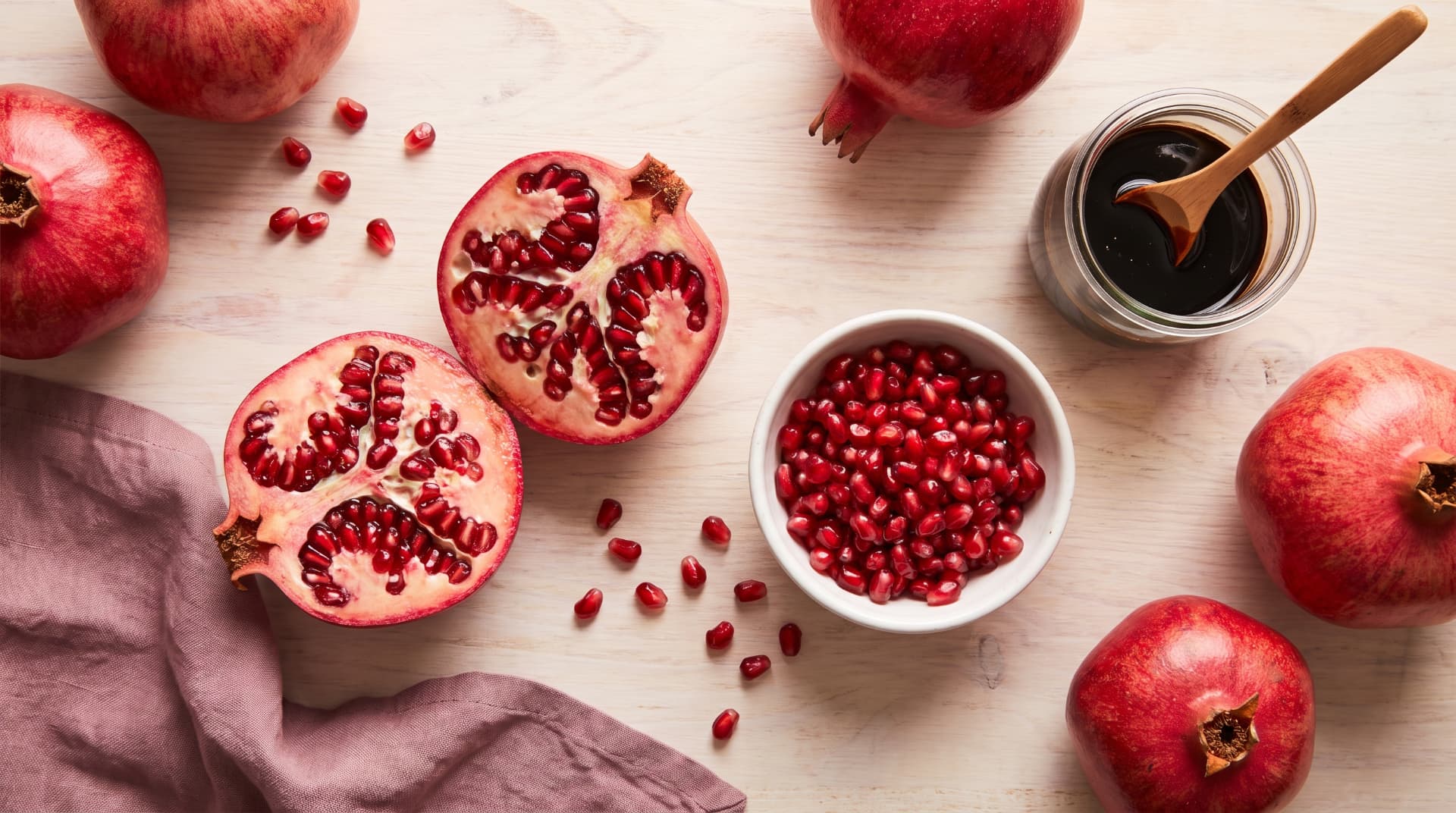
Pomegranates show up in the produce aisle every fall looking like they're daring you to try. Leathery skin, no obvious opening, and a reputation for turning your countertop into a crime scene. Here's the good news: picking a good one, opening it cleanly, and making it last more than three days all come down to a handful of specific tricks. No mystery required.
How to Pick a Ripe Pomegranate
Skip the "thump it and hope" approach. Here's what actually tells you something:
- Weight. Pick it up. A ripe pomegranate feels heavy for its size, that weight is juice. If two pomegranates are the same size and one feels noticeably lighter, put it back.
- Shape. Ripe pomegranates aren't perfectly round. Look for one that's slightly flattened or squared off at the stem and blossom ends, almost angular rather than ball shaped. A perfectly round pomegranate is often a sign it hasn't fully matured.
- Skin. You want skin that looks taut but has a slightly leathery texture, not shiny and tight like a balloon. Color varies a lot by variety, from deep red to a more brownish red, so don't rely on color alone.
- Sound. Tap it. A ripe pomegranate makes a dull, almost metallic sound because it's packed solid with juice-filled seeds. A hollow-sounding pomegranate usually means it's underripe.
The one fact that changes how you shop: pomegranates are non-climacteric, meaning they stop ripening the moment they're picked. Unlike a banana or an avocado, leaving it on your counter for a few extra days won't make it any riper or sweeter. Whatever ripeness it has at the store is what you're getting, so it's worth taking an extra ten seconds to actually check it before it goes in your cart.
How to Cut and Deseed a Pomegranate
The bowl-of-water method is the one nearly every source agrees on for a reason: it works, and it keeps your kitchen from looking like a bloody mess.
- Cut off the crown. Slice off the top, where the little crown-shaped stem is, just enough to expose the white pith underneath.
- Score the peel. Following the ridges you'll see running down the outside of the fruit, score the skin into four to six sections, cutting just through the peel without slicing into the seeds.
- Submerge and break apart. Fill a large bowl with cool water and pull the pomegranate apart into its scored sections while it's underwater.
- Release the seeds. Still submerged, gently work the seeds loose from the white membrane with your fingers. The seeds will sink to the bottom of the bowl and the membrane and pith will float to the top.
- Strain and store. Skim off the floating membrane, then pour the seeds through a strainer or colander to drain off the water.
Doing this underwater is the whole trick: it keeps the juice contained in the bowl instead of on your shirt, and it makes separating seeds from membrane much faster since everything settles by weight instead of you picking through it piece by piece.
How to Store Pomegranates
Whole, uncut pomegranates:
- Room temperature: about 1 to 2 weeks, kept out of direct sunlight
- Refrigerator (crisper drawer): 2 months or more, wrapped loosely or in a produce bag
Storage estimates vary somewhat by source and by pomegranate variety, so treat these as a reasonable range rather than an exact countdown. When in doubt, the fridge is the safer bet if you're not using it within the week.
Loose seeds (arils):
- Refrigerator, in an airtight container: 3 to 5 days
- Freezer: 6 to 12 months
To freeze arils, spread them in a single layer on a parchment-lined baking sheet and freeze until solid, about an hour or two, before transferring them to a freezer bag or airtight container. Freezing them loose first keeps them from clumping into one giant frozen block. Whole, uncut pomegranates don't freeze well: the high water content turns the fruit mushy and grainy once thawed, so it's really only worth freezing the seeds themselves.
Using Pomegranates: Juice, Molasses, and Beyond
Once you've got a bowl of seeds, a few directions are worth knowing:
- Straight up. Pomegranate seeds are ready to eat as-is, straight out of the bowl, or scattered over salads, yogurt, oatmeal, or roasted vegetables for a burst of tart crunch.
- Juice. Blend the seeds briefly and strain out the solids, or use a citrus juicer on a halved pomegranate for a quicker (if slightly less clean) extraction.
- Pomegranate molasses. This is a pantry staple in Middle Eastern cooking, made by simmering pomegranate juice down into a thick, tangy syrup. A simple version: combine 4 cups of pomegranate juice, ¼ cup of fresh lemon juice, and about ½ cup of sugar in a saucepan, bring it to a boil, then reduce to a gentle simmer for 50 to 60 minutes, stirring occasionally, until it's reduced to roughly 1 to 1¼ cups and coats the back of a spoon. The lemon juice and sugar aren't just for flavor, they also help the finished molasses keep longer in the fridge. If you want a more intensely tart, shorter-shelf-life version, you can skip the sugar and lemon entirely and just reduce the juice on its own.
Once you've got a bottle, use it as a glaze for roasted chicken, a tangy addition to salad dressings, or a drizzle over cheesecake or yogurt.
Pomegranate Nutrition at a Glance
Per 100g (about ½ cup) of raw pomegranate seeds, according to USDA FoodData Central:
| Nutrient | Amount |
|---|---|
| Calories | 83 |
| Protein | 1.67 g |
| Fat | 1.17 g |
| Carbohydrates | 18.7 g |
| Fiber | ~4 g |
These are estimates and can vary somewhat by pomegranate variety and size.
When Are Pomegranates in Season?
In the U.S., California grows the vast majority of the crop. Harvest generally begins in late September and runs through January, with the season peaking in October and November as the Wonderful variety, the most widely grown in California, reaches full maturity. That makes fall the best window for picking up fresh pomegranates at their best quality and price.
Speaking of storing things well past their season, if pomegranates got you thinking about the rest of your pantry, our Pantry Storage Calculator can help you figure out how much shelf space you actually need for everything else sitting in there.
FAQ
How do you know when a pomegranate is ripe?
Look for one that feels heavy for its size, has a slightly flattened or squared shape rather than perfectly round, and makes a dull, metallic sound when tapped. Skin color varies by variety, so don't rely on color alone.
Do pomegranates ripen after you pick them?
No. Pomegranates are non-climacteric, meaning they stop ripening once they're removed from the tree. Whatever ripeness a pomegranate has when you buy it is as good as it's going to get.
What's the easiest way to cut a pomegranate without making a mess?
Score the peel into sections along its natural ridges, then break it apart and separate the seeds from the membrane while submerged in a bowl of water. The seeds sink and the membrane floats, so cleanup is minimal.
How long do pomegranates last?
A whole, uncut pomegranate keeps for about 1 to 2 weeks at room temperature or 2 months or more in the refrigerator. Loose seeds last 3 to 5 days refrigerated in an airtight container.
Can you freeze pomegranate seeds?
Yes. Spread them in a single layer on a baking sheet, freeze until solid, then transfer to a freezer bag or container. They'll keep for 6 to 12 months. Whole, uncut pomegranates don't freeze well.
What is pomegranate molasses?
It's pomegranate juice simmered down with a little sugar and lemon juice into a thick, tangy syrup, commonly used in Middle Eastern cooking as a glaze, dressing ingredient, or drizzle.