Rice Pilaf 101: What It Actually Is
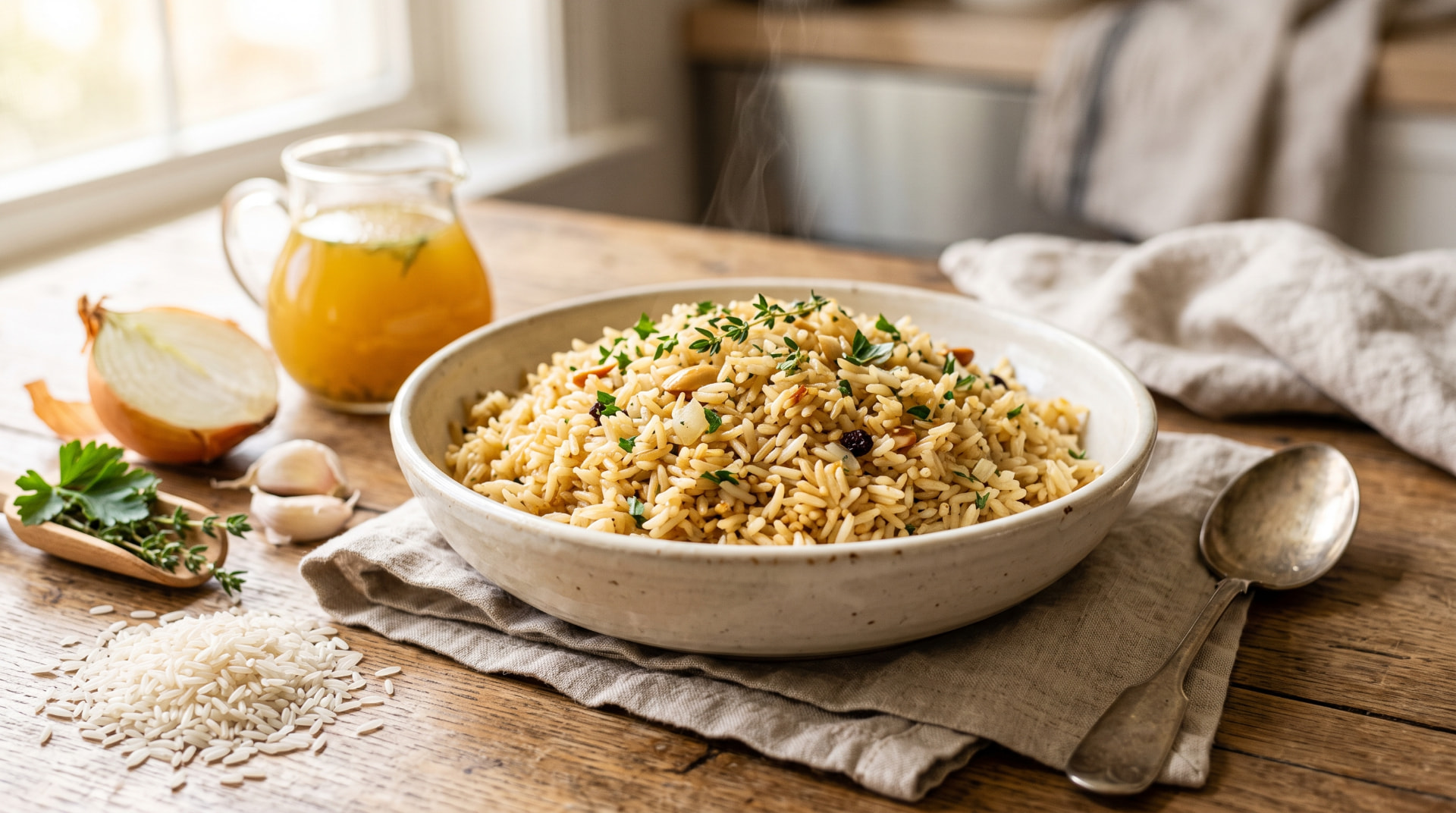
If you grew up with a box of Rice-A-Roni or a side of pilaf at a wedding buffet, you probably think of pilaf as a specific dish. It's not. Pilaf is a cooking technique, and once you know it, you can apply it to almost any grain in your pantry.
What Is Pilaf?
Pilaf is a method of cooking rice (or another grain) where the grain is first sautéed in fat with aromatics, then cooked in a measured amount of liquid that's added all at once, covered, and left mostly undisturbed until absorbed. The result is separate, fluffy grains rather than a sticky or creamy texture. If you need help figuring out how much rice to cook, try our Rice Calculator.
The technique goes by different names depending on the region: pilav in Turkey, pulao in South Asia, plov in Central Asia, polo in Persian cuisine. All of them describe the same basic process. Pilaf is believed to have originated in Persia and spread widely across Central Asia, the Middle East, and South Asia over the centuries, eventually influencing dishes like Spanish paella and Indian biryani.
What Is Pilaf Made Of?
A basic pilaf comes down to five components:
- Grain: Long-grain rice (basmati, jasmine, or plain long-grain) is the most common choice, though pilaf can also be made with bulgur, orzo, or other grains.
- Fat: Butter or oil, used to sauté the grain and aromatics before any liquid goes in.
- Aromatics: Onion and garlic are the base; many regional versions add warming spices like cumin, cinnamon, or cardamom.
- Liquid: Broth or stock, added in a measured ratio and not topped off mid-cook.
- Add-ins (optional): Toasted nuts, dried fruit, vegetables, or orzo pasta are common depending on the regional style.
How Pilaf Differs From Plain Rice
Plain rice is simmered in water with no aromatics and no pre-toasting step. Pilaf builds flavor before the liquid ever goes in: the grain is coated in fat and toasted briefly, which is why pilaf has a nuttier, more savory flavor than a pot of plain steamed rice.
How Pilaf Differs From Risotto
Pilaf and risotto are often confused because both start by toasting rice in fat, but the similarities end there.
| Pilaf | Risotto | |
|---|---|---|
| Rice type | Long-grain (basmati, jasmine) | Short-grain, starchy (arborio, carnaroli) |
| Liquid method | Added all at once, covered | Added gradually, stirred constantly |
| Texture goal | Separate, fluffy grains | Creamy, starchy consistency |
| Origin | Persia, spread across Central and South Asia | Northern Italy |
The core difference is starch. Risotto relies on constant stirring to release starch from short-grain rice and build a creamy sauce around the grains. Pilaf does the opposite: long-grain rice is lower in the starch that causes stickiness, and the hands-off cooking method keeps grains from breaking down, so the starch stays put and the grains stay separate.
Best Rice for Pilaf
Long-grain rice varieties like basmati and jasmine work best for pilaf because they're higher in amylose, a starch type that resists clumping as it cooks. Short-grain and medium-grain rice varieties contain more amylopectin, which is what makes rice sticky, so they're better suited to dishes like risotto or sushi rice than to pilaf.
Frequently Asked Questions
Is pilaf the same thing as rice?
No. Rice is the ingredient; pilaf is a cooking method. You can make pilaf with rice, but also with bulgur, orzo, or other grains.
Is rice pilaf gluten free?
It depends on the recipe. A pilaf made with rice, broth, and vegetables is naturally gluten free, but many boxed and homemade versions include orzo pasta, which contains wheat. Always check the ingredient list if you need a gluten-free version.
How many calories are in rice pilaf?
A cup of homemade rice pilaf typically runs somewhere between 200 and 260 calories, depending on how much fat is used and what add-ins go in. Plain white rice alone is closer to 200 calories per cup, and butter, oil, nuts, or dried fruit will push the total higher.
What's the difference between pilaf and risotto?
Pilaf uses long-grain rice and a hands-off, absorption cooking method that keeps grains separate. Risotto uses short-grain, starchy rice and requires constant stirring to build a creamy texture.
Can pilaf be made without rice?
Yes. Bulgur pilaf is common in Middle Eastern and Mediterranean cooking, and orzo, lentils, and other grains can also be prepared using the pilaf method.