Salted vs. Unsalted Butter: A Guide For Baking
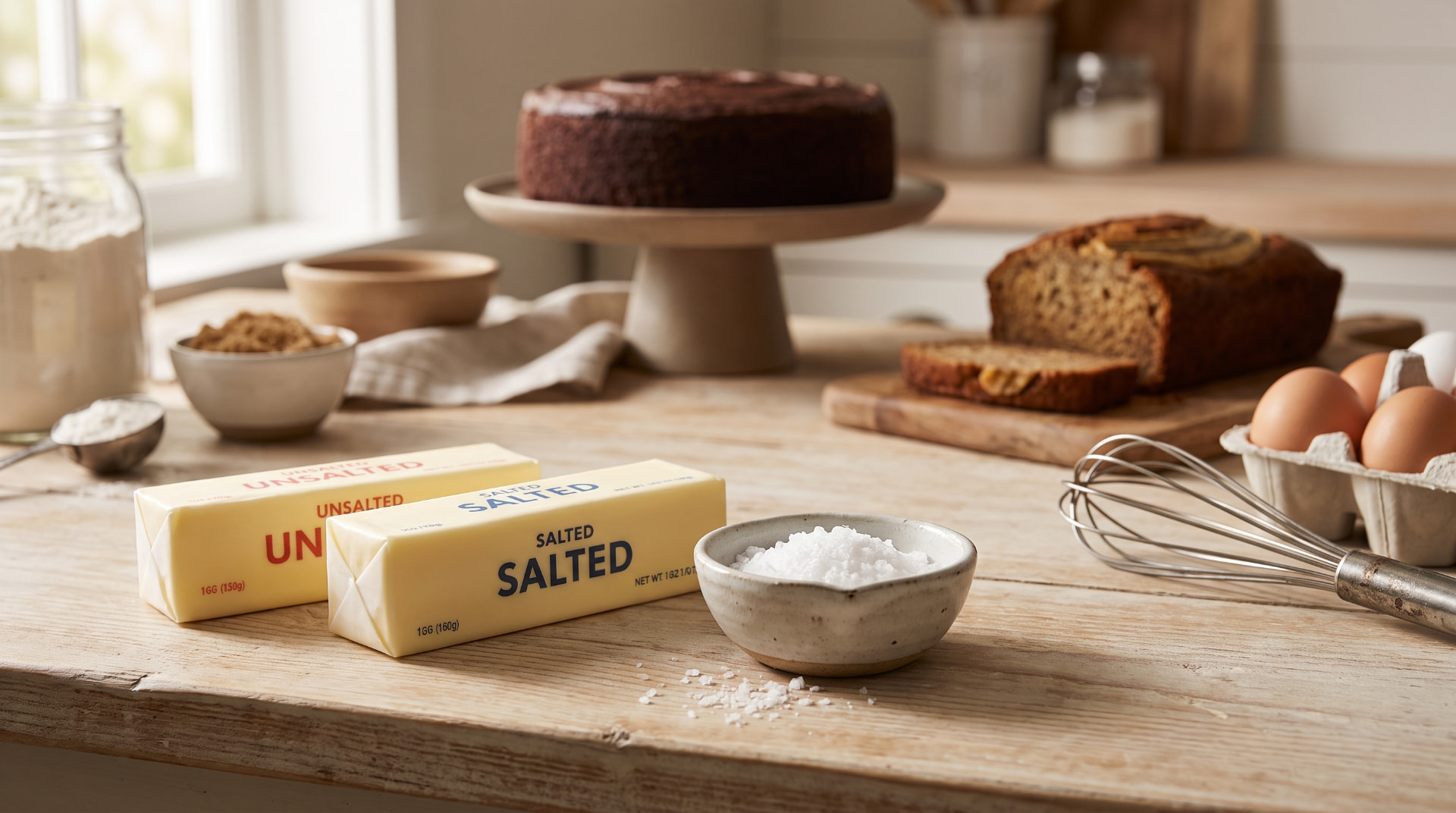
You're standing in front of the butter aisle, recipe in hand, and it just says "butter." Salted or unsalted? Does it actually matter, or is this one of those rules bakers made up to sound fancy?
It matters, but maybe not as much as you think, and not for the reason most people assume. The real issue isn't flavor. It's control. Salted butter isn't standardized: one brand's stick might carry twice the salt of another's, and salted butter also tends to hold more water, which can affect texture in ways that have nothing to do with taste. Unsalted butter gives every recipe a clean, predictable baseline.
But "always use unsalted" isn't the full story either. Some recipes genuinely don't care. Others have bakers split right down the middle. Here's exactly where each one matters, recipe by recipe.
Salted vs. Unsalted Butter for Baking, at a Glance
| Recipe Type | Best Choice | Why |
|---|---|---|
| Cookies (delicate, e.g. sugar cookies, shortbread) | Unsalted | Subtle flavor means salt variance is noticeable |
| Cookies (simple, e.g. chocolate chip, oatmeal) | Either works | Forgiving recipe, salted adds a nice edge |
| Brownies | Either works | Dense and chocolate-forward, so it's forgiving of either butter type, similar to muffins and quick breads |
| Banana Bread | Either works | Most forgiving of all, just adjust added salt |
| Pie Crust & Pastry Dough | Unsalted | Control matters for a neutral, flaky base |
| Cake (especially vanilla or delicate sponge) | Unsalted | Same logic as delicate cookies |
| Frosting & Buttercream | Either works | Genuinely divided; salted can cut sweetness |
Why Butter Type Actually Matters in Baking
Salted butter isn't made to a single standard. The salt content in salted butter typically runs between 1.25% and 1.75% of the total weight, and it varies brand to brand. To put that in real terms: Kerrygold's salted butter runs around 100mg of salt per tablespoon, while a lightly salted option like Straus comes in closer to 45mg. Same "salted butter" label, more than double the salt.
Then there's water. Salted butter tends to carry a higher water content than unsalted, generally landing somewhere between 10% and 18% versus unsalted's lower end. In baking, that extra water can interfere with gluten development, which is part of why cookies made with salted butter sometimes spread more and bake up a little paler and doughier than the same recipe made with unsalted.
None of this means salted butter is "worse." It just means it's variable, and variability is exactly what you don't want when a recipe depends on precise ratios. If you need to convert between sticks, cups, tablespoons, or grams, the Butter Calculator handles the math. For a broader look at every butter option on the shelf, see our guide to types of butter.
By Recipe Type
Cookies
This one splits into two camps. Delicate cookies like sugar cookies, shortbread, and macarons rely on a clean, subtle butter flavor, so unsalted is the better call; it lets you control exactly how much salt makes it into the dough. Simpler, heartier cookies like chocolate chip and oatmeal are far more forgiving. Salted butter can actually work in their favor here, adding a little extra edge that plays well against brown sugar and chocolate.
If you do use salted butter in a recipe that calls for unsalted, hold back roughly ¼ teaspoon of added salt per stick of butter used.
Brownies
Brownies are dense, rich, and built around chocolate, which does a lot of the flavor work on its own. That makes them tolerant of either butter type. If your recipe calls for unsalted and all you've got is salted, go ahead and use it. Just skip or reduce any additional salt the recipe calls for.
Banana Bread
Banana bread might be the single most forgiving recipe in the baking world when it comes to butter type. The bananas, sugar, and spices carry so much of the flavor that the salt content barely registers either way. If a recipe calls for unsalted butter and you only have salted, just leave out the pinch of added salt and bake as usual.
Pie Crust and Pastry Dough
This is where unsalted earns its reputation. A good pie crust depends on precise fat-to-flour ratios and a clean, neutral flavor base that lets the filling do the talking. Professional bakers lean unsalted here specifically for that reason: it gives full control over seasoning and keeps the crust from turning out unpredictably salty batch to batch. That said, plenty of home bakers use salted butter for pie crust with good results. If that's what's in your fridge, just dial back any added salt in the recipe.
Cake
Cake follows the same logic as delicate cookies, especially for vanilla or plain sponge cakes where there's nowhere for excess salt to hide. Unsalted butter is the safer default so the other flavors, vanilla, citrus, spice, come through cleanly. Denser, more assertively flavored cakes (think chocolate or spice cake) have a little more wiggle room.
Frosting and Buttercream
Here's the genuinely contested one. Classic advice says unsalted, so you can add just enough salt to balance the sugar without guessing. But plenty of experienced bakers actually prefer salted butter for buttercream specifically because it cuts through the sweetness without any extra measuring. In one taste test, panelists leaned toward unsalted butter with a controlled pinch of salt added back in, but the margin wasn't huge. This is one case where personal preference genuinely rules.
Substituting One for the Other
If you're standing in your kitchen with the wrong butter and no time for a grocery run, here's the simple swap:
- Recipe calls for unsalted, you have salted: Use the salted butter and reduce any added salt in the recipe by about ¼ teaspoon per stick of butter used.
- Recipe calls for salted, you have unsalted: Use the unsalted butter and add back about ¼ teaspoon of salt per stick.
This won't be a perfect one-to-one match since salt content varies by brand, but it'll get you close enough that most people won't notice a difference.
Frequently Asked Questions
What's the actual difference between salted and unsalted butter?
Salted butter has salt added during production, typically making up 1.25% to 1.75% of its total weight, while unsalted butter has none. Salted butter also tends to carry a higher water content, which is the bigger factor in how it behaves during baking.
Can I substitute salted butter for unsalted in a recipe?
Yes. Use the same amount of salted butter called for, then reduce any additional salt in the recipe by about ¼ teaspoon per stick of butter used.
Why do most baking recipes call for unsalted butter?
Because salt content in salted butter isn't standardized across brands, using unsalted butter lets a recipe control the exact amount of salt added, which keeps results consistent no matter which brand of butter you buy.
Is salted or unsalted butter better for cookies?
It depends on the cookie. Delicate cookies like sugar cookies and shortbread benefit from unsalted for a cleaner flavor. Heartier cookies like chocolate chip and oatmeal are forgiving of either.
Does the type of butter I use really change the texture of baked goods?
It can, though it's the water content more than the salt that's responsible. Salted butter's higher water content can interfere with gluten development, occasionally leading to more spread in cookies or a slightly denser crumb.
Which has a longer shelf life, salted or unsalted butter?
Salted butter, generally by a few months, since salt acts as a natural preservative. Unsalted butter is typically fresher on the shelf but should be used or frozen sooner.