What Are Scallops? Bay vs. Sea & How to Cook Them
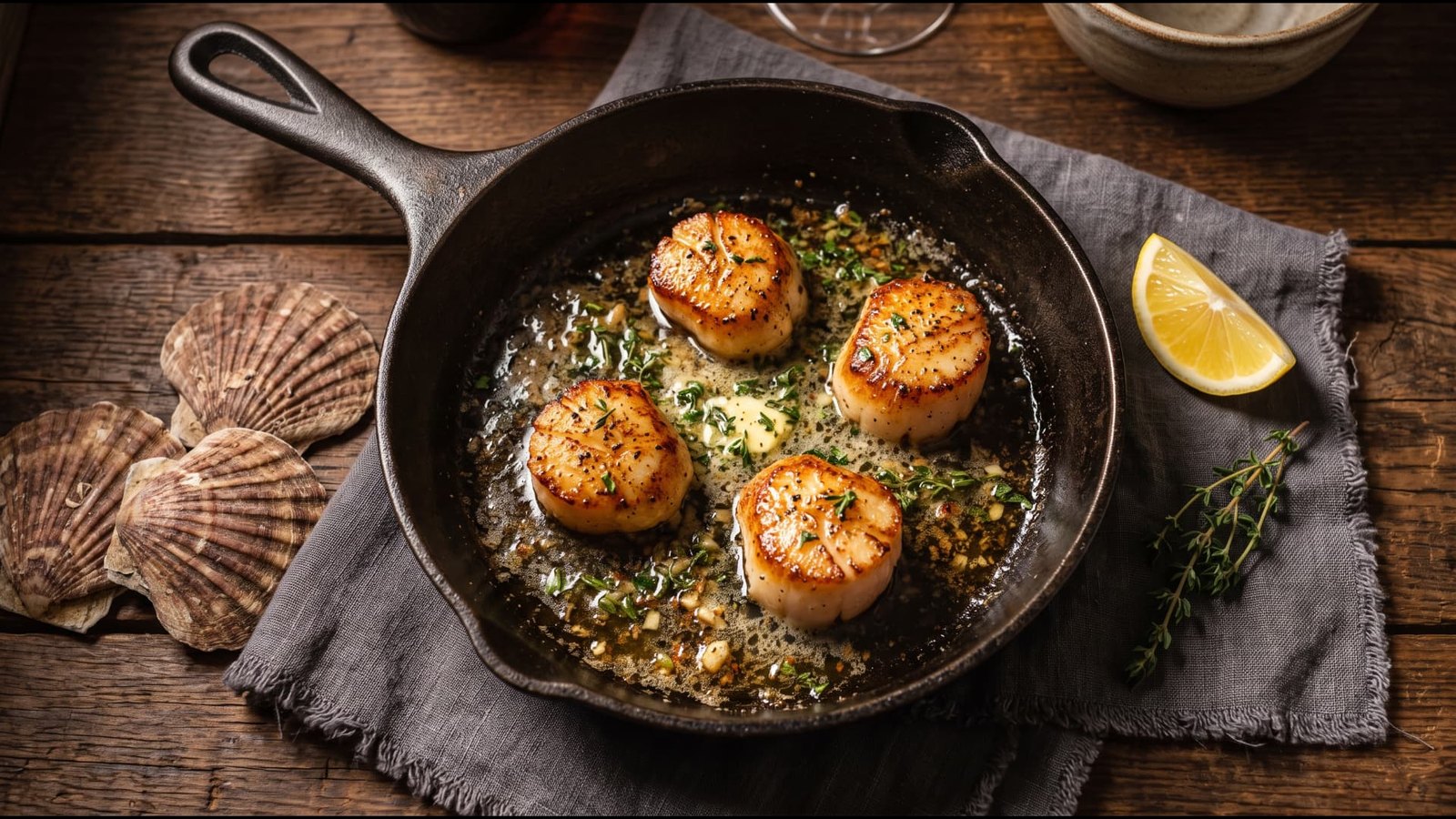
Scallops show up on menus looking fancy and expensive, but they're one of the easiest seafoods to cook well at home once you know what you're working with. Here's what a scallop actually is, how bay and sea scallops differ, and how to cook them so they turn out tender instead of rubbery.
What Are Scallops?
Scallops are bivalve mollusks, the same family that includes oysters, mussels, and clams. That makes them shellfish, so if you have a shellfish allergy, scallops are off the table along with the rest of that group.
What you're eating is the adductor muscle, the part that opens and closes the scallop's two hinged shells. It's firm, white, and mild, with none of the "fishy" flavor people sometimes expect. Some scallops are sold with the coral still attached, the soft orange or red section next to the muscle, which is edible and has a stronger, slightly sweet flavor.
Unlike clams or mussels, scallops don't stay put. They can actually swim, clapping their shells together to jet away from predators, and they have dozens of small eyes along the edge of their shell that detect light and movement. They don't have teeth or a centralized brain. Instead, their nervous system is made up of a few small clusters of nerve cells called ganglia spread through their body.
Bay Scallops vs. Sea Scallops
The two scallops you'll actually find at the store are bay and sea scallops, and the difference comes down to size and where they're harvested.
Bay scallops are small, about a half inch to three-quarters of an inch across, with 50 to 100 to a pound. They come from shallow, protected water like bays and estuaries, with the Gulf Coast of Florida being one of the best-known sources. They're sweeter and more tender than sea scallops, which makes them a good fit for soups, stews, and pasta rather than searing on their own.
Sea scallops are the larger ones, running 1.5 to 2 inches across with 20 to 30 to a pound. They come from deeper ocean water and have a firmer texture, which is exactly what you want for a hard sear. If a recipe calls for pan-seared scallops, it means sea scallops.
You'll also see a few named varieties worth knowing:
- Hokkaido (Yesso) scallops come from the cold waters around Japan's northern island and are prized for sashimi-grade sweetness.
- Weathervane scallops are the largest scallop in the world, caught mostly off Alaska, with a giant orange shell and a big adductor muscle.
- Patagonian scallops are smaller and sweeter, wild-caught off Argentina and typically frozen at sea shortly after harvest.
- Callo de hacha is a Mexican specialty from a pen shell mollusk, not technically a true scallop, but it looks and tastes close enough that it's sold and cooked the same way, especially in aguachile and ceviche.
You'll also see scallops labeled diver (hand-harvested by divers, minimal damage, usually the priciest) or dayboat (trawled and brought in the same day, more common and more affordable).
If you're planning to serve scallops as part of a bigger spread, the Seafood Buffet Calculator can help you figure out how much to buy per guest.
How to Cook Scallops
Scallops cook fast, so the biggest mistake is overcrowding the pan or walking away.
To sear scallops:
- Pat them completely dry with paper towels. Any surface moisture steams instead of searing.
- Heat oil and butter in a skillet over medium-high heat until it's shimmering.
- Place scallops in the pan without letting them touch each other. Don't move them.
- Sear 1.5 to 2 minutes per side, until a golden-brown crust forms.
- Remove from the pan, season with salt, and finish with a squeeze of lemon.
Scallops can also be sautéed, grilled on skewers (3 minutes per side), or baked at 350°F for 20 to 25 minutes if you're going the butter-and-breadcrumb route.
Cooking from frozen: thaw scallops in the refrigerator overnight, wrapped in a paper towel to absorb extra moisture, then pat dry before cooking as usual. Cooking them straight from frozen makes it much harder to get a good sear.
How to Tell When Scallops Are Done
Scallops go from perfectly cooked to rubbery in about 30 seconds, so knowing exactly when to pull them matters.
Visually, a done scallop is opaque all the way through and firm but not hard, with a golden crust on the outside. If it's still translucent in the center, it needs more time.
For an exact number, the USDA recommends cooking scallops to an internal temperature of 145°F. Many chefs pull them earlier, around 120 to 125°F, since the temperature keeps climbing a few degrees after they're off the heat. If you're checking with a thermometer, remove them from the pan a little before they hit your target to avoid overcooking.
FAQ
Are scallops shellfish?
Yes. Scallops are bivalve mollusks in the same broad shellfish category as oysters, mussels, and clams. Anyone with a shellfish allergy should avoid them.
How are scallops harvested?
Most scallops are harvested by trawling, where boats drag nets along the ocean floor. Diver scallops are hand-collected instead, which is gentler on the seafloor and typically commands a higher price. Dayboat scallops are trawled and brought back to port the same day they're caught.
Do scallops feel pain?
This is genuinely debated. Scallops don't have a centralized brain, and their nervous system is made up of a few scattered ganglia rather than a brain and spinal cord. Because of this, the scientific consensus leans toward scallops not experiencing pain the way animals with a central nervous system do, though it's an active area of research. It's part of why some plant-based eaters who otherwise avoid animal products still eat bivalves like scallops, oysters, and mussels.
Can dogs eat scallops?
Yes, in small amounts. Scallops should be fully cooked, plain with no butter or seasoning, and removed from the shell before serving. Never give a dog raw scallops or any part of the shell, which can splinter and cause choking or internal injury.
Why are scallops so expensive?
Scallops are labor-intensive to harvest, especially diver scallops, and they have a short shelf life once out of the shell. Wild sea scallop populations are also more tightly regulated than many other seafoods, which limits supply and keeps prices higher than farmed shellfish like mussels or farmed shrimp.