Seasoning 101: The Anatomy of a Chicken Blend
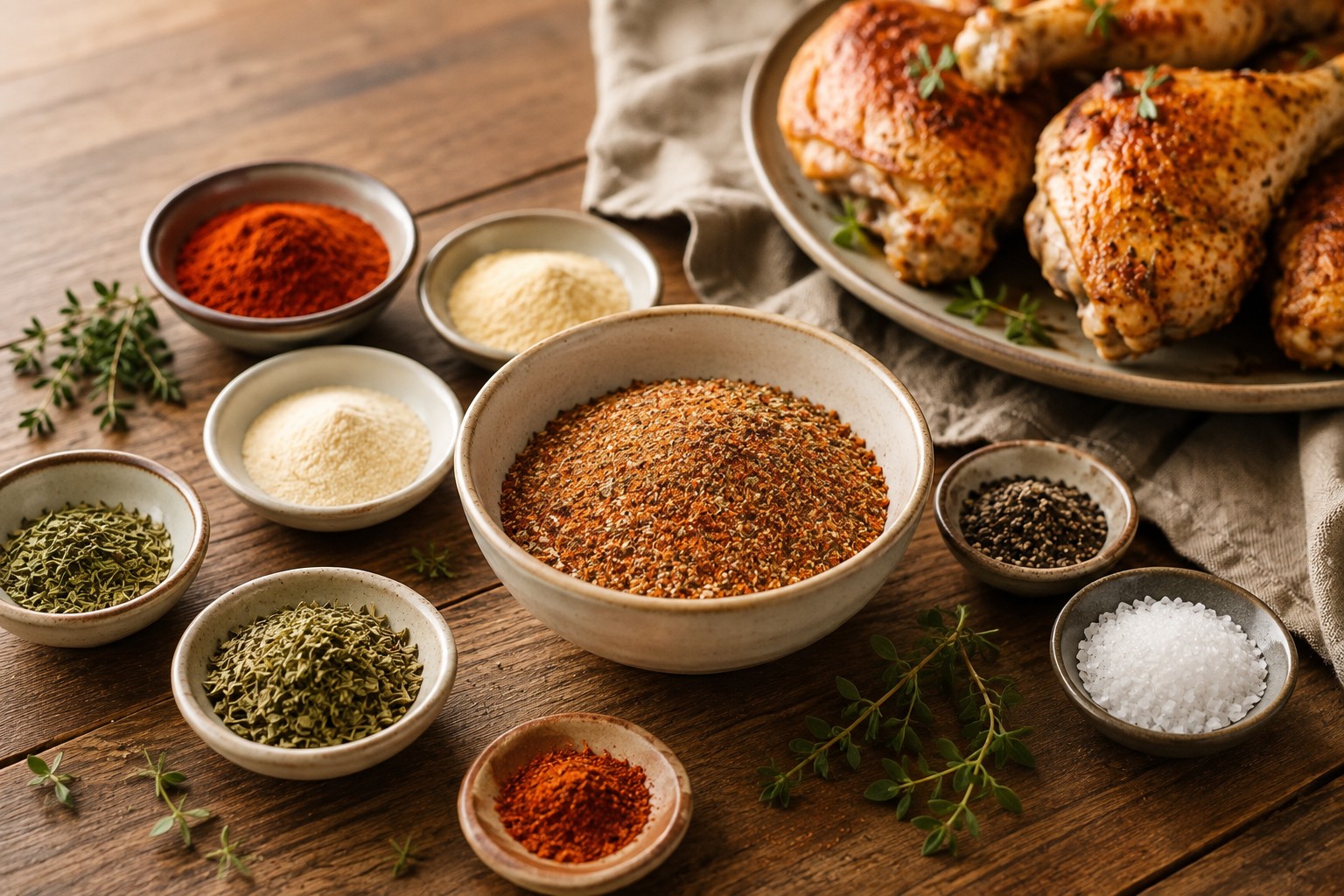
Chicken is the blankest of blank canvases. That's exactly why "how do I season it" is one of the most searched cooking questions there is. The chicken itself barely has a flavor of its own, which means the seasoning is doing almost all of the work. Get it right and chicken tastes like whatever cuisine you're craving. Get it wrong and it tastes like nothing at all.
This guide breaks seasoning down two ways: by cuisine, so you know what flavor direction to go in, and by cut, so you know how to actually apply it. Bookmark the table. It's the part you'll come back to.
The Cuisine Table
Every cuisine builds its chicken flavor around a small, recognizable set of ingredients. Here's a side-by-side breakdown of the most-searched seasoning styles and what they're actually made of.
| Cuisine | Core Seasonings | Flavor Profile | Best For |
|---|---|---|---|
| Cajun | Paprika, cayenne, garlic powder, onion powder, oregano, thyme, black pepper | Smoky, peppery, bold | Breast, thighs, blackened |
| Taco / Tex-Mex | Chili powder, cumin, paprika, garlic powder, oregano, a little cinnamon | Earthy, warm, savory | Ground, thighs, fajita strips |
| Ranch | Dried dill, garlic powder, onion powder, parsley, buttermilk powder | Herby, tangy, cooling | Wings, tenders, salad toppers |
| Fajita | Chili powder, cumin, smoked paprika, garlic, onion, lime zest | Smoky, citrusy, bright | Strips, breast, grilled |
| Jerk | Allspice, scotch bonnet or cayenne, thyme, cinnamon, nutmeg, brown sugar | Sweet-hot, warm, aromatic | Thighs, drumsticks, grilled |
| Mediterranean | Oregano, garlic, lemon zest, thyme, a little cinnamon | Bright, herbal, light | Breast, thighs, skewers |
| Poultry Seasoning (classic) | Sage, thyme, marjoram, rosemary, black pepper | Savory, herbal, homestyle | Whole roast, breast, gravy dishes |
| Montreal-Style | Coarse pepper, garlic, coriander, dill, paprika | Peppery, coarse, savory | Grilled breast, thighs |
The reason cuisines taste different from each other even when they share ingredients (garlic and paprika show up almost everywhere) comes down to ratio and what's paired with them. Cajun leans hard on pepper heat. Fajita leans on smoke and citrus. Jerk leans on warm sweetness before the heat hits. Same pantry, different destination.
Seasoning by Cut
The blend matters, but so does the cut you're putting it on. Different parts of the chicken hold seasoning differently.
Chicken Breast
Breast meat is lean and mild, which means it needs the most help and is also the easiest to overdo. A dry rub works well here, but breast benefits more than any other cut from a short marinade or brine first, since there's no fat to keep it from drying out. Stick to a thin, even coating and don't skip a little oil to help the seasoning adhere.
Chicken Thighs
Thighs have more fat and more forgiveness. They can handle heavier, bolder blends (Cajun, jerk, fajita) without drying out, and they hold up well to both dry rubs and marinades. If you're only going to season one cut generously, make it thighs.
Chicken Wings
Wings are mostly skin surface area, so this is where a dry rub shines over a wet marinade. The seasoning clings to the skin and crisps up in the oven or fryer instead of steaming off. Ranch and Cajun are the two most-searched wing seasoning styles for exactly this reason.
Fried Chicken
Fried chicken gets seasoned twice: once in the wet dredge (buttermilk or egg wash) and once in the flour itself. Seasoning the flour, not just the chicken, is the step most home cooks skip and the one that makes the biggest difference. Paprika, garlic powder, onion powder, and a little cayenne in the flour will out-flavor a plain-flour fried chicken every time.
Seasoning by Use-Case
Sometimes you're not cooking a cuisine, you're cooking a dish. Here's how seasoning shifts depending on what the chicken is headed for.
- Chicken Alfredo: Keep it simple. Salt, pepper, garlic powder, and a little Italian seasoning is enough, since the sauce is doing the heavy lifting.
- Chicken Tacos: Lean on the Taco/Tex-Mex blend from the table above. A squeeze of lime after cooking brightens it further.
- Chicken Caesar Salad: Black pepper, garlic, and a light hand with salt. The dressing is already salty and sharp, so the chicken seasoning should stay in the background.
- Chicken Queso or Nachos: Similar to tacos, but pull back the chili powder slightly so it doesn't compete with the cheese.
- Jerk Chicken: This one's a dish and a cuisine at once. Use the full jerk blend from the table, and let it marinate if you have the time. Jerk is one of the few blends that genuinely improves with a longer sit.
Dry Rub vs. Marinade
Both are seasoning delivery methods, but they work differently and knowing which one to reach for saves a lot of guessing.
Dry rub is seasoning applied directly to the surface of the chicken, usually with a little oil to help it stick. It's fast, it's what you want for anything going under a broiler or into a fryer where you need the exterior to crisp, and it's the better choice for wings and fried chicken specifically.
Marinade is a liquid mixture the chicken sits in, usually with an acid (citrus, vinegar, buttermilk) alongside the seasoning. It seasons more gently but penetrates deeper, and it adds moisture, which is why lean cuts like breast benefit from it the most. The tradeoff is time. A dry rub can go straight into the pan. A marinade needs at least 30 minutes, and ideally a few hours, to actually do anything.
Neither one is "better." A dry rub is the right call when you want texture and speed. A marinade is the right call when you want depth and you have the time to give it.
FAQ
What's the best all-purpose chicken seasoning?
A basic blend of paprika, garlic powder, onion powder, black pepper, and salt works on almost any cut and any cooking method. It's the base that most cuisine-specific blends build on top of.
What is chicken seasoning actually made of?
Most store-bought and homemade chicken seasoning blends are built from paprika, garlic powder, onion powder, black pepper, salt, and a dried herb like oregano or thyme. Specific styles (Cajun, ranch, jerk) add or swap ingredients from there.
Should I season chicken before or after cooking?
Before. Seasoning after cooking only flavors the surface and doesn't get a chance to penetrate. Season at least a few minutes ahead, or longer if you're using a marinade.
Can I use the same seasoning on all cuts of chicken?
You can, but breast will need a lighter hand or a marinade to avoid drying out, while thighs and wings can handle a heavier dry rub without issue.
What seasoning goes with chicken alfredo?
Keep it simple: salt, pepper, garlic powder, and a light Italian seasoning. The alfredo sauce provides most of the flavor, so the chicken shouldn't compete with it.
Not sure how long to cook your seasoned chicken once it's ready for the pan? Our Chicken Calculator takes the guesswork out of timing by cut and cooking method.