Shallots 101: What They Are, How to Use Them, and What to Substitute
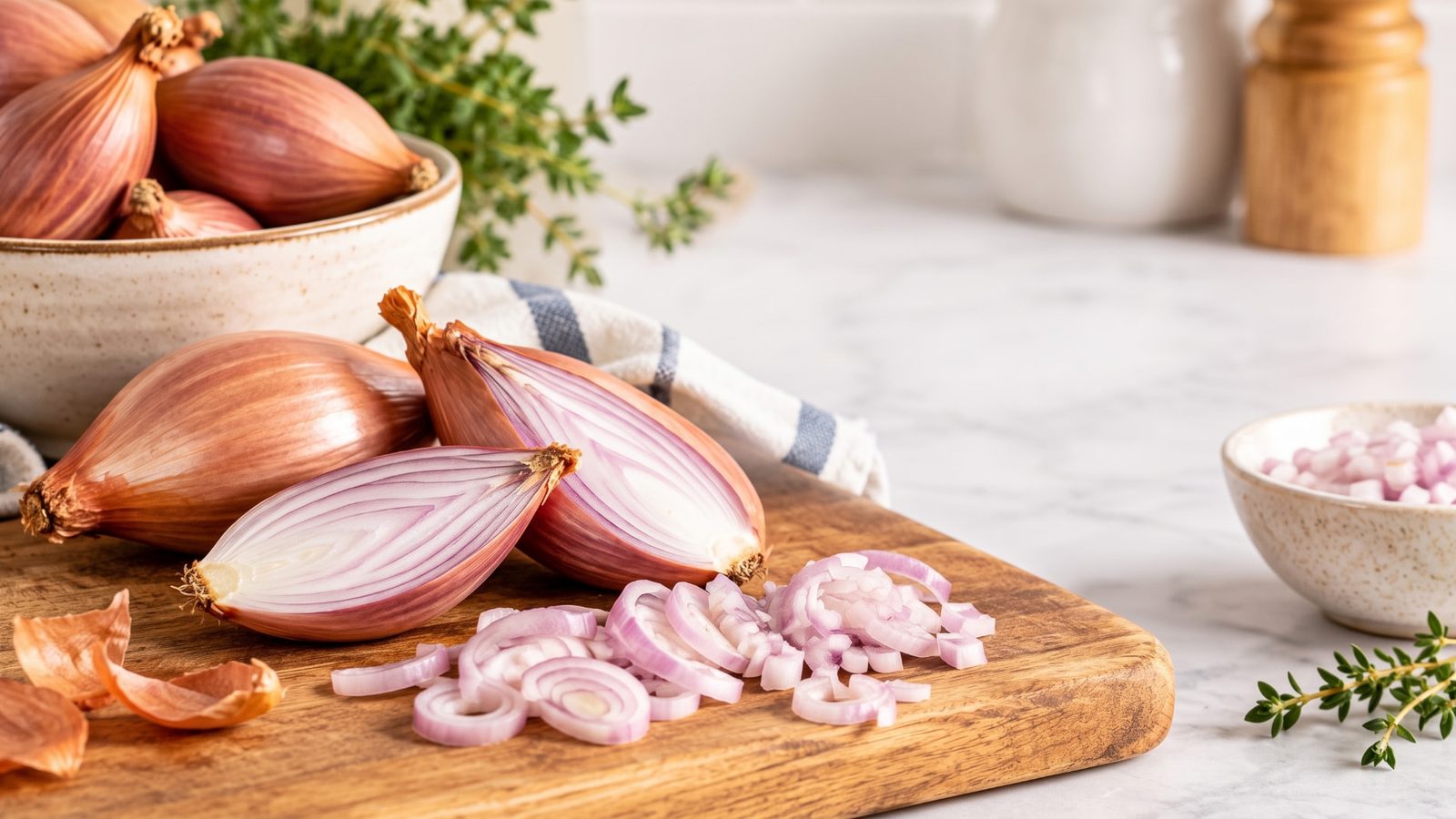
Shallots show up in fancy restaurant recipes, cost more than onions, and sit in the produce aisle in tiny bags looking smug. Good news: they are just small, mild onions with better manners, and you do not need a culinary degree to cook with them.
Quick answer: A shallot is a small, mild, slightly sweet member of the onion family that grows in clusters. In most cooked recipes, you can swap in yellow onion at a 1:1 ratio, chopped. Store whole shallots in a cool, dark, ventilated spot for about a month.
What Is a Shallot?
A shallot is a type of onion. Botanically, it belongs to the onion species Allium cepa, in a group called the Aggregatum Group. "Aggregatum" simply means the bulbs grow in clusters, with one plant producing several small bulbs. A common onion, by contrast, usually forms one large bulb. Shallots were once classified as their own species, but that name was folded into the onion species around 2010.
Shallots are small and oval, with thin, papery skin that ranges from coppery brown to rosy pink. Inside, the flesh is white to pale purple. Many shallots split into two separate cloves when you peel them.
Types of Shallots
You may not find every variety, but these are the ones you’re most likely to come across.
- French red shallots: The most common type in US grocery stores. They have coppery-red skin and a classic mild, slightly sweet flavor.
- Banana shallots (echalion): Long and narrow, usually one bulb instead of a cluster. They are easier to peel and chop, and they sit somewhere between a shallot and a sweet onion.
- Jersey (pink) shallots: Larger and rounder, with a rosy-pink color.
- Gray shallots (griselle): Gray-brown skin and purple flesh. French chefs call these the "true shallot," and they are actually a different species (Allium oschaninii). They are harder to find in the US.
- Dutch yellow shallots: Sharper and more onion-like than French red shallots, with less of the delicate sweetness.
How to pick good shallots: Choose bulbs that feel solid and heavy for their size, with tight, dry skins. Skip any with soft patches or green shoots.
What Do Shallots Taste Like?
Shallots taste like a milder, sweeter onion, with a faint garlic-like note that some people pick up on. Raw, they have a gentle bite that is less sharp than most onions. Cooked, they turn soft and sweet and melt into sauces. That balance is why cooks reach for them in vinaigrettes, pan sauces, and dishes where a more prominent onion flavor would take over.
Shallots vs. Onions, Scallions, and Pearl Onions
Shallots vs. onions: Shallots are a kind of onion, just smaller, milder, and sweeter. They are especially good in raw dishes like salad dressings, where a regular onion might overpower the dish.
Shallots vs. red onions: Red onions are sharper and spicier, especially raw. You can use them in a pinch, but you may want to use a little less and soak them first (more on that below).
Shallots vs. scallions (green onions): Scallions, also called green onions, are onions picked young, before a large bulb forms. Shallots are mature bulbs. Scallions are milder and grassier and lack the sweetness of a shallot. A quick heads up: in parts of Australia and in English-speaking Quebec, "shallot" is sometimes used to mean a scallion.
Shallots vs. pearl onions: Pearl onions are small, sweet onions often used for pickling or served whole in stews. They taste similar to shallots, minus the hint of garlic.
Shallot Substitutes
If you are out of shallots, most onions, and a couple of their relatives, can step in. Because shallot sizes vary, measure by volume. As a rough guide, a small shallot is about 2 tablespoons chopped, a medium shallot is about 1/4 cup, and a large shallot is about 1/2 cup. Need to scale a recipe? Try our Recipe Scaler.
| Substitute | Ratio | Notes |
|---|---|---|
| Yellow onion | 1:1 chopped | The best all-around swap. Works raw or cooked, though raw is sharper. |
| Red onion | 3/4 to 1 part chopped | Sharper than shallots. Mince finely and soak about 10 minutes for raw uses. |
| Scallion whites | 1:1 | Mild. Good cooked or raw. Use the white parts only. |
| Chives | 1:1 chopped | Mild and delicate. Best raw or stirred in at the end. |
| Leeks | 1:1 | Use the white and light green parts, sliced thin and rinsed well. Best cooked. |
| White onion | About 1/2 the amount | Harsher than shallots. Soak raw or cook a little longer. |
Raw vs. cooked matters. In cooked dishes, most onions are swapped easily. Cut them to the same size as the shallots and cook them a little longer to soften the flavor. In raw dishes like vinaigrettes, onions are noticeably sharper. Soaking minced onion in cold water for about 10 minutes mellows the bite. And if shallots are the star of the dish, like roasted shallots, no substitute will match them perfectly.
How to Cook With Shallots
- Raw: Minced shallots add gentle onion flavor to vinaigrettes, salads, salsas, and sauces such as mignonette.
- Sautéed: Cook thin slices in butter or oil with a pinch of salt as the base for pan sauces, soups, and pasta dishes.
- Roasted: Roast them whole alongside vegetables or meat. They turn soft, sweet, and jammy, and they work well as a side dish.
- Caramelized: Slice them thin and cook slowly in butter or oil over low heat until soft and golden. Great on toast, burgers, and pasta.
- Crispy: Thin slices cooked until golden make a crunchy topping for soups, salads, and rice bowls.
- Pickled: Quick-pickled shallots add a bright, tangy bite to tacos, salads, and grain bowls.
- In classic sauces: Shallots are a staple in French sauces like béarnaise and in pan sauces for steak and chicken.
How to Store Shallots
Whole shallots: Keep them in a cool, dark, dry spot with good airflow, like a pantry shelf or cabinet. A mesh bag or open basket works well. Don't wash them before storing, since moisture is what causes sprouting and rot. Stored this way, they'll keep for about a month.
Can you refrigerate whole shallots? You can, but moisture can make the skins soggy and encourage mold. If you do, keep them dry, uncovered or in a ventilated bag, and check them often. For most kitchens, the pantry is the safer default.
Peeled or chopped shallots: Store them in an airtight container or sealed bag in the refrigerator. They'll keep about 10 to 14 days, though they're best used sooner.
Can you freeze shallots? Yes. Peel them, separate the cloves, and freeze in a sealed bag or airtight container for up to 6 months. Frozen shallots lose their crisp texture, so use them in cooked dishes like soups, sauces, and sautés.
How to tell if a shallot has gone bad: Toss any that feel soft or mushy, show mold, or smell off. Light sprouting is usually fine to trim, but a bulb that's gone hollow, shriveled, or slimy is past its prime.
Shallots FAQ
What is a shallot?
A shallot is a small, mild, slightly sweet member of the onion family that grows in clusters. Botanically it is a type of onion (Allium cepa, Aggregatum Group).
Are shallots onions?
Yes. Shallots are a cultivar group of the onion species Allium cepa. They were once classified as their own species, but that name was merged into the onion species around 2010.
Do shallots taste like onions?
They taste like a milder, sweeter onion, sometimes with a faint garlic-like note. Cooked, they turn soft and sweet. Raw, they have a gentle bite that is less sharp than most onions.
Can you eat shallots raw?
Yes. Raw shallots are a favorite in vinaigrettes, salads, and sauces because they are milder than most onions. Mince them finely so the flavor blends in.
What can I use instead of shallots?
Yellow onion is the easiest swap, used 1:1 chopped. Red onion, scallion whites, chives, leeks, and white onion also work. See the substitution chart above for ratios and tips.
How much chopped shallot does one shallot yield?
Roughly 2 tablespoons for a small shallot, about 1/4 cup for a medium one, and about 1/2 cup for a large one. Sizes vary, so measure by volume for recipes where precision matters.
What are the differences between shallots and scallions?
Shallots are mature bulbs with a sweet, mild flavor. Scallions, also called green onions, are onions picked young, before a large bulb forms. In parts of Australia and in English-speaking Quebec, "shallot" sometimes means scallion, so check the origins of your recipe.
How long do shallots last?
Whole shallots last about a month in a cool, dark, ventilated spot. Peeled or chopped shallots last 10 to 14 days in an airtight container in the fridge. Frozen shallots keep for up to 6 months.
Can you freeze shallots?
Yes. Peel them, separate the cloves, and freeze in a sealed bag or container for up to 6 months. They soften when thawed, so use them in cooked dishes.