Tomato Paste vs. Tomato Sauce vs. Tomato Puree: What's the Real Difference
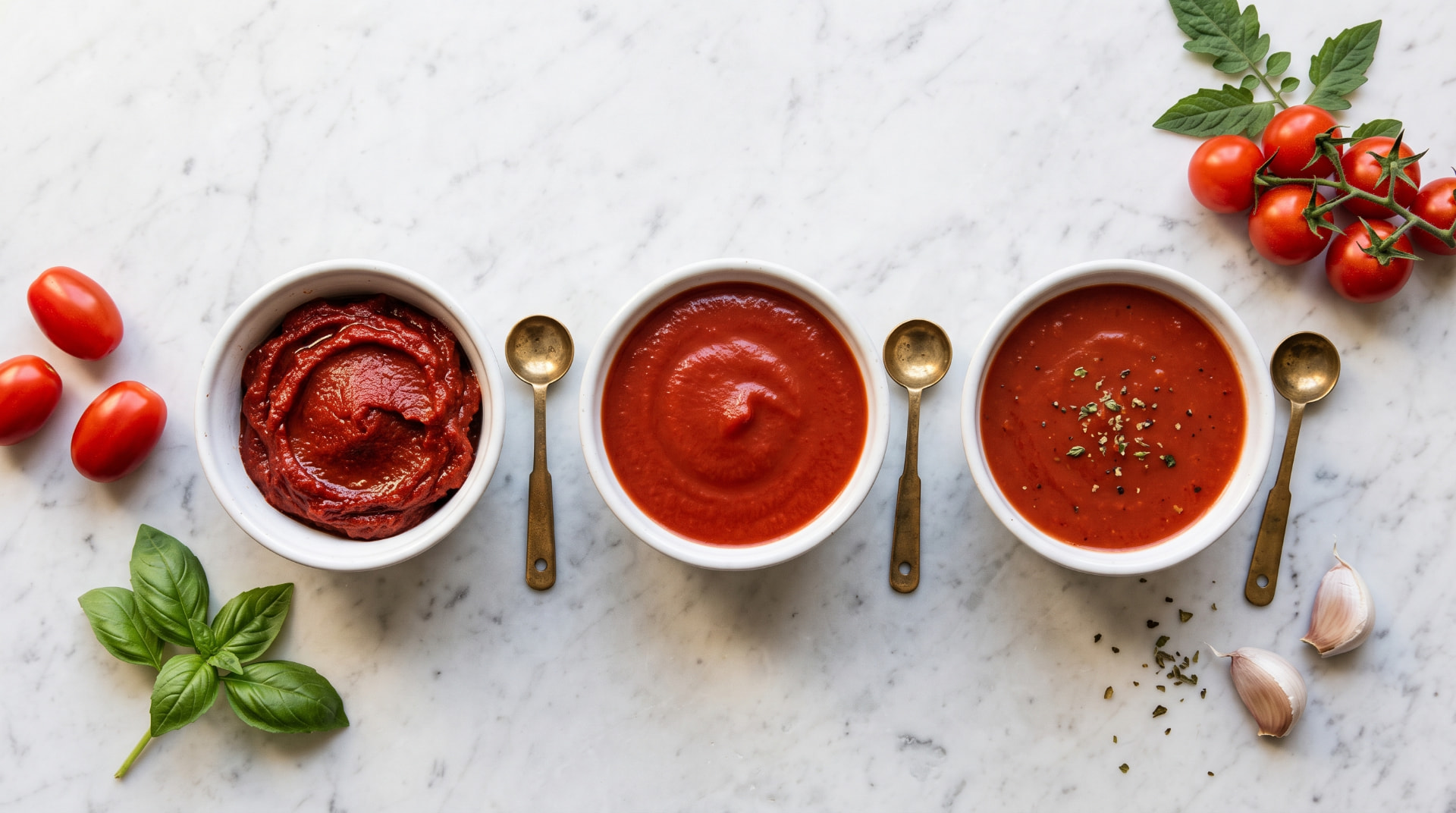
You are three steps into a recipe and the can in your hand does not match what the recipe calls for. Before you improvise, it helps to know what actually separates these three tomato products, because the difference is not just texture. It is concentration, and that changes how much of each one you actually need.
What Each One Actually Is
All three start as the same fruit. What separates them is how much water gets cooked out and how much gets left in.
Tomato paste is tomatoes with the peel and seeds removed, then cooked down under low heat until the water evaporates and the solids concentrate. Under FDA rules, tomato paste has to contain at least 24 percent tomato solids once the salt is accounted for. That is roughly five times more concentrated than a fresh tomato, which is why a single tablespoon carries so much flavor.
Tomato puree is cooked and strained tomatoes that stop short of full concentration. By FDA standards, puree has to fall between 8 and 24 percent tomato solids. It pours easily but has more body than sauce.
Tomato sauce is puree that has been thinned further and usually seasoned, sometimes with onion, garlic, or herbs already added. It is the loosest of the three and the one most often eaten straight out of the jar rather than used as a building block.
The short version: paste is concentrated, puree is in the middle, sauce is the thinnest and often already seasoned.
How to Substitute One for Another
These ratios are starting points, not exact science. Brands vary in thickness, so adjust by eye once you are close.
Need sauce but only have paste? Use 1 tablespoon of tomato paste plus 2 tablespoons of water for every tablespoon of tomato sauce the recipe calls for. Whisk until smooth, then taste. Sauce is usually seasoned, so add a pinch of salt and dried herbs if your dish needs it.
Need paste but only have sauce? Use 3 tablespoons of tomato sauce for every 1 tablespoon of tomato paste needed. Simmer it uncovered in a pan until it reduces down to about a third of its original volume. This takes roughly 10 to 15 minutes over medium heat. Skip this swap for pizza sauce or a meatloaf glaze, where the whole point of the paste is a thick, low-moisture result. It works fine in soups, chili, and braises where a little extra liquid does not matter.
Need puree but only have paste? Use 1 tablespoon of tomato paste plus about 1 to 1.5 tablespoons of water for every tablespoon of puree needed.
Need puree but only have sauce? They are close enough in most recipes to swap evenly. If your sauce is seasoned and the recipe expects plain puree, hold back added salt and herbs until you taste the finished dish.
In a real pinch, no tomato product on hand? Ketchup works as a last resort for tomato paste specifically, at a 1:1 ratio. Expect a sweeter, tangier result since ketchup is seasoned with sugar and vinegar. This is a rescue move, not a recommendation, and it is not a good swap for sauce or puree.
Quick Conversion Table
| Have | Need | Ratio |
|---|---|---|
| Tomato paste | Tomato sauce | 1 tbsp paste + 2 tbsp water = 1 tbsp sauce |
| Tomato sauce | Tomato paste | 3 tbsp sauce, simmered down = 1 tbsp paste |
| Tomato paste | Tomato puree | 1 tbsp paste + 1 to 1.5 tbsp water = 1 tbsp puree |
| Tomato sauce | Tomato puree | 1:1, no adjustment needed |
| Tomato paste | Ketchup (emergency only) | 1:1 |
When the Swap Will Let You Down
Concentration is not just a texture issue. It changes how a dish cooks.
Pizza sauce, meatloaf glaze, and any dish that relies on a thick, clingy coating will turn watery if you swap in sauce or puree without reducing it first. The extra moisture also dilutes the deep, slightly caramelized flavor that comes specifically from cooking paste down over low heat.
On the other hand, soups, chili, stews, and braises are forgiving. A little extra liquid gets absorbed into the pot anyway, so these are the safest places to make a substitution without extra steps.
Storage: How Long Each One Actually Lasts
Once a can or jar is opened, all three tomato products behave about the same, and USDA guidance treats them as high-acid canned goods with a short refrigerated window once exposed to air.
Tomato paste, opened: 5 to 7 days in the refrigerator, stored in an airtight container rather than left in the can. Freezes well for 2 to 3 months, and portioning it into tablespoon-sized cubes before freezing makes it easy to pull out exactly what a recipe needs.
Tomato sauce, opened: 5 to 7 days in the refrigerator. Homemade sauce without commercial preservatives spoils faster, closer to 3 to 5 days. Freezes for up to 6 months.
Tomato puree, opened: 5 to 7 days in the refrigerator, following the same high-acid canned goods guidance. Freezes for up to 3 months.
Unopened, in the pantry: All three keep well past a year unopened and stored in a cool, dry place, generally 18 to 24 months, though quality can start to fade before that window closes.
Watch for the usual spoilage signs regardless of the date on the container: mold, a sour or fermented smell, dark discoloration, or a fizzy texture. When in doubt, throw it out.
Looking for the right tools to make cooking easier? Browse our Shop Kitchen Essentials guide. (Affiliate links will be added in a follow-up update.)
Frequently Asked Questions
Is tomato paste the same thing as tomato sauce?
No. Tomato paste is tomatoes concentrated down to at least 24 percent solids, while tomato sauce is much thinner and usually already seasoned. A tablespoon of paste carries roughly the tomato equivalent of several tablespoons of sauce.
Can I use tomato sauce instead of tomato paste?
Yes, in most recipes. Use 3 tablespoons of tomato sauce for every 1 tablespoon of tomato paste called for, then simmer it down to reduce the extra liquid. This works well in soups, chili, and stews. Avoid it in pizza sauce or glazes where a thick, concentrated result matters.
How much water do I add to tomato paste to make it like sauce?
Add about 2 tablespoons of water for every 1 tablespoon of tomato paste. Adjust with a pinch of salt or dried herbs, since plain tomato sauce is usually seasoned and plain reconstituted paste is not.
Is tomato puree the same as tomato sauce?
They are close but not identical. Puree is thicker and less likely to be seasoned, while sauce is thinner and often has garlic, onion, or herbs already added. They can generally substitute for each other at a 1:1 ratio.
Can I use ketchup instead of tomato paste?
As a last resort, yes, at a 1:1 ratio. Expect a sweeter and tangier result because ketchup contains added sugar and vinegar that tomato paste does not.
How long does opened tomato paste last in the fridge?
About 5 to 7 days when transferred to an airtight container. For longer storage, freeze it in tablespoon portions for up to 2 to 3 months.