What Is a Fish Fry? A Guide to Frying, Hosting & Storage
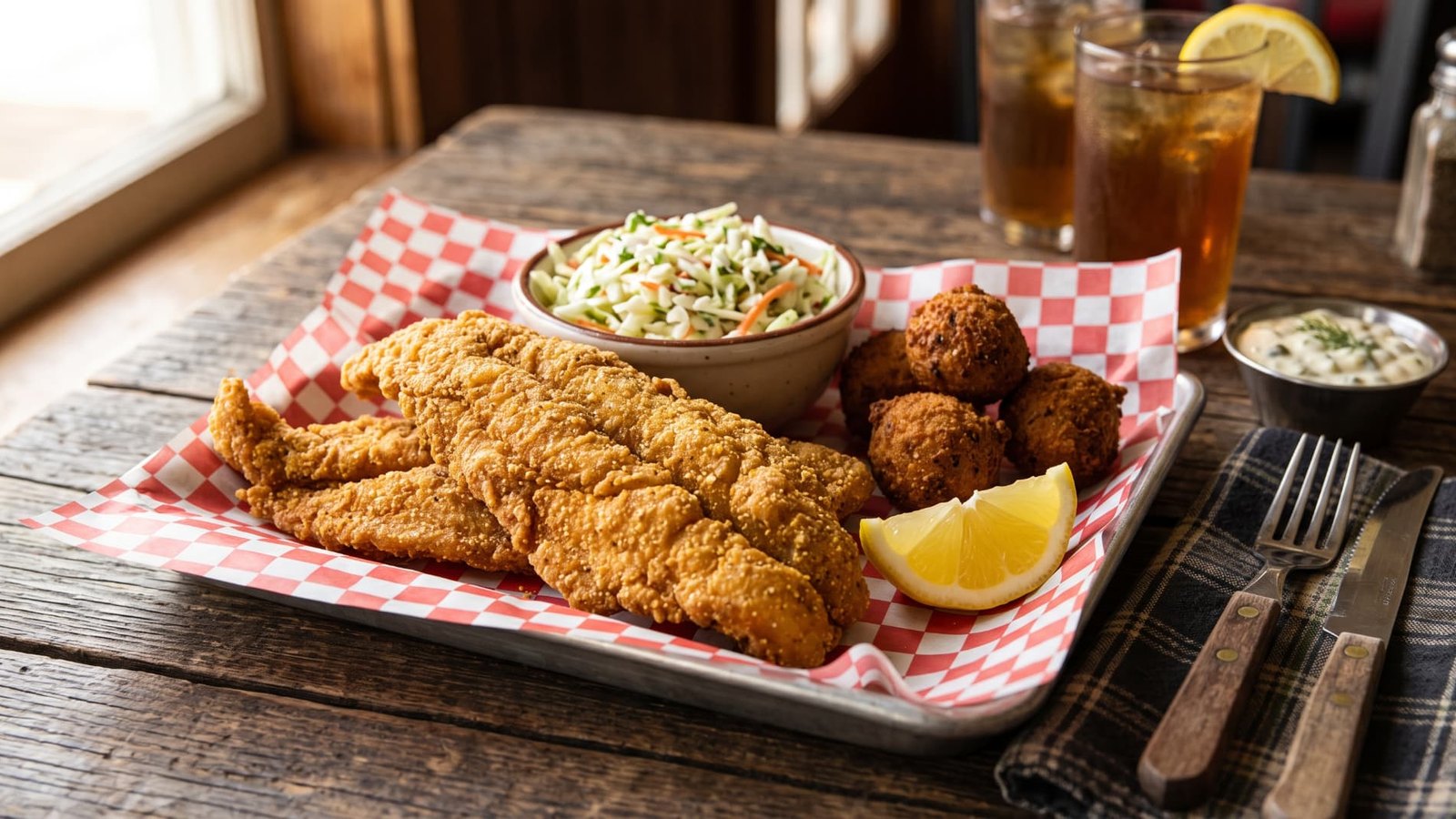
Ask several people what a fish fry is and you'll get several different answers: a cooking method, a Friday night event in a church parking lot, or just an excuse to eat cornmeal-crusted catfish with your hands. They're all correct.
What Is a Fish Fry?
A fish fry is both a technique and an event. As a technique, it simply means coating fish in a batter or breading and cooking it in hot oil until the crust turns golden and the inside stays flaky. As an event, a fish fry is a gathering built around that same fried fish, usually with hearty sides like coleslaw, fries, and hush puppies, and often serving a crowd rather than a single dinner plate.
In much of the Midwest and South, fish fries are tied to Friday nights, especially during Lent. Catholic dietary rules call for abstaining from meat on Fridays during Lent, and fish has traditionally been treated as separate from meat for that purpose. Churches and community groups picked up the tradition as a fundraiser, and the Friday night fish fry stuck around well beyond its religious roots. (More on why fish gets a pass in the FAQ below.)
How to Fry Fish
Oil Temperature
Keep your oil between 350°F and 375°F. Below that range, the fish absorbs too much oil and turns greasy. Above it, the crust burns before the inside finishes cooking. A thermometer clipped to the pot takes the guesswork out, and it's worth checking the temperature between batches since dropping cold fish into hot oil always brings the temperature down.
Fish is safe to eat once it hits an internal temperature of 145°F, or when the flesh turns opaque and flakes easily with a fork.
Best Oil for Frying Fish
Reach for a neutral oil with a high smoke point: peanut, canola, vegetable, or soybean oil all work well. Peanut oil is a popular choice for flavor, though it costs more. Skip olive oil. Its smoke point is too low for deep frying, and it can leave the fish tasting off.
Cornmeal, Flour, or Beer Batter?
- Cornmeal is the classic Southern and Gulf Coast approach. It forms a thin, crunchy crust with a mild corn flavor and is the traditional pairing for catfish. Many cooks cut it with a little flour for a lighter crust.
- Flour dredge is often the base layer under a wet batter, helping it stick to the fish.
- Beer batter is the English fish-and-chips style: flour whisked with cold beer for a light, crisp, bubbly coating. It works especially well on milder fish like cod, flounder, or haddock.
- Cracker meal is a regional variant worth knowing about. Some cooks swear by it over cornmeal for an even crunch with a more neutral flavor.
There's no single correct choice here. Cornmeal leans rustic and Southern, beer batter leans toward fish and chips, and both are traditional.
Best Fish for Frying
Lighter, flakier fish fry best: tilapia, catfish, cod, perch, halibut, trout, and striped bass are all solid choices. Dense or oily fish like tuna, salmon, and sea bass are harder to fry well since they're easy to overcook.
Frying Fish From Frozen
You can fry fish straight from frozen, but pat it dry first so the batter sticks and the oil doesn't spatter. Frozen fillets will need a few extra minutes in the oil, so check the internal temperature rather than relying on time alone.
Hosting a Fish Fry
A fish fry is a single-focus event: fish is the main course, not one option among many kinds of seafood. Plan on about 8 ounces of raw fish per guest as a starting point, then add hearty sides. If your spread includes a full lineup of slaw, fries, and hush puppies, you can trim that a little since guests will fill up on sides too.
For an exact number based on your guest count, use the Seafood Buffet Calculator and select Single Seafood Focus with Fish Fillets checked. It'll scale the total up or down for any size crowd.
Equipment: a deep pot or a countertop fryer, an oil thermometer, tongs or a spider strainer, and a wire rack or paper towels for draining. If you're frying in batches for a group, a warm oven (around 200°F) keeps earlier batches crisp while you finish the rest.
Sides: coleslaw, french fries or hush puppies, and a simple tartar or remoulade sauce round out a traditional spread. For picky or younger eaters, fish sticks are a good addition to the spread since they're typically made from boneless fillets, unlike some fresh fillets that can still have small bones.
Storage & Leftovers
Fridge: Cooked fried fish keeps for 3 to 4 days in the refrigerator. Let it cool before storing, and use an airtight container to keep the crust from getting soggy.
Freezer: Fried fish can be frozen for up to 3 months. Wrap it tightly or use a freezer-safe container to prevent freezer burn.
Reheating: Skip the microwave, which turns the crust soft and rubbery. An oven or air fryer at 350-400°F for several minutes brings back the crunch far better.
FAQ
Is fish meat?
It depends on what you mean by "meat." In everyday cooking, fish is usually treated as seafood rather than meat. However, fish has often been distinguished from meat, particularly during Lent, when many observe meatless Fridays, which is one reason fish fries became a Friday night tradition in the first place.
There's an interesting federal-regulation wrinkle, too. Most fish and seafood are regulated by the FDA, but Siluriformes fish, including catfish, are regulated by the USDA's Food Safety and Inspection Service (FSIS). Congress gave FSIS authority to inspect these fish under the Federal Meat Inspection Act, and that authority covers both domestic and imported Siluriformes products.
So while you'd normally call catfish "fish" or "seafood" at the dinner table, there's a technical regulatory twist: catfish is subject to USDA meat-inspection law rather than the FDA's general seafood-inspection framework. That makes the fish at the center of so many Friday night fish fries an especially interesting case when it comes to the question, "Is fish meat?" We'll let you decide.
Can dogs eat fried fish?
Plain cooked fish is fine for dogs in moderation, but fried fish isn't recommended. The oil and added fat can upset a dog's stomach and raise the risk of pancreatitis. Bones are a separate and bigger risk: fish bones are small, sharp, and brittle, and they can lodge in or puncture a dog's mouth, throat, or digestive tract. If you want to share, offer a plain, unseasoned, and fully deboned piece of baked or grilled fish instead.
Can cats eat fried fish?
Same answer as dogs: the fish itself isn't the problem, the frying is. Fried food's fat content is hard on a cat's digestive system and can contribute to pancreatitis. Bones carry the same choking and internal injury risk for cats as they do for dogs. Plain, fully deboned cooked fish, no oil or seasoning, is the safer option.
What's a Cajun fish fry?
A Cajun-style fish fry leans on a heavily seasoned cornmeal coating, usually built around a Cajun or Creole spice blend with cayenne, paprika, and garlic, giving the crust more heat and depth than a plain cornmeal dredge.
What's the best fried fish seasoning?
A simple mix of salt, black pepper, garlic powder, onion powder, and paprika works on almost any batter or breading. Cajun seasoning is a popular upgrade if you want more heat.