Gumbo: Its History, and How It Differs from Jambalaya and Étouffée
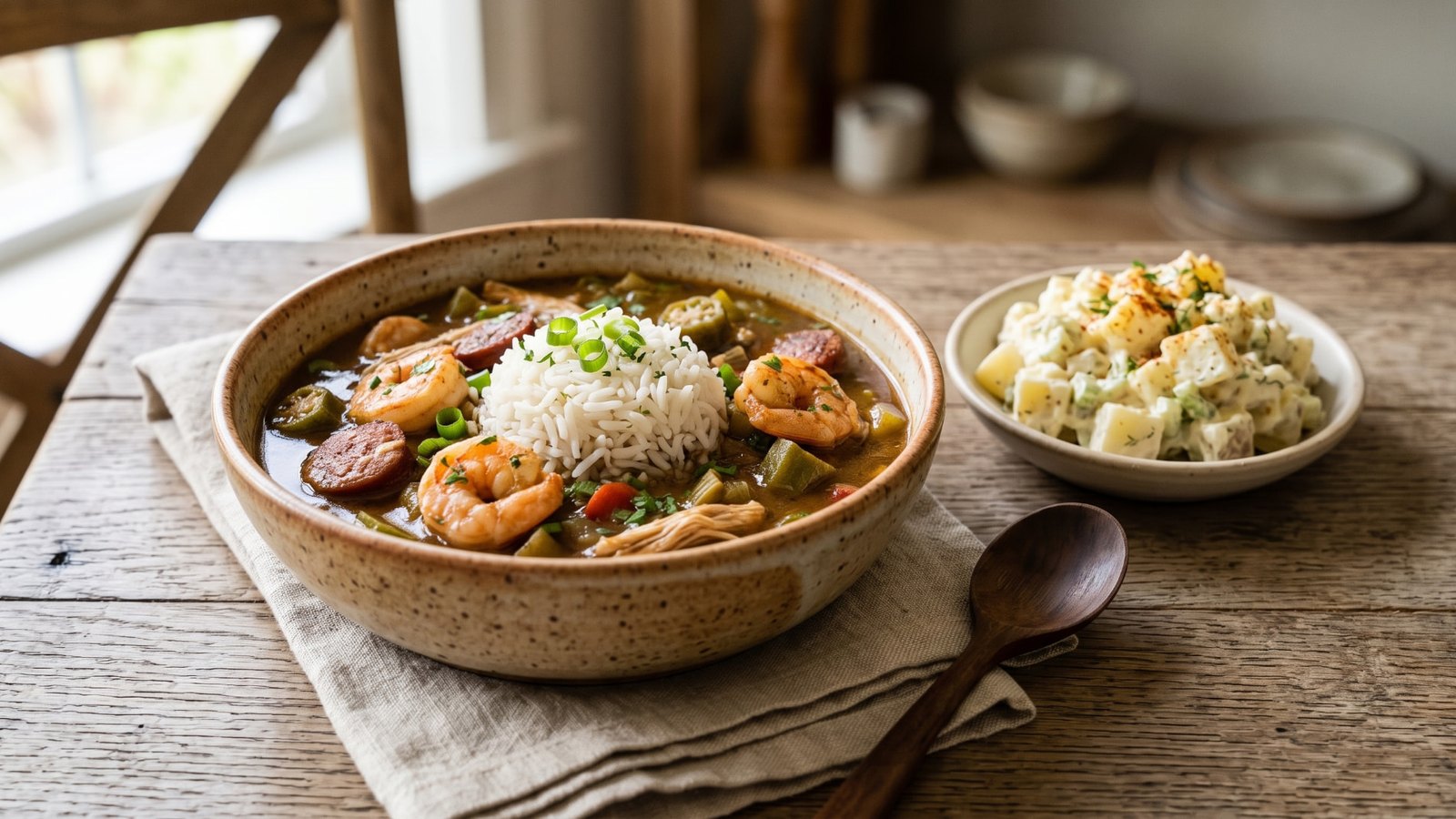
Every food culture has one dish that refuses to sit still long enough to be defined, and in Louisiana, that dish is gumbo. Ask ten people how to make it and you'll get ten different answers, all delivered with the same unshakable confidence. Here's the version that won't get you into a fight at a family reunion.
What Is Gumbo?
Gumbo is a hearty Louisiana stew built on a stock, a thickener, and whatever meat, seafood, or vegetables the cook has on hand. It almost always starts with the "holy trinity" of onions, celery, and bell peppers, and it's almost always served ladled over rice rather than mixed in with it. Depending on who's cooking, that thickener might be a deeply browned roux, okra, filé powder, or some combination of the three. There's no single fixed recipe, which is exactly the point. Gumbo has always been a "cook with what you've got" kind of dish.
Where Gumbo Came From
The name itself is a clue to the dish's origins. Gumbo is believed to come from West and Central African words for okra, most likely the Bambara word "gombo" or the Bantu "ki ngombo," carried over through American French. Enslaved West Africans brought okra with them and used it to thicken stews, and that naming stuck even as the dish evolved.
Gumbo's history is really a history of Louisiana's cultures colliding in one pot. Okra came from West Africa. Filé powder, ground from sassafras leaves, came from the Choctaw and other Indigenous communities in the region. The technique of making a roux came from French settlers, though the deeply browned roux used in gumbo bears little resemblance to its lighter French counterpart. Spanish influence shows up in the sofrito-style base that became the holy trinity once celery joined the mix.
The earliest documented references to gumbo date to the turn of the 19th century, including a gubernatorial reception in New Orleans in 1803 and a Cajun gathering on the Acadian Coast in 1804. By the time Lafcadio Hearn published recipes for chicken, ham, oyster, crab, shrimp, and beef gumbo in his 1885 cookbook, the "whatever's in the kitchen" tradition was already well established.
Creole vs. Cajun Gumbo
Gumbo splits into two main traditions, and the easiest way to tell them apart is tomatoes. Creole gumbo, which developed in the more cosmopolitan kitchens of New Orleans, typically includes tomatoes and leans on a medium roux with a seafood-heavy lineup like shrimp, crab, and oysters. Cajun gumbo, from the rural Acadiana region, never includes tomatoes, relies on a much darker chocolate-brown roux, and tends to center on chicken, sausage, and game. Both use the same holy trinity, but the roux color and the tomatoes are the fastest way to spot which tradition you're eating.
Gumbo vs. Jambalaya vs. Étouffée
These three get lumped together constantly, but they're built differently. The clearest difference comes down to what happens to the rice.
Gumbo is a stew or soup, thickened with roux, okra, or filé, and it's ladled over rice that's cooked separately. Jambalaya skips the roux almost entirely and cooks the rice directly in the pot with everything else, closer to a paella, which gives it a drier, more scoopable texture. Étouffée, which means "smothered" in French, is a thicker, more concentrated roux-based sauce that's usually built around a single shellfish, most often shrimp or crawfish, and served over rice on the side rather than mixed in or stewed with it.
So if the rice is cooked in with everything else, it's jambalaya. If it's a thick sauce centered on one shellfish, it's étouffée. If it's a stew with a deep roux and a mix of proteins, ladled over rice, it's gumbo.
FAQ
How is gumbo thickened?
Three ways, often combined: a deeply browned flour roux, okra (whose natural mucilage thickens as it cooks), or filé powder, made from ground sassafras leaves and traditionally stirred in at the end of cooking or offered at the table.
Is gumbo gluten-free? Can it be made vegan?
Traditional gumbo isn't gluten-free because of the flour roux. To make it gluten-free, swap in rice flour, chickpea flour, or a 1:1 gluten-free flour blend, or skip the roux and thicken with okra and filé instead. For a vegan version, swap the meat and seafood for beans, mushrooms, or plant-based sausage, use vegetable broth, and make the roux with oil or vegan butter instead of dairy butter.
What's the best rice for gumbo?
Long-grain white rice is the traditional choice, rinsed before cooking for a fluffier result that won't turn mushy under the stew. If you're scaling a recipe up for a crowd, our Rice Calculator can help you figure out exactly how much to cook.
What goes with gumbo?
Rice is the base, and from there, French bread or garlic bread, cornbread, potato salad, and coleslaw are the most common sides. A scattering of sliced green onions on top is nearly universal.
How long does gumbo last in the fridge?
Three to four days, per USDA guidance for soups and stews, and up to 2 to 3 months in the freezer. Cool it and get it into the fridge within two hours of cooking. If your batch is seafood-heavy, lean toward the shorter end of that window, since shellfish spoils faster than chicken or sausage.