Why Certain Foods Take You Back in Time
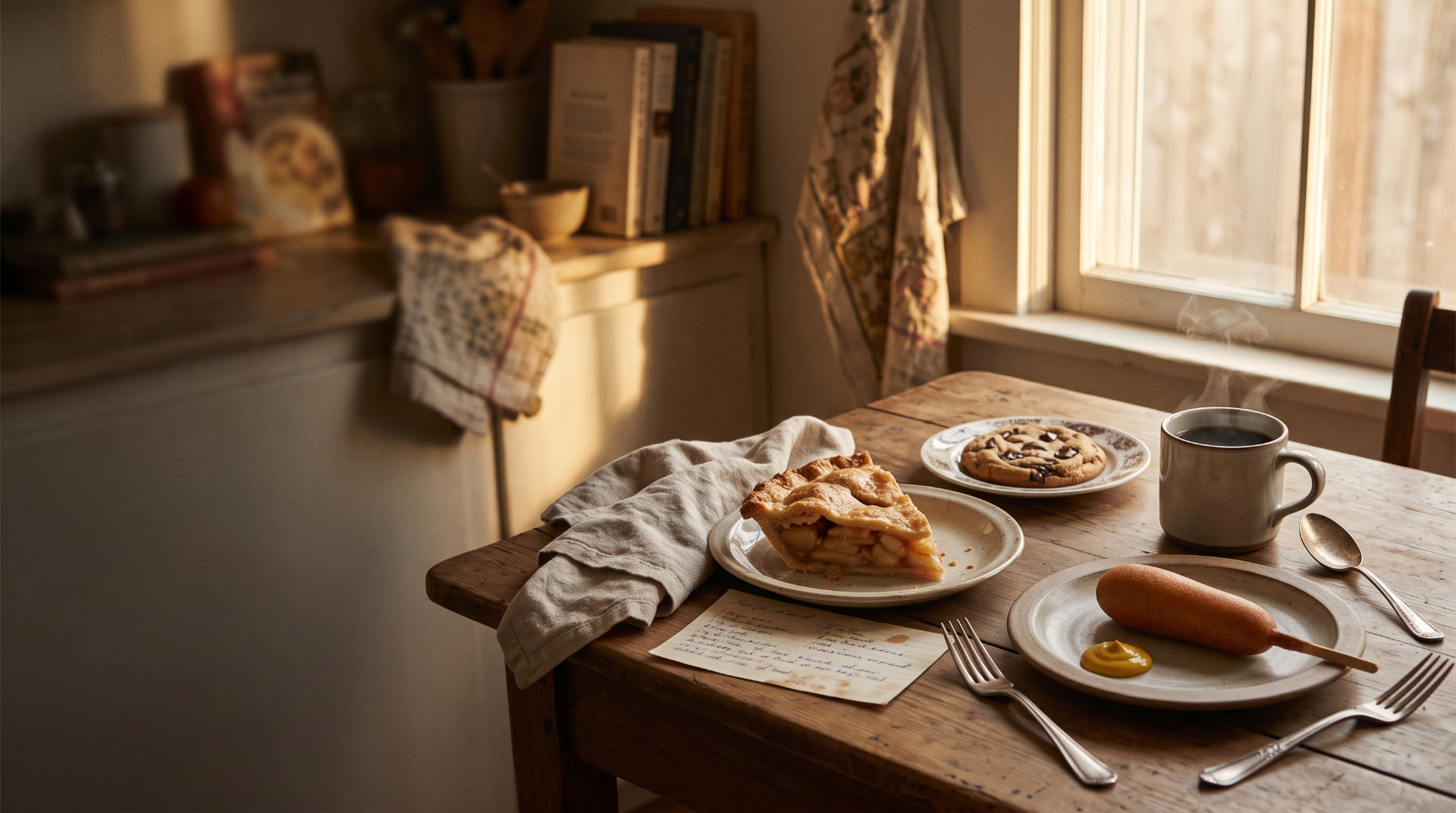
I was eating a corn dog when it happened. I wasn't thinking about carnivals. I wasn't thinking about summer, or being ten years old, or the smell of fried batter drifting between game booths. I was just eating a corn dog.
And then, somehow, I was there.
Not remembering it, exactly. There. The lights, the noise, the sticky-handed feeling of holding a paper tray. One bite, and twenty years disappeared.
If that's ever happened to you, a smell or a taste that pulled you somewhere else entirely, no warning, no permission asked, you're not imagining it. There's a real reason food does this, and it's one of the more fascinating things happening in your brain without you noticing.
Why Smell Is the Shortcut
Most of what you sense has to go through a kind of security checkpoint first. Sight, sound, touch, all of it passes through a part of your brain called the thalamus, which sorts and routes the information before it reaches the areas responsible for emotion and memory.
Smell skips the line entirely.
When you smell something, the signal travels straight to your olfactory bulb, and from there almost immediately to the amygdala and hippocampus, the parts of your brain that handle emotion and memory formation. No checkpoint, no delay. That's why a smell can hit you with a memory before you've even consciously registered what you're smelling. Your brain remembers before you do.
There's actually a name for this: the Proust effect, named after the writer Marcel Proust, who described the smell of a small cake instantly reviving a flood of childhood memories he thought were long gone. It's been a literary reference for over a century. Now it's neuroscience.
The Five Ingredients of a Food Memory
Not every food carries this kind of weight. The ones that do tend to share a few things in common.
Smell
This is the strongest trigger of the five, for the reasons above. Maybe it's coffee brewing in the morning, and suddenly you're back in your grandfather's kitchen, watching him pour his first cup before anyone else was awake.
Texture
The powdered sugar dusting off a funnel cake. The way cotton candy seems to vanish the second it touches your tongue. Texture doesn't just tell you what you're eating, it tells you when, that specific crunch or fluff often belongs to one very specific place in time.
Place
Some foods are so tied to where you ate them that they barely make sense anywhere else. A tray of Salisbury steak might mean nothing on its own, but pair it with a cafeteria tray and fluorescent lighting, and suddenly you're back in a school hallway you haven't thought about in years.
Ritual
Some foods only show up once a year, which is exactly what makes them powerful. The smell of turkey roasting doesn't just mean dinner, it means fall has arrived, the table is being set, and everyone is about to be in one room again.
People
This might be the most important ingredient of all. Grandma's homemade cookies aren't just cookies. They're a specific set of hands, a specific kitchen, a specific person who is or isn't still around to make them. Research on food nostalgia has found that even just picturing a comfort food can measurably ease feelings of loneliness, before a single bite is taken. The food is almost a stand-in for the person.
The Food Isn't Really the Point
Here's the thing about a corn dog: on its own, it's not a particularly remarkable food. Fried batter on a stick. And yet.
What you're actually remembering isn't the corn dog. It's being a kid with nowhere else to be. It's the carnival lights, the people you were with, the version of you that existed at that moment. The food is just the door. What's on the other side is the memory.
That's not a coincidence, either. Psychologists have found that nostalgic foods are tied to something called identity continuity, a sense that the person you were and the person you are now are still connected, still the same thread. That's a bigger, gentler thing than just missing a taste.
What Food Takes You Back?
Maybe it's not a corn dog for you. Maybe it's the smell of coffee, or turkey on Thanksgiving morning, or a cookie recipe nobody's quite been able to replicate since. Whatever it is, the pull isn't nostalgia for nostalgia's sake. It's your brain doing something it's built to do: holding onto the people and places that mattered, and handing them back to you, one bite at a time.
And if your memory happens to involve a crowd, a game, or a backyard full of folding chairs, our Party Food Calculator can help you plan the kind of spread worth remembering.
FAQ
Why does smell trigger memories more than other senses?
Smell has a shortcut most senses don't get. Sight, sound, and touch all pass through the thalamus, a kind of relay station, before reaching the parts of your brain responsible for emotion and memory. Smell skips that step and travels almost directly to the amygdala and hippocampus. That direct route is why a smell can bring back a memory before you've even consciously placed what you're smelling.
What is the Proust effect?
The Proust effect is named after the writer Marcel Proust, who described how the smell of a small cake instantly revived a flood of childhood memories in his writing. It refers to the way a smell or taste can unlock a vivid, detailed memory seemingly out of nowhere. What started as a literary observation over a century ago is now a recognized part of how scientists talk about smell and memory.
Why do certain foods remind us of childhood?
Foods from childhood tend to be tied to repeated, emotionally significant moments, holidays, family meals, favorite treats, so the brain links the smell or taste to everything that surrounded it at the time: the people, the place, the feeling. Researchers call this identity continuity, the sense that who you were back then and who you are now are still connected. That connection is part of what makes a food memory feel less like a fact and more like a feeling.
Can food really help with loneliness or comfort?
Yes. Studies on food nostalgia have found that even just picturing or thinking about a comfort food can measurably ease feelings of loneliness, without a single bite being taken. The food itself seems to act as a stand-in for the people and moments attached to it, which is part of why nostalgic foods feel comforting even before you start eating.