Wild Rice 101: Is It Actually Rice, and How It Compares
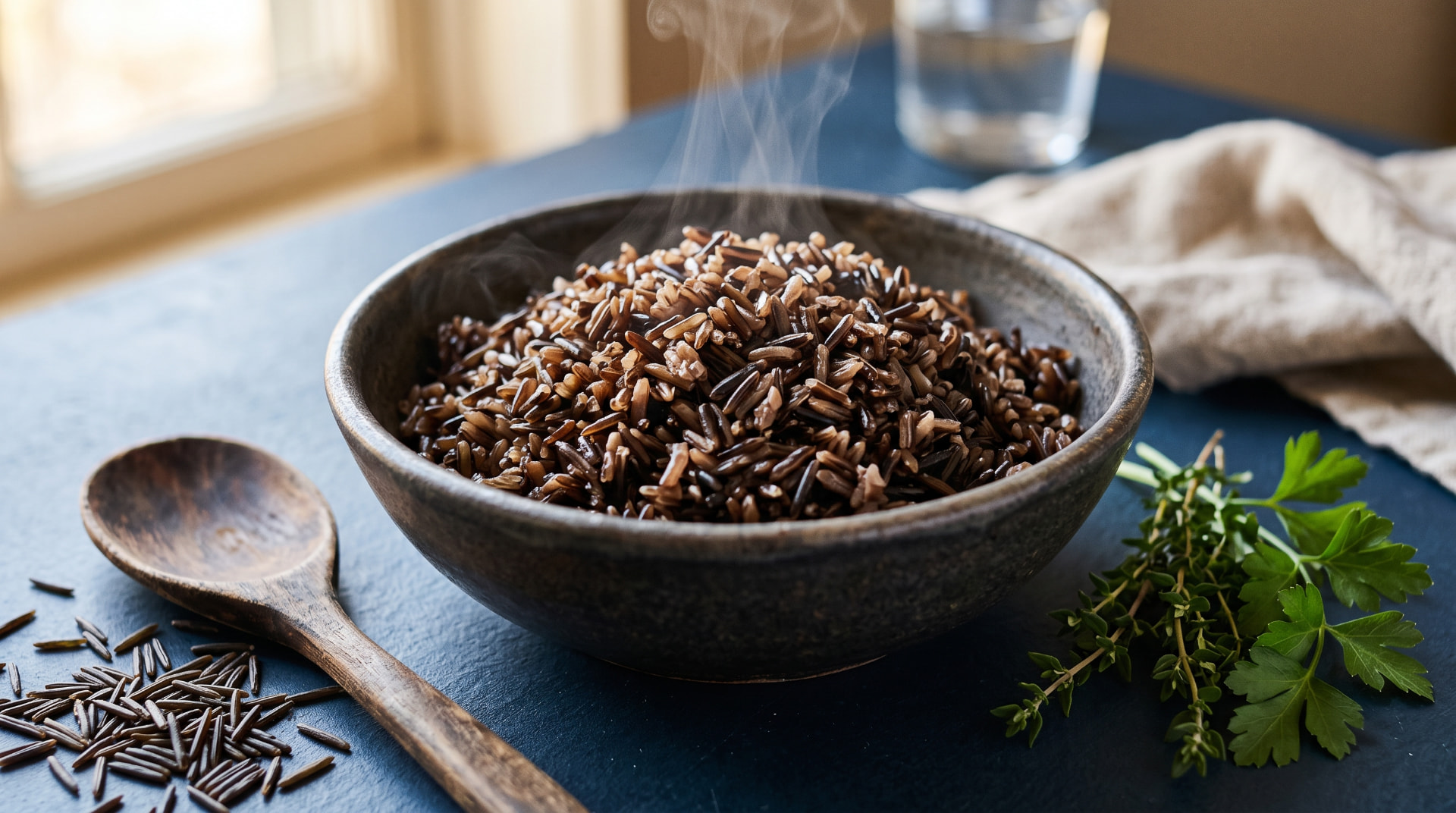
Wild rice has been coasting on a technicality for about four centuries, letting everyone assume it's just a rice family reunion when it's actually crashed the party from an entirely different gene pool. Time to sort out what's actually in the bag.
What Wild Rice Actually Is
True rice belongs to the genus Oryza. Wild rice belongs to a different genus entirely, Zizania, an aquatic grass native to the Great Lakes region of North America. They're distant cousins (same grass family, same tribe, different genus) but wild rice isn't a variety of rice the way basmati or jasmine are. It's the seed of a completely separate plant that happens to look and cook similarly enough that early European settlers gave it the same name.
There are four Zizania species. The one on your grocery shelf is almost always Zizania palustris, grown primarily in Minnesota and California.
How It Compares: Wild Rice vs. White Rice vs. Brown Rice
| Calories (1 cup cooked) | Protein | Fiber | Fat | Sodium | Glycemic Index | |
|---|---|---|---|---|---|---|
| Wild Rice | 166 | 6.5g | 3g | 0.56g | 5mg | 45 (moderate) |
| White Rice | 205 | 4.3g | 0.6g | 0.4g | low | 64-72 (medium-high) |
| Brown Rice | 216-218 | 5g | 3.5g | 1.8g | low | 50-55 (medium) |
These numbers are approximations only and may vary by brand.
Cup for cup, wild rice has the fewest calories, the most protein, and the lowest glycemic index of the three. It isn't a "diet food," it's just a genuinely different nutritional profile than either white or brown rice, largely because it's a whole grain seed rather than a milled grain.
Is Wild Rice Gluten-Free, Keto, and Diabetic-Friendly?
- Gluten-free? Yes. It isn't related to wheat and contains no gluten naturally.
- Keto-friendly? Moderately. At 35g carbs per cup, it's lower-carb than white or brown rice but still enough to count carefully on a strict keto plan.
- Low carb? Relatively, compared to other rices, but it's still a grain, not a low-carb food outright.
- Good for diabetics? Its moderate glycemic index (45) means a gentler blood sugar impact than white rice, though anyone managing diabetes should factor total carbs and portion size, not GI alone.
- High in fiber? Yes, comparable to brown rice at 3g per cup.
- A whole grain? Yes, botanically distinct from rice but still classified as a whole grain.
- Low FODMAP? Generally considered lower-FODMAP than many grains in small portions, though individual tolerance varies.
- Good for weight loss? Its fiber and protein combination helps with satiety, and it's the lowest-calorie of the three rices per cup.
How to Cook Wild Rice (By Method)
| Method | Ratio (water:rice) | Time |
|---|---|---|
| Stovetop | 3:1 to 4:1 | 40-50 min |
| Rice Cooker | 2:1 | 45-55 min |
| Instant Pot | 1 1/3:1 | 20 min high pressure + natural release |
| Slow Cooker | 2.5:1 to 3:1 | 4-6 hrs on low |
| Microwave | 3:1 | about 30 min (not the most reliable method; stovetop is easier to control) |
One cup of dry wild rice yields roughly 3 to 3.5 cups cooked. Darker, more heavily parched grains take longer to cook than lighter ones, so treat these as ranges and check for tenderness rather than cutting off at an exact minute mark.
Not sure how much you need for a crowd? Our Rice Calculator scales it for you.
True Wild Rice vs. Cultivated Wild Rice
Nearly all the wild rice sold in stores today, including the Trader Joe's and Rice-A-Roni blends on shelves, is cultivated: grown in flooded paddies and harvested by combine, mostly in Minnesota and California. That's different from true hand-harvested wild rice, which grows naturally in lakes and rivers and is still gathered by canoe using traditional methods, largely by Ojibwe harvesters in Minnesota, Wisconsin, and Michigan.
Wild rice, known as manoomin ("good berry") in Ojibwe, has been a staple food and sacred grain in the Great Lakes region for centuries and is Minnesota's official state grain. Hand-harvested rice tends to have longer, thinner, more irregular grains and a lighter color than the uniform black cultivated variety, and it's usually sold separately and priced higher.
Storage and Freezing
Cooked wild rice keeps in the fridge for about 5 days and freezes well for up to 6 months. For a full breakdown by rice type, see How Long Does Cooked Rice Last.
Frequently Asked Questions
Can I cook wild rice in an Instant Pot?
Yes. Use a 1 1/3:1 water-to-rice ratio and cook on high pressure for 20 minutes, then let the pressure release naturally.
Can I cook wild rice in a crockpot?
Yes. Use a 2.5:1 to 3:1 water-to-rice ratio and cook on low for 4 to 6 hours, checking near the end so it doesn't turn mushy.
Can I cook wild rice in the microwave?
You can, but it's the least consistent method. Combine 1 cup rice with 3 cups water, microwave on full power for 6 minutes, then on medium power for 25 to 30 minutes.
Can I freeze wild rice?
Both uncooked and cooked wild rice freeze well. Cooked rice keeps in the freezer for up to 6 months in an airtight container or freezer bag.
Can I freeze wild rice soup?
Yes, though the texture of the rice may soften slightly after thawing and reheating.
Can I soak wild rice overnight?
Yes, and it can shorten cook time, though it isn't required the way it is for some legumes.
Can I cook wild rice and quinoa together?
Not recommended in the same pot with one ratio, since they have different cook times and water needs; cook separately and combine after.
Can wild rice go bad?
Dry wild rice stored in a cool, dry place lasts a long time, but discard it if it smells off, looks discolored, or shows signs of moisture or pests.
Does wild rice cause digestive discomfort?
As a high-fiber whole grain, introducing it in large amounts quickly can cause temporary gas or bloating for some people, the same as with most fiber-rich foods. This isn't unique to wild rice and typically resolves as your gut adjusts.
Can I grow wild rice at home?
Not practically in most settings. It needs shallow, slow-moving water and specific conditions, so it isn't a realistic backyard or container crop.