Canning Salt vs. Pickling Salt vs. Kosher Salt
Can You Substitute One for Another?
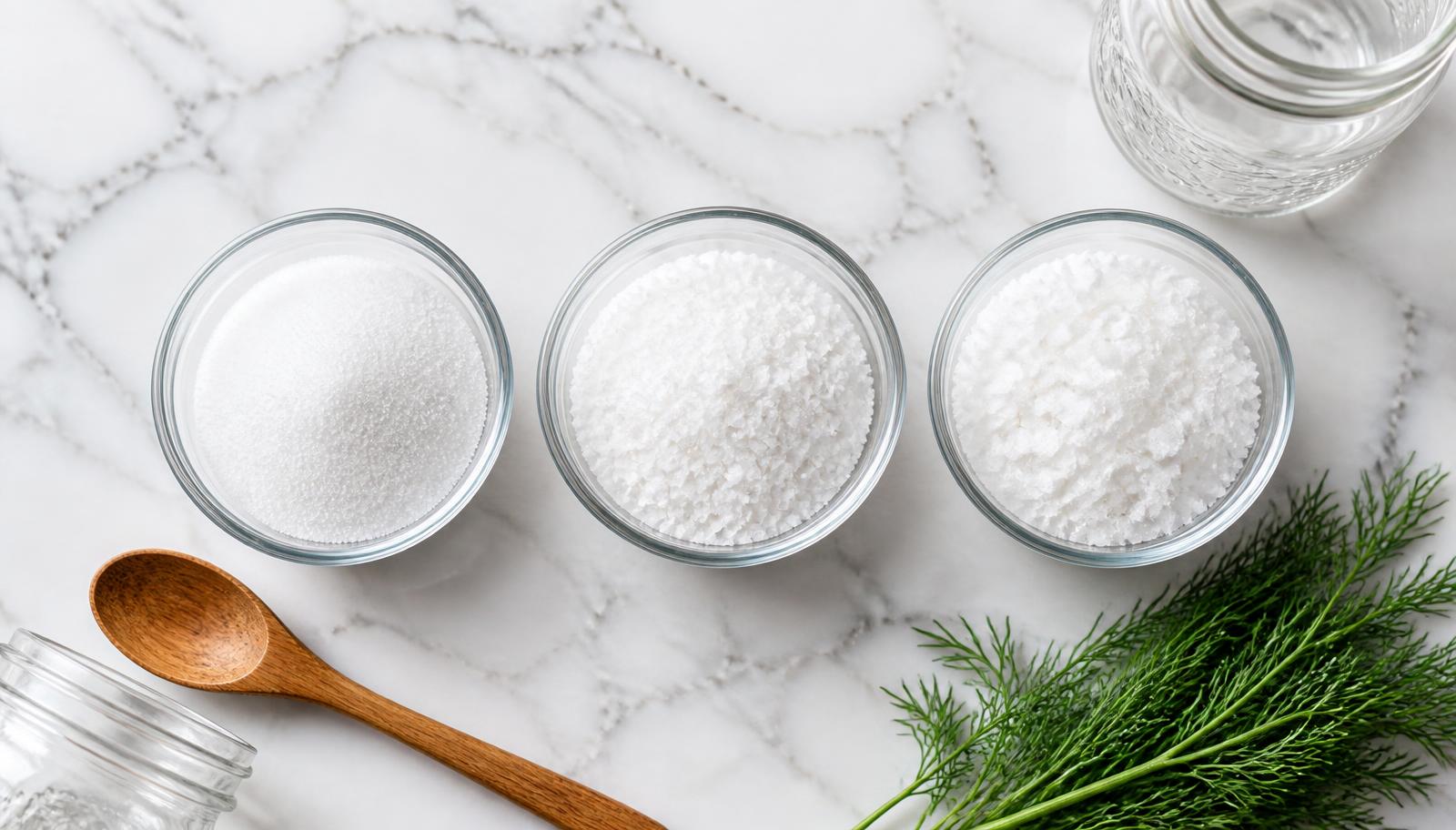
You're halfway through a canning recipe when you realize the pantry has kosher salt, table salt, and half a bag of something labeled "pickling spice" but no canning salt in sight. Good news: substituting is usually fine. The bad news is that not all salts behave the same way in a jar, and getting the amount wrong can leave you with cloudy brine or a texture problem. Here's what actually matters.
Salt is only one of the variables worth getting right before you start. If you're canning above sea level, check your processing time with our Water Bath Canning Altitude Adjustment Calculator, and review how to sterilize canning jars while you're prepping.
Is Canning Salt the Same as Pickling Salt?
Yes. Canning salt and pickling salt are the same product, just labeled differently depending on the brand. Both are pure, fine-grain sodium chloride with no additives.
What Makes Canning Salt Different from Table Salt?
Table salt contains additives that canning and pickling salt don't: iodine (in iodized salt) and an anti-caking agent, usually calcium silicate. Neither of these is dangerous to eat, but both cause problems in a jar. The calcium silicate doesn't fully dissolve and can cloud the brine or leave a fine sediment in the jar over time. The iodine can darken certain vegetables and slightly affect flavor. Canning and pickling salt skip both additives, which is why tested recipes call for it specifically. If you're curious about what salt is doing to flavor in the first place, see why salt makes food taste better.
Can You Use Kosher Salt Instead of Canning Salt?
Yes, as long as the kosher salt you're using is additive-free. Most kosher salt has no iodine and no anti-caking agent, which makes it chemically similar to canning salt. The catch is grain size: kosher salt crystals are larger and less densely packed than canning salt, so a tablespoon of kosher salt doesn't contain the same amount of salt as a tablespoon of canning salt.
This matters more than people expect, because not all kosher salt is the same. Some brands use smaller, denser grains, while others use larger, hollow flakes. Measuring different kosher salts by the same tablespoon can give you noticeably different amounts of actual salt, so it's worth checking your specific brand's grain size before assuming a straight swap.
Salt Conversion Table
| If Your Recipe Calls For | Substitute With |
|---|---|
| 1 tablespoon canning/pickling salt | 1 tablespoon table salt (not recommended for canning, but equivalent by volume) |
| 1 tablespoon canning/pickling salt | About 1½ tablespoons fine, dense kosher salt |
| 1 tablespoon canning/pickling salt | About 2 tablespoons coarse, hollow-flake kosher salt |
| 1 tablespoon canning/pickling salt | 1 tablespoon fine, additive-free sea salt |
For the most accurate results, especially in larger batches, measure salt by weight rather than volume. Equal weights of any pure sodium chloride salt are equally salty, regardless of brand or grain size. Volume is only an approximation, and checking your specific kosher salt's grain style (fine and dense vs. coarse and hollow) will get you closer before you even weigh it.
Stocking up on canning or pickling salt and a kitchen scale for weighing it? See our Shop Kitchen Essentials page for the tools we recommend.
Does Salt Actually Affect Canning Safety?
This depends on what you're canning.
- Plain canned vegetables and meats: salt is there for flavor only. It doesn't affect safety, and you can leave it out entirely if you're watching sodium.
- Fresh-pack pickles: salt affects texture and flavor, drawing out moisture and helping pickles stay crisp, but it isn't what makes pickles safe. That job belongs to the vinegar. As long as your vinegar is at least 5% acidity and measured correctly, the recipe's safety doesn't change based on which salt you use or whether you adjust the amount.
In other words: swap salts freely for flavor and clarity reasons, but don't touch your vinegar measurements to compensate for a salt substitution.
What to Avoid
- Reduced-sodium salt or salt substitutes: these are often blended with potassium chloride, which behaves differently in brine and can leave an unpleasant, metallic aftertaste in canned or pickled food.
- Salt with added minerals or seasoning: some sea salts and specialty salts contain trace minerals that can tint the brine. Stick to fine, plain, additive-free salt for the clearest results.
- Solar or ice-melting "salt": these aren't food grade and aren't safe for canning or pickling, despite sometimes being sold near cooking salts.
Frequently Asked Questions
Is pickling salt the same as canning salt?
Yes. They're the same product, pure fine-grain sodium chloride with no additives, just marketed under different names depending on the brand.
Can I substitute kosher salt for canning salt?
Yes, as long as it's additive-free. You'll need about 1½ times the volume if using a fine, dense kosher salt, or about 2 times the volume if using a coarser, hollow-flake style, since kosher salt is less dense by volume than canning salt.
Why can't I use regular table salt for canning?
Table salt usually contains iodine and an anti-caking agent. The anti-caking agent can cloud brine or leave sediment, and the iodine can darken certain foods. It won't make your food unsafe, but it can affect appearance and quality.
Does using a different salt affect canning safety?
For fresh-pack pickles, no. Vinegar acidity is what makes pickles safe, not salt. For plain canned vegetables and meats, salt is for flavor only and doesn't affect safety at all.
Can I use sea salt for canning or pickling?
Yes, as long as it's fine-grain and free of added minerals or anti-caking agents, which can otherwise cloud the brine or tint the food.