Fennel 101: A Complete Guide to Eating the Whole Plant
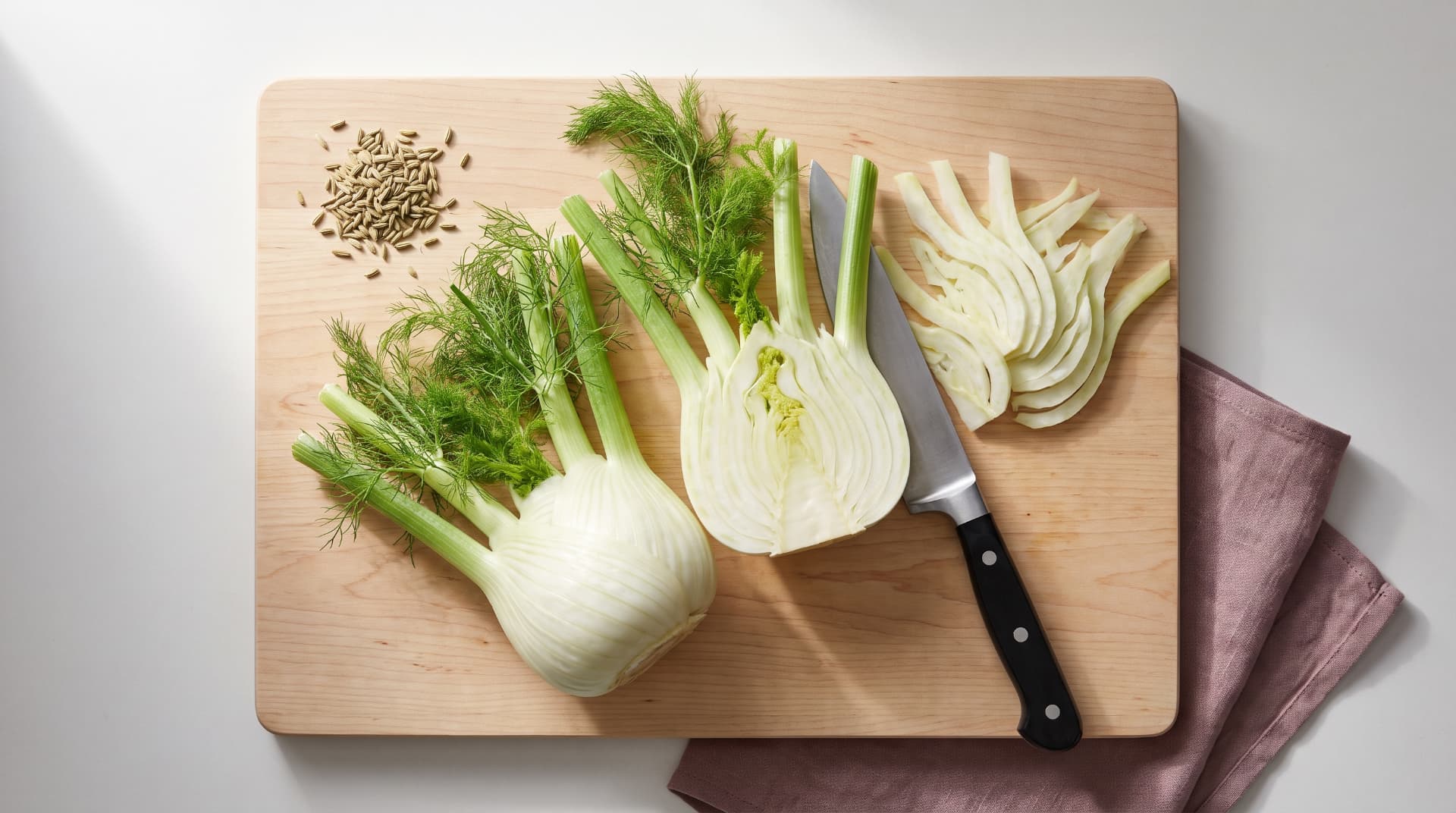
Fennel is one of the most overlooked vegetables in the produce aisle, mostly because people aren't sure what to do with it. That's a shame, because every part of the plant is edible: the crunchy white bulb, the fibrous stalks, the feathery fronds, the seeds, even the pollen. Here's how to cut it, cook it, and use every piece.
What Fennel Tastes Like
Raw fennel has a crisp, celery-like crunch with a mild licorice or anise flavor, thanks to a compound called anethole (the same compound found in anise and star anise, though fennel's version is much gentler). Once cooked, that licorice edge fades into something sweeter and more mellow, and the texture turns silky-soft. If you're on the fence about black licorice, don't let that scare you off fennel: most people who dislike licorice candy still enjoy cooked fennel.
How to Cut Fennel
- Cut off the stalks close to the top of the bulb. Save the fronds and stalks; you'll use them later.
- Trim about a quarter inch off the root end and discard.
- Remove any tough or discolored outer layers.
- Stand the bulb on the cut root end and slice it in half through the core.
- Lay each half flat and cut a small V-shaped wedge to remove the tough core.
- Slice or dice from there, thick or thin depending on your recipe. For paper-thin shaved fennel, use a mandoline.
Eating Fennel Raw
Raw fennel is at its best thinly shaved or sliced, where the crunch and mild anise flavor can shine. It pairs especially well with:
- Citrus: orange or grapefruit segments with shaved fennel and a light vinaigrette
- Apple: fennel and apple slaw with a squeeze of lemon
- Arugula and parmesan: peppery greens balance fennel's sweetness
- Crudité platters: fennel wedges alongside a cool, creamy dip
A quick pickle is another easy way to use raw fennel: thin slices in a hot vinegar brine, ready to eat in a few hours and good in the fridge for a couple of weeks.
Cooking Methods
Cooking mellows fennel's licorice edge and brings out its natural sweetness. Fennel pairs naturally with chicken, pork, and fish, and its sweetness makes it a natural partner for other fall vegetables. Butternut Squash 101 has more ideas for fall side dish pairings.
Roasted
Toss wedges or slices in olive oil, salt, and pepper, and roast until caramelized at the edges, about 25 to 35 minutes. Works well alongside other root vegetables. If you want a roasting comparison, see Beets 101.
Braised
Cook low and slow in butter, stock, or wine until meltingly soft, a classic Italian preparation often finished with parmesan.
Grilled
Thick planks brushed with oil and grilled until charred play well against fennel's sweetness.
Sautéed
Sliced and cooked low in butter or oil until jammy, a great base for pasta or risotto.
Fronds
Treat the feathery fronds like a fresh herb, not a garnish afterthought:
- Chop and stir into pesto
- Blend into a compound butter for fish, chicken, or pasta
- Mix into an herb salt for roasted vegetables
- Toss into salads or grain bowls for a light anise note
- Use as a finishing garnish on soups
Stalks
The stalks are more fibrous than the bulb and usually too tough to eat raw in large pieces. They're best:
- Simmered into stock or broth
- Finely diced and sautéed the way you'd use celery
- Added whole to a braising liquid, then discarded before serving
Seeds
Fennel seeds show up across nearly every food culture:
- Italian: the signature flavor in sausage, meatballs, and marinades
- Indian: curries, lentil dishes, masala chai, and chewed whole after meals as a traditional digestive
- Chinese: a component of five-spice powder
- Pickling: added whole to brines for cucumbers, beets, and other vegetables
- Baking: breads, crackers, cookies, and biscotti
Toast whole seeds briefly in a dry pan before using to bring out more aroma, or grind them for a finer, more even flavor in rubs and marinades.
FAQ
Does fennel taste like licorice?
Yes, raw fennel has a mild licorice or anise flavor from the compound anethole. Cooking mellows that flavor into something sweeter and less pronounced.
Is fennel low FODMAP?
Raw fennel bulb is low FODMAP in modest servings, generally around half a cup, becoming higher in FODMAPs at larger amounts. Fennel fronds and seeds are low FODMAP even in more generous amounts. Individual tolerance varies, so it's worth checking with a dietitian if you're managing IBS.
Can you substitute celery for fennel?
Celery works as a texture substitute, though you'll lose the anise flavor. Adding a pinch of fennel seed to celery can help mimic the aroma if needed.
Is fennel good for digestion?
Fennel has a long traditional use as a digestive aid, particularly the seeds, which are chewed after meals in Indian cuisine. It's a source of fiber as well.
Can dogs eat fennel?
The ASPCA lists fennel as non-toxic to dogs, cats, and horses. It's fine in small amounts as an occasional addition to food, but concentrated fennel essential oil should be avoided, and any new food should be introduced in moderation.
How do you store fresh fennel?
Keep the bulb unwashed in the refrigerator, ideally wrapped loosely, where it will stay fresh for about 7 to 10 days. For longer storage, blanch and freeze it for up to 6 months.