What Is a Ham Hock? Names, Uses & How to Cook It
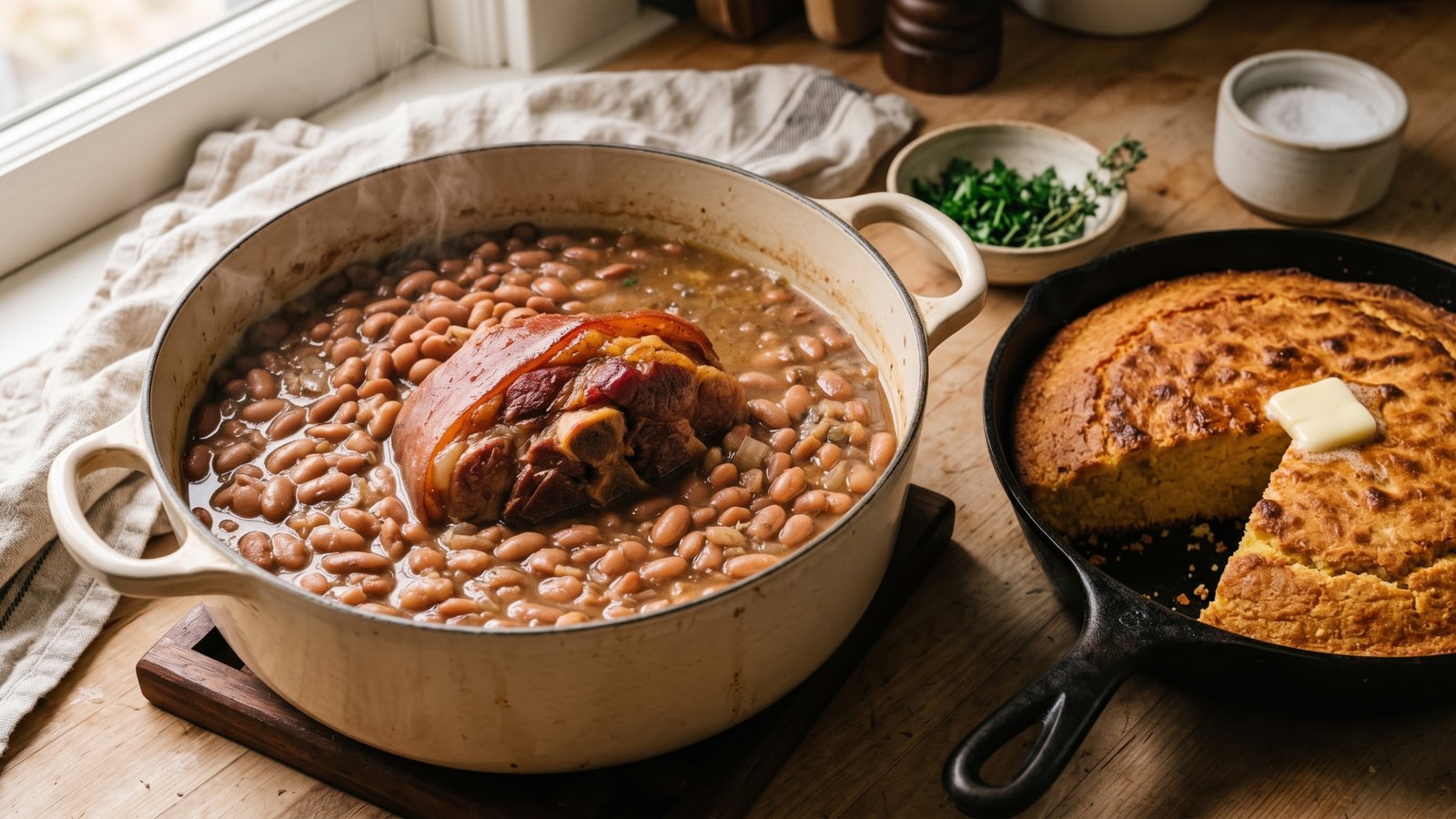
If you've ever stood in the meat aisle staring at a smoked, oddly-shaped hunk of pork wondering what exactly you're looking at, you're not alone. This little cut punches way above its price tag once it hits a pot.
What Is a Ham Hock?
A ham hock comes from the shank of a pig's leg, the section between the knee and the ankle, right above the trotter. It's mostly skin, bone, and connective tissue with just a bit of meat, which is exactly why it needs a long, slow simmer to become tender.
Here's where the naming gets confusing: the same cut goes by different names depending on whether it's been cured. When it's fresh and uncured, it's usually called a pork hock or pork knuckle. Once it's been smoked or brined, it becomes a ham hock. In the US, "fresh ham" sometimes refers to an uncured pork leg cut too, which only muddies the water further. If a recipe calls for a ham hock and yours is unsmoked, you're working with a pork hock instead, and it will taste noticeably milder.
Other Names Around the World
This cut shows up on tables worldwide under names that have nothing to do with "ham" or "hock" at all.
In Germany, it's Schweinshaxe when roasted whole and served with potatoes and sauerkraut, or Eisbein when pickled and cured. Austrians call the roasted version Stelze. Head to Poland and it's golonka. In Taiwan, Wanluan pork knuckle gets simmered low and slow in a spiced broth with star anise and cinnamon. Sweden has fläsklägg med rotmos, cured hocks served over a mash of rutabaga and potato. Northern Italy calls it stinco and roasts it whole. And if you're in Montreal, don't ask for a ham hock at all, order "pigs' knuckles" instead.
How to Cook Ham Hocks
Ham hocks are built for low, slow, wet cooking, not a quick sear. Boiling or simmering breaks down all that connective tissue into rich, gelatinous flavor that a hot pan just can't reach.
Plan on 1.5 to 2.5 hours of simmering, though some recipes stretch closer to 3 hours depending on the size of the hock and how tender you want the meat. A common approach is to simmer the hock alone for the first 45 minutes to an hour, which renders fat and builds a flavorful base, before adding whatever you're cooking it with.
That's the move behind most of the dishes ham hocks are famous for. Simmered with collard, mustard, or turnip greens, the smoky richness seasons the whole pot as the greens cook down. Dropped into a pot of beans, whether it's black-eyed peas or a classic pot of pinto beans with cornbread on the side, the hock does the same job a ham bone does in split pea soup. If you're planning a batch, our Bean Calculator can help you figure out how many dried beans to start with for the crowd you're feeding.
Once the meat is fork-tender and pulling easily from the bone, pull it off, chop it up, and stir it back into whatever you were simmering it in. Discard the skin and bones, or save the bones for stock.
How to Store Ham Hocks
There's no ham-hock-specific storage chart from the USDA, but the guidance for cured, cook-before-you-eat pork applies here. An uncooked smoked ham hock will generally keep 5 to 7 days in the fridge and 3 to 4 months in the freezer, though it's worth checking the package date since brands vary.
Once cooked, the leftover meat follows standard cooked-meat rules: 3 to 4 days refrigerated, or 2 to 3 months frozen. Cool it and get it into the fridge within two hours of cooking, and reheat to 165°F before eating.
FAQ
Can dogs eat ham hock bones?
No. Cooked bones, ham hock bones included, can splinter and cause choking or serious internal injury. The meat itself is also high in fat and sodium. Skip sharing ham hocks with your dog altogether, cooked or not.
Is a ham hock the same as a ham bone?
Not quite. A ham hock comes from the shank end of the leg, near the ankle, while a ham bone is typically what's left after carving a whole ham, usually from higher up the leg. Ham hocks are sold specifically for slow cooking and have more skin and connective tissue; a ham bone is more of a byproduct you save after a holiday ham.
Where can I buy ham hocks?
Most grocery stores carry smoked ham hocks in the meat department, often near the bacon or packaged pork. If your store doesn't stock them, a butcher counter almost always will, and they're typically one of the cheaper cuts on offer.
What's the difference between a ham hock and a pork knuckle?
They're the same physical cut of meat. The difference is curing. Fresh and uncured, it's a pork hock or pork knuckle. Smoked or brined, it's a ham hock.
What part of the pig is a ham hock?
It's the shank section of the leg, the joint between the knee and the ankle, just above where the leg meets the trotter. It's not part of the ham itself and it's not the foot, it's the narrow stretch of bone, skin, and connective tissue in between.