Are Canning Lids Reusable? And Other Canning Jar Myths
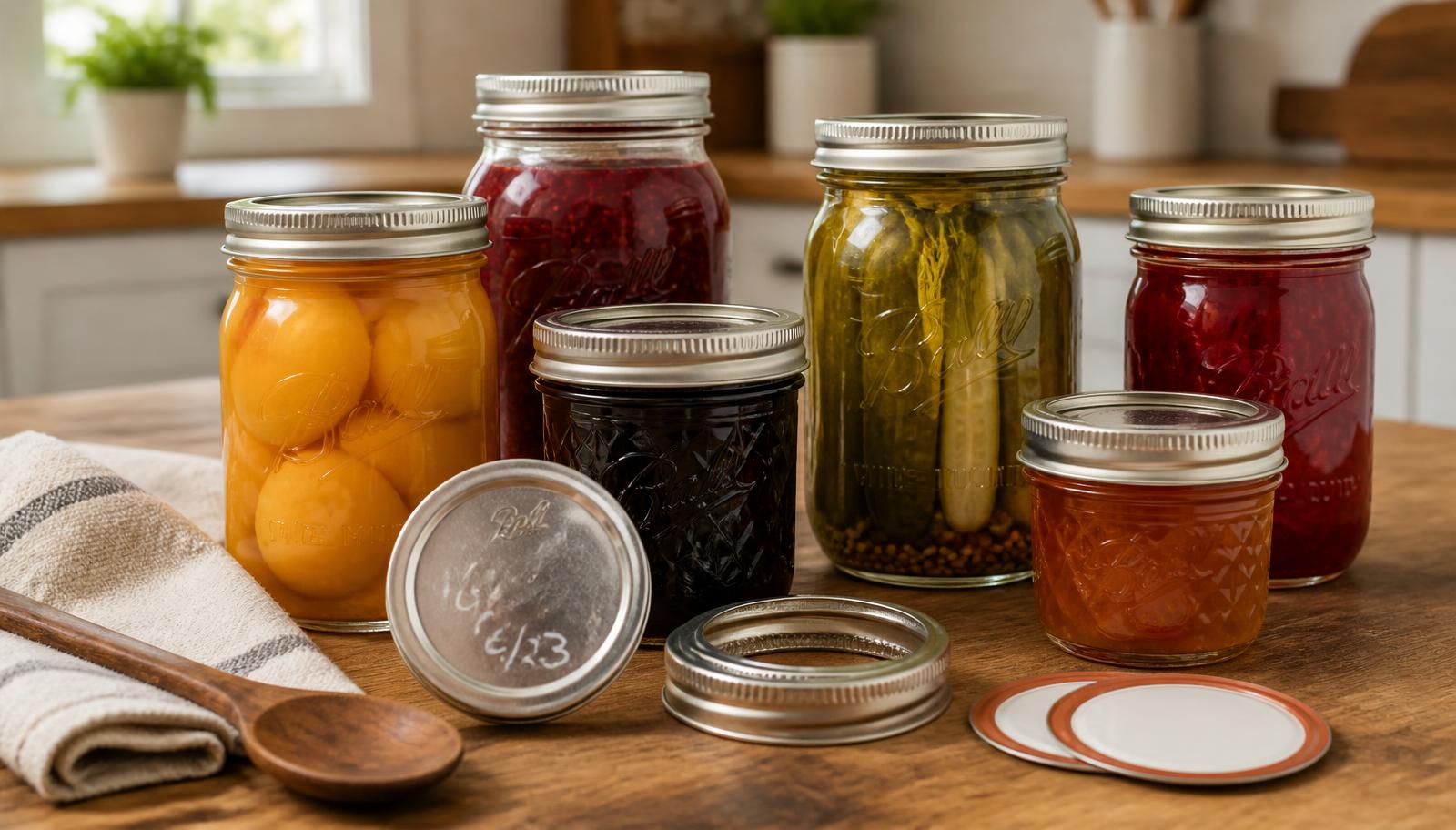
Somewhere in every kitchen drawer sits a small pile of canning lids nobody is quite brave enough to throw away and nobody is quite sure they can use again. That is a reasonable place to be, because canning jars and lids come with an impressive amount of folklore attached to them, from whether the rings can go back in the drawer to whether the jars themselves belong in the microwave. Some of these myths are harmless, the kind of thing you shrug off. A few of them can genuinely ruin a batch of preserves or crack a jar in half in your oven, which is a bad time for everyone involved. So let's sort out which is which, once and for all.
A quick note before we get into it: the guidance below is general information based on standard canning jar and lid practices. Manufacturers occasionally build products that work differently, especially with newer lid designs, so always check and follow the specific instructions that came with your jars and lids first.
Can You Reuse Canning Lids and Rings?
The short answer is that it depends on which piece you mean, and this is where most of the confusion starts.
Metal screw bands, often called rings, are reusable. As long as a ring is not rusted, bent, or dented, you can use it again and again across multiple canning seasons. Its only job is to hold the flat lid in place while the jar seals and cools, so once the seal has formed, the ring is not doing any preserving work at all.
Two piece flat lids are a different story. Those flat metal discs with the sealing compound around the edge are designed for one use. The compound softens during processing and forms a seal against the jar rim as it cools. Once that seal is broken, whether you are opening the jar to eat the contents or just checking it, the compound has already done its job and will not reliably reseal a second time. Reusing a flat lid risks a false seal, which can look fine on the outside while leaving your food unsafe.
If you are using a one piece lid system, like some newer reusable canning lid designs made with silicone gaskets, follow the manufacturer's specific reuse guidance since those are built differently from traditional two piece lids.
Are Canning Jars and Lids Recyclable?
Canning jars themselves are made of the same soda lime glass used in most food packaging, so in most areas they can go in your curbside glass recycling right alongside other jars and bottles. If your area does not accept glass curbside, check for a local drop off glass recycling site, since many exist even where curbside pickup does not. If you are stocking up on canning supplies in general, our guide to canning salt versus pickling salt versus kosher salt covers another area where the differences matter more than people expect.
Metal lids and rings are a different situation. They are typically too small for most curbside recycling sorting equipment, which is built for larger metal items. Instead, look for a scrap metal recycler or a specialty metal recycling drop off near you. Some municipal recycling centers accept small metal items in a separate bin, so it is worth checking your local guidelines before tossing rings and lids in with your regular metal recycling.
Freezer, Microwave, Oven, and Dishwasher: What's Actually Safe?
This is where the myths get the most dangerous, so let's go appliance by appliance.
Freezer: Canning jars are freezer safe, with one important caveat. Liquids expand as they freeze, so you need to leave enough headspace, generally an inch or more, or the jar can crack under pressure as the contents expand. Wide mouth jars also tend to handle freezing better than narrow mouth jars because the straight sides give the contents more room to expand evenly.
Microwave: Canning jars are not microwave safe, and this is one of the most important myths to clear up. Standard canning jars are not tempered the way true microwave safe glass is, and the metal lid and ring should never go in a microwave at all. If you need to reheat food from a canning jar, transfer it to a microwave safe container first.
Oven: Canning jars are not oven safe either. Even though the jars go through a hot water bath or pressure canner during processing, that is a controlled, gradual heating and cooling process. The dry, direct heat of an oven, especially combined with any sudden temperature change, can cause the glass to crack or shatter. Skip the oven for any recipe that calls for baking in a mason jar unless the jar is specifically labeled oven safe.
Dishwasher: Canning jars themselves are dishwasher safe for regular cleaning between uses. Metal rings can go in the dishwasher too, though repeated dishwasher cycles may cause them to rust faster over time, so many canners prefer to hand wash rings to extend their life. For flat lids, hand washing is generally the safer choice since the sealing compound can be affected by high heat and harsh detergent over repeated dishwasher cycles.
Are Canning Jars Tempered Glass? And Are They Worth Anything?
Despite going through the canning process, standard canning jars are not made of tempered glass. Tempered glass is treated to withstand rapid temperature swings and high impact, which is why it shows up in things like oven safe bakeware and car windows. Canning jars are made of ordinary soda lime glass, which is exactly why the oven and stovetop direct heat myths above can lead to cracked or shattered jars. The canning process itself uses gradual, controlled heat specifically because the glass is not built for sudden temperature changes.
As for whether jars are airtight, a properly sealed canning jar is airtight, and that seal is what makes shelf stable canning possible in the first place. You can check a seal by pressing the center of a cooled lid. If it does not flex or pop, the jar is sealed.
Vintage and antique canning jars can be worth something, particularly older Ball, Mason, or Atlas jars with unique colors, embossing, or manufacturing quirks like bubbles in the glass. Most common vintage jars sell for modest amounts, generally in the ten to thirty dollar range, though rare colors or early production runs can bring in significantly more from serious collectors. If you come across an unusual looking jar at an estate sale or in a relative's basement, it is worth a quick search before you put it to everyday use.
Frequently Asked Questions
Can you reuse canning lids?
No. Two piece flat lids are designed for a single use because the sealing compound only forms a reliable seal once. Metal rings, however, can be reused as long as they are not rusted or damaged.
Are canning jars microwave safe?
No. Canning jars are not tempered for microwave use, and the metal lid and ring should never go in a microwave at all. Transfer food to a microwave safe container before reheating.
Are canning jars oven safe?
No, standard canning jars are not oven safe. They are made of ordinary glass that is not built for the dry, direct heat of an oven, and using them there risks cracking or shattering.
Can canning jars be frozen?
Yes, with enough headspace left for the contents to expand as they freeze. Wide mouth jars generally handle freezing better than narrow mouth jars.
Are canning jars recyclable?
Yes, the glass jars themselves can typically go in curbside glass recycling. Metal lids and rings usually need to go to a scrap metal or specialty metal recycling location instead.
Are canning jars worth anything?
Common vintage jars are often worth a modest amount, while rare colors or early production runs can be worth considerably more to collectors. It is worth checking before using an unusual old jar for everyday canning.