Peach Patrol: Why Peaches Go Mealy, Brown, or Bruised (And What to Do About It)
The Calculated Cook uses affiliate links. We may earn a small commission at no extra cost to you.
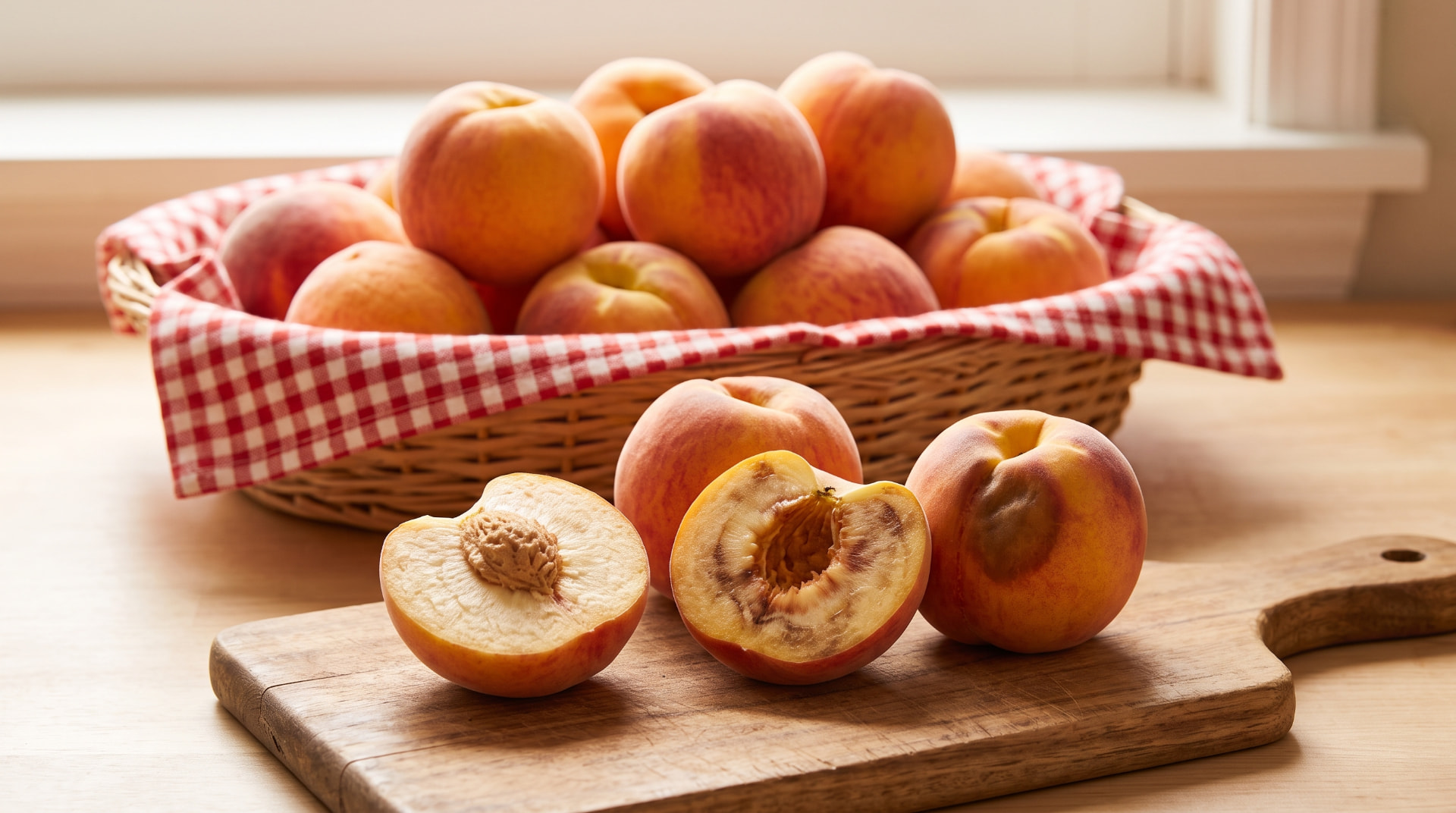
You bought a peach that looked perfect. Firm, fuzzy, smelled like summer. Then you bit in and got sawdust. Or you cut one open and found brown streaks running through it like it had a rough week. Neither one means you did anything wrong, and neither one means the peach is bad. Here's what's actually going on.
The Quick Answer
- Mealy peach: Safe to eat, just not enjoyable out of hand. Cook it instead of forcing it down.
- Brown inside: Safe to eat unless there's mold, sliminess, or a sour smell. Same reaction as a sliced apple browning.
- Bruised peach: Safe to eat. Cut around the bruise and use the rest.
Why Peaches Go Mealy
That dry, grainy texture (some people call it "woolly") almost always comes down to one thing: the peach spent too much time in the fridge's danger zone, roughly 36 to 46°F, before it had a chance to fully ripen.
Peaches that go straight into the fridge while they're still hard, then sit there for days, can lose the ability to get juicy the way they're supposed to. Instead of softening into that dripping-down-your-arm texture, the flesh dries out and turns grainy. It's not spoilage. It's a peach whose ripening process got interrupted by cold before it was ready for it.
Some varieties are also more genetically prone to this than others, so if it keeps happening with peaches from the same store, it's not something you're doing wrong.
Is it safe to eat? Yes. A mealy peach won't hurt you. It's just not going to taste like much, and the texture isn't pleasant to eat out of hand. Better use elsewhere (more on that below) than force it down.
Why the Inside Turns Brown
Brown streaks or patches inside a peach usually show up alongside mealiness, and it's the same basic reaction as watching a sliced apple turn brown on the counter. Once cold exposure damages the peach's cells, air reaches compounds inside the fruit and turns them brown.
It looks unappetizing, but it's not dangerous. It's the same harmless browning reaction happening inside the peach instead of on a cut surface.
What About Bruises?
Bruising comes from a different cause but produces the same result. Instead of cold exposure, this one's from a bump, a drop, or getting squished at the bottom of the grocery bag. The impact damages the cells, air gets in, and you get that same soft, brown spot.
The fix is simple: cut around the bruised part and eat the rest like normal. The only time to toss the whole peach is if you're also seeing mold, a slimy texture, or a sour smell. A bruise on its own is cosmetic, not a safety issue.
How to Keep This From Happening
Let peaches finish ripening on the counter, not the fridge. A hard peach should sit out at room temperature until it gives slightly when you press near the stem and smells sweet. Only refrigerate it once it's actually ripe.
Once refrigerated, keep peaches at 32 to 34°F and eat them within about a week. Cold storage well below the 36 to 46°F danger zone slows ripening without triggering the damage that causes mealiness.
Handle them gently and store loosely. Peaches bruise easily, so avoid stacking them deep in a bag or bin.
How to Tell If a Peach Is Ripe
- Give it a gentle squeeze near the stem. A ripe peach yields slightly under light pressure. If it feels hard all over, it's not there yet. If it feels mushy or leaks juice, it's past ripe.
- Smell it. A ripe peach smells sweet and fragrant, especially near the stem end. Little to no smell usually means it needs more time on the counter.
- Check the background color, not the blush. The red "blush" on a peach's skin is about variety, not ripeness. Look instead at the color underneath it. A ripe peach has a warm gold or creamy yellow undertone. Green undertones mean it's still unripe.
- Skip the hard squeeze test. Pressing firmly to check for softness is what causes a lot of bruising in the first place. A light touch near the stem is enough.
What to Do With a Less-Than-Perfect Peach
A mealy or bruised peach might not be great for eating out of hand, but it still has plenty of use left in it. Cook it down into a peach sauce, blend it into a smoothie where texture doesn't matter, or bake it into a cobbler where the oven does the work the peach couldn't do on its own.
FAQ
Is a peach safe to eat if it's brown inside, whether it's one spot or spread throughout?
Yes. Browning inside a peach, whether it's a single streak or spread through more of the flesh, is almost always the same harmless cold-storage reaction that turns a cut apple brown. It happens when a peach goes into the fridge before it's ripe and the cold damages the cell structure, and more widespread browning just means more of that damage happened at once. It's a texture and quality issue, not spoilage. It's safe to eat unless you also notice mold, sliminess, or a sour smell.
What's the difference between a mealy peach and a grainy peach?
They're the same underlying issue described two different ways. "Grainy" refers to the sandy, gritty texture itself, while "mealy" (or "woolly") describes the overall dry, cottony eating experience. Both come from the same cause: a peach that went into the fridge before it fully ripened.
Is a mealy peach safe to eat?
Yes. A mealy or woolly texture is a quality issue, not a food safety issue. It happens when a peach sits too long in the 36 to 46°F cold storage danger zone before it fully ripens, and it won't make you sick.
Is a bruised peach safe to eat, or should I throw the whole thing away?
Yes. A bruise is localized cell damage from an impact, not bacterial spoilage, so it doesn't spread through the fruit the way rot does. Cut away the bruised section and eat the rest, as long as the remaining fruit looks and smells normal. The only reason to toss the whole peach is mold, sliminess, or a sour smell, none of which come from bruising alone.
Should peaches be refrigerated?
Only once they're fully ripe. Refrigerating a hard, unripe peach in the 36 to 46°F danger zone is the most common reason peaches turn mealy. Let them ripen on the counter first, then refrigerate at 32 to 34°F for up to about a week.
Why do some peaches go mealy and others don't, even from the same store?
Some peach varieties are genetically more prone to it than others, and how long a batch sat in cold storage before reaching the store plays a role too. It's not something you're doing wrong at home.